

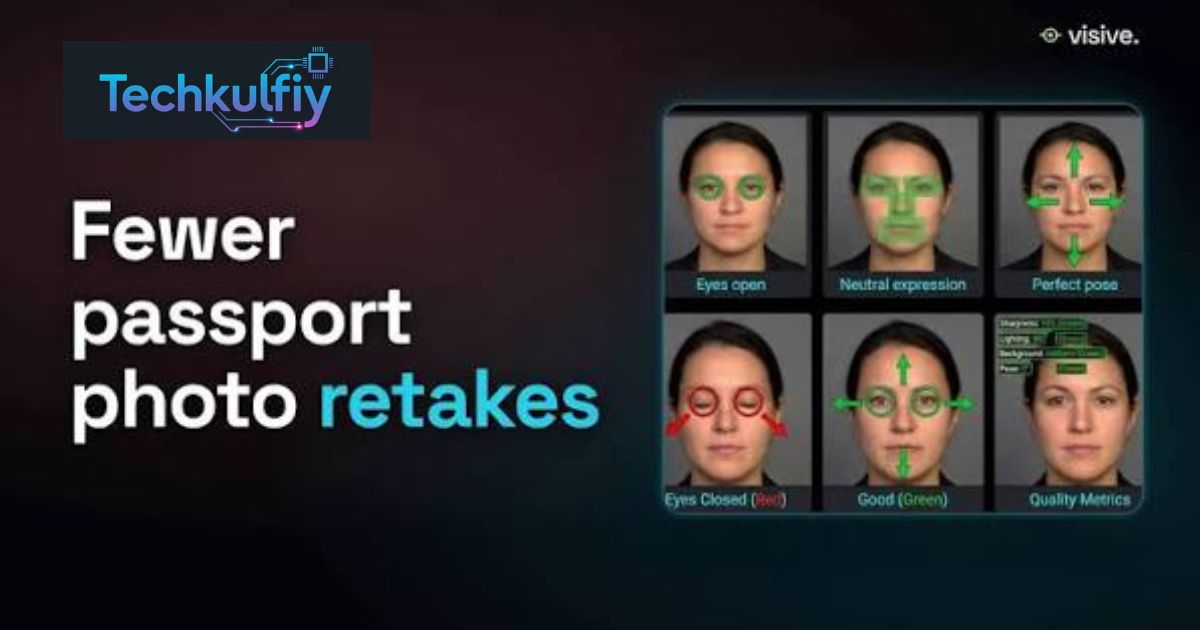
Identity verification has become an important part of modern travel, digital services, and government operations. Passport photos, visa portraits, and other identity images must meet specific quality requirements so that biometric systems can process them reliably.
The Paravision ISO/ICAO Image Quality Suite is designed to help organizations evaluate facial images against established international standards. It checks important image characteristics, including face position, lighting, visibility, and background quality.
For organizations developing biometric identity systems, this type of technology( Paravision ISO/ICAO Image Quality Suite) can make image-quality assessment more consistent. Understanding its features, limitations, and potential uses helps businesses and technology professionals see where it may fit into modern identity workflows.
What Is Paravision ISO/ICAO Image Quality Suite?
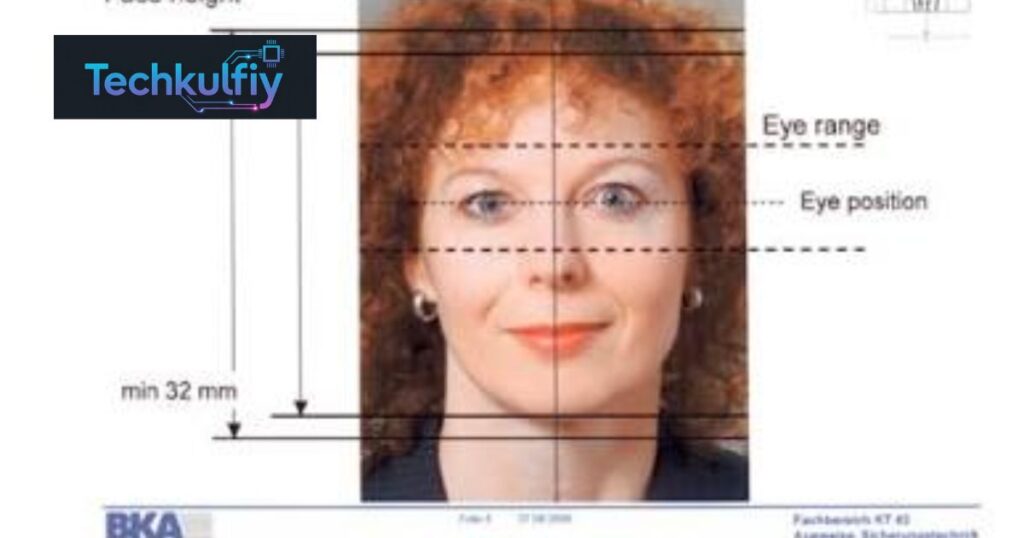
The Paravision ISO/ICAO Image Quality Suite is a software product designed to evaluate facial images against established standards used in passports, visas, identity documents, and travel-related applications. Its purpose is to help organizations determine whether a face image meets relevant quality requirements before using it in an identity verification process.
The product comes from Paravision, a company focused on identity AI, facial recognition, liveness detection, and other biometric technologies. Rather than simply identifying a person, this particular suite focuses on the quality and presentation of the image being processed.
This distinction matters because even an advanced facial recognition system can struggle when the source image is poorly framed, badly lit, or unsuitable for the intended application. A face might be visible to a human observer while still failing important technical requirements.
The Paravision ISO/ICAO Image Quality Suite evaluates multiple image characteristics and provides an overall result alongside individual measurements. Organizations can use these results to understand why an image passes or fails their selected checks.
The Paravision ISO/ICAO Image Quality Suite supports requirements associated with ISO/IEC 19794-5, ISO/IEC 39794-5, and ICAO 9303. These standards are relevant to facial images used in machine-readable travel documents and government identity programs.
Paravision ISO/ICAO Image Quality Suite also offers configurable thresholds for individual checks. This gives organizations more flexibility when implementing image-quality rules within their own systems.
Why Facial Image Quality Matters in Identity Verification
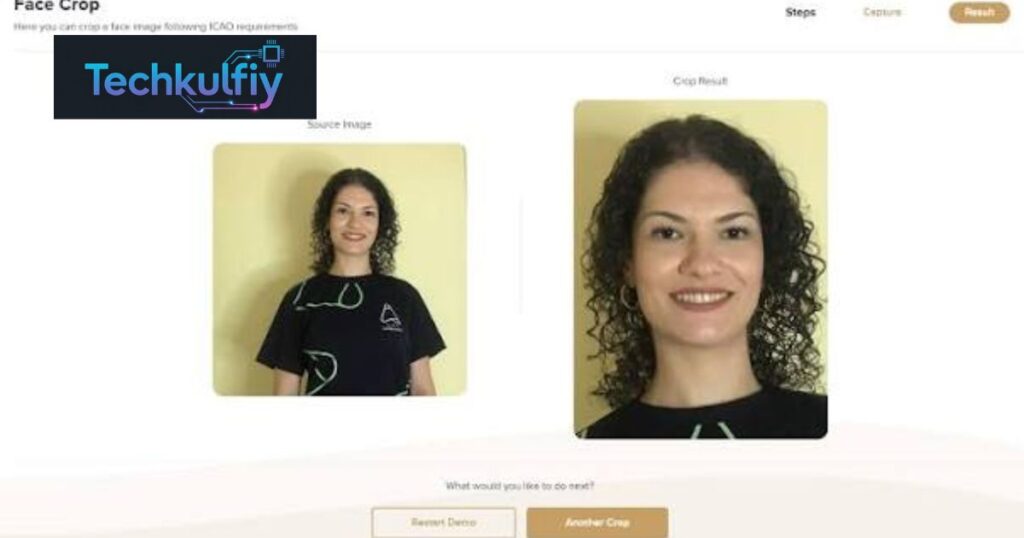
A photograph is not automatically suitable for every identity-related purpose. An image may look clear on a phone screen but still have problems with face positioning, exposure, or visibility.
For example, a passport portrait with a face that appears too small may not meet the intended framing requirements. A photograph with strong shadows can hide facial details. An image captured from an unusual angle may also fail a standard designed for a more controlled portrait.
These problems can affect biometric verification, which compares facial information to establish whether an image belongs to the expected person. Image-quality assessment helps organizations identify potential problems before an image enters a larger workflow.
The Paravision ISO/ICAO Image Quality Suite addresses this need by measuring image characteristics against applicable requirements. Its output can help teams understand the quality of a submitted portrait instead of relying entirely on manual inspection.
Better image checks may also reduce avoidable resubmissions. If an organization identifies a problem early, it can ask a person to provide a more suitable image before the process moves forward.
However, image quality is only one part of reliable identity verification. A high-quality photograph does not prove that a person is genuine, establish that a document is authentic, or guarantee that facial matching will succeed. Organizations still need suitable identity checks, security controls, and operational procedures.
Key Features of Paravision ISO/ICAO Image Quality Suite
The Paravision ISO/ICAO Image Quality Suite focuses on several characteristics that influence whether a facial image meets relevant standards. These checks can help organizations make image evaluation more consistent.
| Feature | What it evaluates | Why it matters |
|---|---|---|
| Face size and framing | The size and placement of the face | Helps assess portrait composition |
| Pose | The direction and position of the face | Supports applicable portrait requirements |
| Eyes and expression | Relevant eye visibility and expression characteristics | Helps evaluate presentation quality |
| Face visibility | Whether important facial areas are visible | Identifies possible image obstructions |
| Lighting and exposure | How light and brightness affect the portrait | Helps detect unsuitable image conditions |
| Background quality | Whether the background meets selected requirements | Supports consistent portrait presentation |
| Configurable thresholds | Individual check settings | Helps organizations adapt evaluations to their requirements |
| Overall and individual results | Summary assessment and detailed measurements | Makes quality problems easier to investigate |
| Optional background standardization | Generation of a portrait version with a uniform background | May help prepare images for particular workflows |
One useful characteristic of Paravision ISO/ICAO Image Quality Suite is the combination of an overall assessment with more detailed measurements. A simple pass-or-fail result can tell an operator that something went wrong, but it may not explain what needs attention.
Detailed results can give technical teams better visibility into individual checks. The exact interpretation still depends on the configured requirements and the organization’s implementation.
The optional background standardization capability can also be relevant when an application needs a more uniform portrait background. Organizations should confirm the output requirements of their particular document process before using any modified image.
Understanding ISO and ICAO Standards
The name of the Paravision ISO/ICAO Image Quality Suite refers to standards that help define the expected characteristics of facial images in identity and travel-document applications.
ISO, the International Organization for Standardization, develops standards across many industries. Within biometric systems, relevant standards describe aspects of how biometric data should be represented and assessed.
ICAO, the International Civil Aviation Organization, develops international guidance and specifications for civil aviation, including machine-readable travel documents. Its Document 9303 series addresses technical requirements for travel documents that can be read by machines.
The product announcement identifies three relevant standards: ISO/IEC 19794-5, ISO/IEC 39794-5, and ICAO 9303. Each has a role in the wider landscape of facial-image representation and travel-document requirements.
These standards are important because identity programs often involve multiple systems, organizations, and jurisdictions. Common technical expectations can help teams work with more consistent requirements.
However, organizations should not assume that using the Paravision ISO/ICAO Image Quality Suite automatically makes an entire identity process compliant. Compliance depends on the relevant standard, the system configuration, the document program, and the way an organization implements and validates its workflow.
Teams should identify the exact requirements that apply to their application and confirm that the selected software configuration supports them.
How the Image Quality Assessment Process Works
The general idea behind the Paravision ISO/ICAO Image Quality Suite is to evaluate an image, check relevant characteristics, and return information that helps an organization decide whether the image meets its requirements.
The precise technical integration will depend on the customer’s implementation, but a typical image-quality workflow can be understood in several stages.
First, a user or connected system provides a facial image. This could be part of an identity application, a document-related process, or another workflow that requires a portrait to be assessed.
Next, the software evaluates the image against the configured checks. These may cover face framing, pose, visibility, lighting, exposure, expression, and background quality.
The system then provides an overall result along with individual measurements and analysis. These details can help the receiving application understand which requirements were met and which checks may need further attention.
The organization can use the result to decide what happens next. Depending on its rules, it might accept the image for the next processing stage, request another photograph, or route the case for manual review.
The Paravision ISO/ICAO Image Quality Suite also allows thresholds to be configured at the individual-check level. This can help an organization align its implementation with its applicable requirements instead of treating every image-quality rule as identical across all workflows.
A useful implementation should make the outcome understandable to both technical systems and the people responsible for resolving image problems. Clear error handling, appropriate logging, and well-defined review procedures are important parts of that process.
Benefits for Passport, Visa, and Identity Document Applications
One of the most direct applications of the Paravision ISO/ICAO Image Quality Suite is the assessment of facial portraits used in identity documents and travel-related processes.
Passport and visa workflows often require photographs that satisfy defined presentation criteria. If a submitted image fails those requirements, the applicant may need to provide a replacement. Detecting problems early can help organizations manage these cases more efficiently.
A consistent automated assessment process can also reduce dependence on subjective manual inspection. Different operators may interpret image quality differently, especially when an organization processes large volumes of submissions. Standardized checks can provide a more repeatable starting point.
Another potential benefit is improved visibility into the reasons behind an image-quality decision. When individual measurements are available, teams can investigate recurring problems and identify whether users frequently submit images with poor lighting, unsuitable framing, or other issues.
For organizations that operate digital identity services, Paravision ISO/ICAO Image Quality Suite insights may help improve instructions and user experience. For example, if many submissions fail because of background quality, an organization can make its image-capture guidance clearer.
Nevertheless, the benefits of Paravision ISO/ICAO Image Quality Suite depend on how the software is integrated and used. The Paravision ISO/ICAO Image Quality Suite does not remove every source of delay in passport or visa processing, and it cannot guarantee that an entire application will be approved.
Its role is narrower: helping evaluate facial-image quality as one component of a broader identity workflow.
Potential Uses in Travel and Border Technology
Travel and border systems increasingly use biometric identity verification to support identity checks at different stages of a journey. These systems may involve digital applications, airport processes, and other controlled environments.
In such settings, image quality can influence how reliably a face image can be processed. A portrait that does not meet the required presentation criteria may need to be captured again or handled through an alternative procedure.
The Paravision ISO/ICAO Image Quality Suite is designed for travel and border applications as well as identity-document workflows. Its ability to assess image characteristics can help organizations evaluate whether portraits meet their selected requirements.
This capability may be relevant to digital travel authorization services, identity enrollment systems, and applications that prepare facial images for subsequent biometric processing. Actual use depends on the organization’s technical architecture and the requirements of the relevant program.
The product should not be confused with a complete border-control platform. Image-quality assessment is different from checking travel eligibility, confirming passport validity, detecting fraudulent documents, or deciding whether someone may enter a country.
Those tasks may involve separate databases, security tools, human decisions, and legal processes. The Paravision ISO/ICAO Image Quality Suite can support the image-quality part of a wider system, but it does not replace these other controls.
How It Fits Into a Wider Biometric Security System
Modern biometric identity systems can include several technologies that perform different jobs. Face recognition compares facial information, while liveness detection helps assess whether a biometric sample may come from a live person rather than a presentation attack. Deepfake detection addresses another category of manipulated or synthetic media.
Image quality is a separate concern. It asks whether the image itself meets defined technical and presentation requirements.
The Paravision ISO/ICAO Image Quality Suite is designed to complement other Paravision capabilities, including image-quality metrics and technologies related to presentation attacks, synthetic media, and deepfake detection.
These functions can contribute to a broader workflow, but their outputs should not be treated as interchangeable. An image may meet portrait-quality requirements and still be fraudulent. A genuine user’s photograph may fail an image-quality check because of poor lighting. A high-quality image may also produce an uncertain identity match.
Organizations therefore need to decide how each component contributes to the final decision. They should define which checks are mandatory, which failures trigger another capture, and which cases require additional review.
Good system design also requires careful attention to data protection, access controls, retention policies, and the appropriate handling of biometric information. Facial images can be sensitive personal data, so organizations should apply relevant privacy laws and internal security policies.
Configurable Thresholds and Workflow Integration
Different identity programs may have different operational requirements. A workflow for a government identity document may not use exactly the same rules as a general customer onboarding process.
The Paravision ISO/ICAO Image Quality Suite supports configurable thresholds at the individual-check level. This flexibility allows organizations to configure evaluations around their intended implementation.
For example, an organization may need to define how it handles a failed framing check differently from a problem involving image exposure. The selected thresholds should reflect applicable standards and operational requirements rather than simply making it easier for images to pass.
Configuration also needs to be documented and tested. If thresholds are changed without proper validation, an organization could accept images that do not meet its intended requirements or reject suitable submissions unnecessarily.
Integration is another important consideration. Technical teams should determine how the software receives images, returns results, reports errors, and communicates with existing applications. They should also test performance under realistic conditions before deploying the system at scale.
The product announcement describes the ability to integrate assessment results into existing workflows, but organizations should confirm the exact deployment options, supported interfaces, technical requirements, and licensing terms with Paravision.
A carefully planned implementation can make image assessment more useful to the people and systems that rely on it. Poorly defined rules, by contrast, can create confusion even when the underlying technology performs as intended.
Limitations and Important Considerations
The Paravision ISO/ICAO Image Quality Suite addresses a specific technical problem, but buyers should understand its limits before evaluating it for a production environment.
First, image-quality assessment does not establish identity on its own. The software evaluates characteristics of an image against relevant requirements; it does not independently prove that the person in the image is the person they claim to be.
Second, meeting image-quality requirements does not guarantee accurate face matching in every situation. Performance can depend on the recognition technology, image conditions, enrollment quality, and other factors.
Third, standards compliance should be assessed in context. An organization needs to know which requirements apply to its document program and verify that its configuration, processes, and wider system meet those requirements.
Fourth, the optional background-standardization feature needs careful evaluation. Organizations should confirm that any generated version is appropriate for the specific use case and does not conflict with the rules governing the document or application.
Finally, organizations should assess the commercial and operational details. These may include pricing, deployment choices, processing capacity, integration support, service terms, security controls, and data-handling practices. Such details should be confirmed directly with the vendor because they may vary by implementation.
These checks are especially important for government agencies, travel companies, financial institutions, and other organizations handling sensitive identity information.
Paravision ISO/ICAO Image Quality Suite Compared With Manual Review
Manual image review and automated quality assessment can serve related but different purposes. A trained reviewer may notice contextual issues that are not captured by a particular automated check. Automated assessment, meanwhile, can help apply defined rules consistently across large numbers of images.
| Comparison area | Automated assessment | Manual review |
|---|---|---|
| Consistency | Applies configured checks repeatedly | May vary between reviewers |
| Processing volume | Can support automated workflows | May require more staff time |
| Detailed measurements | Can return individual check results | Depends on the review process |
| Contextual judgment | Limited to the system’s capabilities | Can consider additional context |
| Handling unusual cases | May require a defined exception process | Can support human judgment |
| Best role | Repeatable image-quality checks | Exceptions, context, and additional review |
For many organizations, the most useful approach may involve both methods. Automated checks can handle routine image-quality assessment, while trained staff review cases that are ambiguous or require a broader decision.
The Paravision ISO/ICAO Image Quality Suite may provide the automated component of this process, but organizations should design clear rules for exceptions and escalation. They should also evaluate how the system performs on images representative of their real users and operating conditions.
The goal should be a reliable and explainable workflow, not automation for its own sake.
Who Should Consider Paravision ISO/ICAO Image Quality Suite?
The product may be relevant to organizations that routinely handle facial images for identity-related purposes and need to assess them against applicable standards.
Government agencies and identity-document programs may consider it when evaluating passport or visa portrait workflows. Travel technology providers may assess whether it fits into systems that prepare or validate facial images. Businesses developing digital identity verification solutions may also investigate it if their use cases involve standards-based portrait assessment.
System integrators and biometric technology providers could find the product relevant when building larger identity workflows that combine image capture, quality checks, and subsequent biometric processing.
However, it may not be necessary for every business. A small organization that only needs occasional manual photo review may have different requirements from an agency processing a large volume of identity images.
Before choosing the product, potential customers should define their needs, identify the standards that apply, and compare the available technical options. They should also ask the vendor for implementation details, testing information, and evidence relevant to their intended use.
The right decision depends on operational requirements, not simply on whether a product uses artificial intelligence.
Frequently Asked Questions
What is Paravision ISO/ICAO Image Quality Suite?
The Paravision ISO/ICAO Image Quality Suite is software designed to evaluate facial images against relevant ISO and ICAO image-quality requirements for identity documents, travel, and border applications.
What does the Paravision ISO/ICAO Image Quality Suite check?
It evaluates characteristics such as face size and framing, pose, eyes and expression, face visibility, lighting, exposure, and background quality.
Which standards does the product support?
The product announcement identifies ISO/IEC 19794-5, ISO/IEC 39794-5, and ICAO 9303 as relevant standards for its image-quality assessments.
Can it help with passport and visa photographs?
Yes. Passport, visa, and other identity-document portraits are among the intended applications. Organizations must still confirm the exact requirements of their document program.
Does passing an image-quality check prove someone’s identity?
No. Image quality and identity verification are different tasks. A suitable photograph does not independently establish that a person is genuine or that a document is authentic.
Does the software support configurable rules?
The product includes configurable thresholds at the individual-check level. Organizations should confirm the appropriate configuration for their own standards and workflows.
Can it improve background consistency?
The suite includes an optional capability that can generate a portrait version with a uniform background. Its suitability depends on the requirements of the intended application.
Is Paravision ISO/ICAO Image Quality Suite suitable for every business?
Not necessarily. It is most relevant to organizations that need standards-based facial-image assessment. Businesses should evaluate their requirements, integration needs, and budget before selecting it.
Conclusion
The Paravision ISO/ICAO Image Quality Suite addresses an important part of modern biometric identity technology: evaluating whether facial images meet defined quality and presentation requirements.
By assessing characteristics such as framing, pose, visibility, lighting, exposure, and background quality, the software can help organizations understand image suitability before moving to later stages of an identity workflow. Its detailed results and configurable thresholds may also support more consistent processes and easier investigation of image-quality problems.
The product is particularly relevant to passport, visa, identity-document, travel, and border applications. Its optional background-standardization capability offers another potential tool for organizations with suitable portrait-processing needs.
However, image-quality assessment is only one component of a secure identity system. It does not replace face matching, document authentication, liveness checks, fraud prevention, or appropriate human oversight.
Organizations considering the Paravision ISO/ICAO Image Quality Suite should review the applicable standards, test the software in their intended environment, and confirm commercial, integration, privacy, and security requirements with the vendor. With a well-designed implementation, standards-based image assessment can become a useful part of a broader and more reliable digital identity workflow.
