


The Sprinklr VOC Agent Suite is an AI-powered approach to understanding what customers think, feel, and expect from a business. It helps organizations turn feedback from different channels into insights that teams can use to improve customer experiences.
American businesses receive customer opinions through online reviews, social media, surveys, support conversations, and news coverage. Reading every message manually can take considerable time, especially when a company serves thousands of customers.
The Sprinklr VOC Agent Suite brings specialized AI agents into this process, helping teams investigate brand performance, customer experience, market trends, and potential reputation risks. Its availability through Google Gemini Enterprise’s Agent Marketplace also gives eligible organizations another way to access this intelligence within their existing workflows.
What Is Sprinklr VOC Agent Suite?

The Sprinklr VOC Agent Suite is a collection of specialized artificial intelligence agents designed to help businesses understand customer opinions and make informed decisions. VOC stands for Voice of the Customer, a business practice focused on collecting and analyzing what people say about products, services, brands, and customer experiences.
Instead of asking employees to read thousands of reviews or manually compare customer surveys, organizations can use AI agents to investigate specific questions. For example, a retailer might want to know why customers are complaining about late deliveries, while a software company may need to identify the features users request most frequently.
The Sprinklr VOC Agent Suite supports this type of investigation by bringing customer signals together and organizing them into useful findings. Its specialized agents focus on different business needs, including brand health, crisis monitoring, competitive benchmarking, trend forecasting, campaign performance, and customer experience analysis.
For American businesses, this approach can be valuable because customers often communicate across many channels. Someone might complain on Instagram, submit a support ticket, leave a review, and later respond to a survey. Examining each interaction separately can hide the bigger picture.
By connecting feedback analysis with business questions, the Sprinklr VOC Agent Suite can help teams understand recurring problems, investigate changing customer expectations, and identify opportunities for improvement.
However, AI-generated insights should support human judgment rather than replace it. Companies still need to check the evidence, protect customer information, and decide which recommendations make sense for their circumstances.
How Sprinklr VOC Agent Suite Works
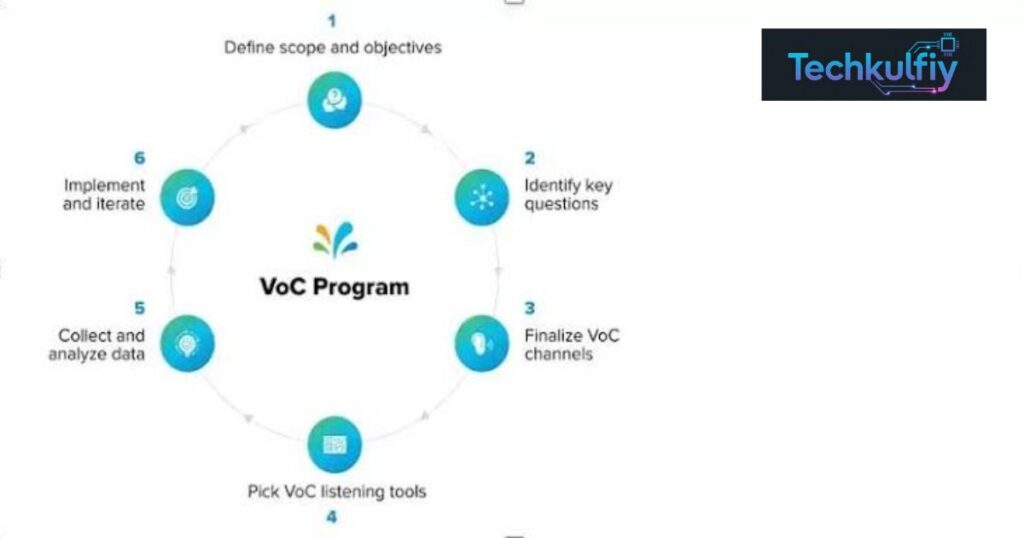
The Sprinklr VOC Agent Suite uses specialized AI agents to investigate customer-related questions using relevant business information. Rather than treating every request as a generic chatbot conversation, the suite organizes its capabilities around recurring tasks that marketing, customer experience, and service teams need to perform.
A business user might ask why customer sentiment has declined, which competitors are receiving positive attention, or what themes are appearing in recent feedback. The appropriate agent can examine relevant information available through the connected environment and produce findings with supporting context.
This process generally involves several stages.
First, a company gathers customer information from available sources. These may include surveys, online reviews, social conversations, support cases, and news coverage. The amount of information accessible depends on the company’s systems, permissions, and configuration.
Next, an AI agent interprets the business question and retrieves relevant information. It looks for patterns, repeated concerns, changes in sentiment, or relationships between different customer signals.
The system then presents its findings in a form that employees can use. Depending on the task, this may include an explanation of a problem, a comparison between brands, or information that helps a team decide what to investigate next.
Finally, employees review the results and choose an appropriate response. A company might improve a product feature, update its customer support process, or prepare a communication plan.
The Sprinklr VOC Agent Suite is particularly relevant when teams need to move beyond basic reporting. A dashboard might show that negative feedback increased last month, but an AI-assisted investigation can help employees explore the reasons behind that change.
The quality of the outcome still depends on the available data, the clarity of the question, and the accuracy of the analysis.
Key Agents and Their Main Purposes
One important aspect of the Sprinklr VOC Agent Suite is its specialized design. Different agents address different questions instead of forcing every team to use the same analytical approach.
The following table explains the principal agent categories and how American organizations might use them.
| AI agent | Main purpose | Example business use |
|---|---|---|
| Brand Health Monitoring | Understand brand perception and sentiment | Investigate why customers are expressing dissatisfaction |
| Crisis Monitoring | Identify developing reputation concerns | Examine a sudden increase in complaints |
| Competitive Benchmarking | Compare brands and market perceptions | Discover areas where competitors receive stronger feedback |
| Trend Forecasting | Explore emerging customer and market trends | Identify growing interest in a product category |
| Influencer and Content Strategy | Understand influential voices and content patterns | Evaluate which conversations may influence brand awareness |
| Campaign Performance | Analyze campaign-related customer signals | Understand how audiences respond to a marketing initiative |
| Customer Experience Analysis | Investigate customer journeys and service experiences | Find recurring issues in support interactions |
| General Listening | Explore broader customer conversations | Research what people are saying about a topic |
These categories help businesses approach customer intelligence through different perspectives. A marketing director may focus on campaign performance, while a customer support manager may be more interested in recurring complaints.
The Sprinklr VOC Agent Suite can make this type of analysis easier to organize, but the usefulness of each agent depends on access to relevant information and the business question being investigated.
How Sprinklr VOC Agent Suite Uses Customer Feedback
Customer feedback is one of the most useful sources of information for understanding a business. Customers often explain what they like, what frustrates them, and what they want companies to change.
However, feedback can be difficult to interpret when it appears across many channels. A company with thousands of monthly reviews cannot always rely on employees reading every message individually.
The Sprinklr VOC Agent Suite helps address this challenge by supporting the analysis of different customer signals. These signals can include structured survey responses and unstructured conversations written in natural language.
Customer sentiment analysis is one relevant technique. It helps categorize opinions as positive, negative, or neutral, although the meaning of an individual message may require additional context. Sarcasm, humor, regional expressions, and mixed opinions can make automated interpretation difficult.
Another useful technique is topic analysis. Instead of simply counting negative comments, a business can investigate which subjects appear repeatedly. For an American online retailer, those subjects might include shipping delays, confusing return policies, product quality, or customer service availability.
The Sprinklr VOC Agent Suite can also help teams investigate patterns across different feedback sources. If customers repeatedly mention the same problem in reviews and support conversations, that may indicate a broader operational issue rather than an isolated complaint.
For example, imagine that a home appliance company receives increasing complaints about installation appointments. Its team could examine feedback themes, identify the affected customer journey, and determine whether scheduling problems deserve further investigation.
The important distinction is that feedback analysis does not automatically solve the problem. Employees must confirm the findings, identify the responsible process, and take practical action.
Brand Health Monitoring and Reputation Management
Brand reputation influences how customers perceive a company before they decide whether to purchase its products or services. Negative experiences can spread quickly through online reviews, public social conversations, and community discussions.
The Sprinklr VOC Agent Suite includes a Brand Health Monitoring agent designed to help businesses understand brand performance, sentiment drivers, and potential actions.
For example, an American restaurant chain might notice that customers are discussing inconsistent service at several locations. Monitoring brand-related conversations could help the organization investigate whether the complaints concern particular locations, menu items, or service processes.
Brand sentiment monitoring can help teams distinguish isolated criticism from recurring concerns. It can also highlight positive customer feedback that a business might use to understand which experiences are working well.
Reputation management requires more than counting mentions. A thousand neutral mentions may be less concerning than a smaller number of detailed complaints about product safety or misleading advertising.
Businesses should therefore consider the context, reach, seriousness, and credibility of each issue. Automated findings should not be treated as proof that every negative comment represents a genuine operational failure.
The Sprinklr VOC Agent Suite can help organize relevant information, but employees should verify important claims before issuing public statements or making significant business decisions.
A thoughtful response may involve correcting an inaccurate claim, addressing a genuine customer problem, or explaining a policy more clearly. The appropriate response depends on the circumstances.
Crisis Monitoring and Early Warning Signals
A reputation crisis can develop when customer dissatisfaction spreads, a product issue receives public attention, or an organization faces a serious service disruption.
The Sprinklr VOC Agent Suite includes a Crisis Monitoring agent intended to help organizations investigate developing issues, their spread, influential participants, and possible response considerations.
For example, suppose a US electronics retailer launches a product that customers report is difficult to use. Early complaints may appear in reviews and social conversations. If the issue grows, the retailer may need to examine the product instructions, customer support process, or return policy.
Crisis monitoring helps teams look for patterns that deserve attention rather than relying entirely on individual employees noticing complaints.
Yet an increase in online discussion does not always indicate a crisis. A popular product launch, a viral joke, or a news story can generate a large number of mentions without presenting a serious business threat.
Organizations should establish escalation rules based on the potential harm, credibility, and urgency of a signal. Issues involving safety, privacy, legal exposure, or substantial customer losses may require immediate human review.
The Sprinklr VOC Agent Suite should be viewed as an analytical aid, not an automatic authority for crisis decisions. Employees must assess the evidence, coordinate with relevant departments, and follow established communication procedures.
Competitive Benchmarking and Market Research
Businesses rarely operate without competition. American consumers can often compare prices, product features, customer service, and reviews before choosing a provider.
The Sprinklr VOC Agent Suite includes a Competitive Benchmarking agent to help organizations examine how their brand compares with competitors.
This type of analysis can reveal differences in customer perceptions. For example, customers may praise one company for convenient returns while criticizing another for slow refunds. Such observations can help a business identify areas worth investigating.
Competitive intelligence can also support product development and marketing strategy. If customers repeatedly request a feature that competing products already provide, a company may decide to evaluate whether that feature belongs in its roadmap.
However, businesses should avoid treating social media discussion as a complete representation of market demand. Online conversations can overrepresent highly engaged customers, particular demographic groups, or unusual experiences.
A useful comparison should combine customer feedback with other relevant information, such as product performance, customer surveys, sales results, and direct market research.
The Sprinklr VOC Agent Suite can help organize customer-related competitive signals, but it cannot guarantee that every competitor or market trend will be captured.
Businesses should also respect privacy, platform rules, and applicable laws when collecting and analyzing market information.
Trend Forecasting and Influencer Insights
Customer expectations change over time. A feature that once seemed optional can become essential, while a product category that attracted little attention may suddenly become popular.
The Sprinklr VOC Agent Suite includes Trend Forecasting and Influencer and Content Strategy agents to help organizations investigate emerging conversations and the people or content influencing them.
Trend forecasting involves examining available signals to identify patterns that may indicate a developing interest. For example, a US fitness brand might investigate growing discussion around home workout equipment, wearable devices, or convenient exercise routines.
These findings can inform product research, editorial planning, campaign ideas, and customer engagement strategies.
Influencer-related analysis serves a different purpose. A business may want to understand which creators are discussing its products, what topics attract audience attention, or how content contributes to brand conversations.
The Sprinklr VOC Agent Suite can help bring these questions into a structured analytical workflow, although an apparent trend should not automatically be treated as a reliable prediction.
A sudden increase in mentions might result from a temporary event rather than sustained consumer demand. Influencer popularity also does not guarantee meaningful sales or positive customer experiences.
Teams should evaluate the duration of a trend, the quality of the available evidence, audience relevance, and potential business impact before investing heavily in a new campaign.
Campaign Performance and Customer Experience Analysis
Marketing teams need to understand whether their campaigns reach the intended audience and generate useful responses. Meanwhile, service teams need to know why customers encounter problems and which processes require improvement.
The Sprinklr VOC Agent Suite includes agents focused on Campaign Performance and Customer Experience Analysis to help address these different needs.
Campaign analysis can involve investigating how customers respond to messaging, which themes attract attention, and what feedback appears around a marketing initiative. These observations may help marketers refine future content or investigate an underperforming campaign.
Customer experience analytics focuses on interactions across the customer journey. This can include discovering recurring service problems, examining complaints about policies, and identifying areas where customers struggle to complete a task.
Consider an American subscription service that receives complaints about cancellation. An analysis may help the team investigate whether customers are confused by the process, unable to locate the relevant settings, or unhappy with the cancellation policy itself.
Each possibility requires a different solution. Improving a help article will not fix a technical error, and changing a technical process will not necessarily resolve dissatisfaction with a policy.
The Sprinklr VOC Agent Suite can help teams explore these distinctions, but employees need to validate the findings against operational data.
Combining customer feedback with support metrics, survey results, and business outcomes can provide a more complete picture than relying on sentiment alone.
Using Sprinklr VOC Agent Suite Through Gemini Enterprise
One notable development is the availability of the Sprinklr VOC Agent Suite through the Google Gemini Enterprise Agent Marketplace.
This integration gives eligible organizations a way to discover and interact with specialized Sprinklr agents within their existing Gemini workflows. The connection uses agent-to-agent communication, allowing compatible systems to exchange requests and responses.
For employees, this can reduce the need to move repeatedly between separate applications when investigating a customer-related question. A team member may be able to access relevant customer intelligence from a familiar enterprise environment, depending on the organization’s configuration and permissions.
However, availability through a marketplace does not mean that every business automatically receives access to every data source or capability.
Organizations may need appropriate subscriptions, authenticated connections, administrator approval, and access to the underlying Sprinklr environment. The exact requirements should be confirmed with the relevant providers.
The Sprinklr VOC Agent Suite should also be evaluated for compatibility with existing workflows. Businesses need to understand which employees can access customer information, how permissions are managed, and how sensitive data is handled.
Before adopting the integration broadly, an organization can test a limited set of business questions and compare the responses with known customer feedback.
This practical evaluation can reveal whether the integration saves time, improves evidence quality, and fits the company’s security requirements.
Benefits for American Businesses
The Sprinklr VOC Agent Suite may offer several advantages to organizations that manage large amounts of customer feedback.
One potential benefit is faster analysis. Employees can spend less time manually reviewing large collections of comments and more time investigating important issues.
Another advantage is a more organized approach to customer intelligence. Specialized agents help separate different questions, such as reputation monitoring, campaign analysis, and competitive research.
The suite may also support collaboration between departments. Marketing, customer service, and leadership teams can investigate related customer signals rather than relying exclusively on separate reports.
For companies operating across multiple channels, a unified view of customer feedback can help expose patterns that are difficult to see when information remains isolated.
There are also important limitations. AI-generated analysis can misunderstand context, overlook information, or produce conclusions that sound convincing without sufficient evidence. The value of the results depends on data quality and the way the system is configured.
A business should therefore measure success using practical outcomes, such as reduced analysis time, faster identification of recurring complaints, and improved resolution of verified customer problems.
The Sprinklr VOC Agent Suite is most useful when its findings lead to better decisions rather than simply creating more reports.
Limitations, Privacy, and Responsible AI Use
Although AI can make customer research more efficient, it does not remove the need for careful data management.
The Sprinklr VOC Agent Suite relies on the information available to its connected systems. If customer feedback is incomplete, outdated, duplicated, or unrepresentative, the resulting analysis may also be limited.
Data quality is especially important when businesses compare customer sentiment over time. A change in the number of collected reviews, for example, might influence the results even when underlying customer satisfaction has not changed significantly.
Privacy is another consideration. Customer support records, survey responses, and account information may contain personal or confidential details. Organizations should review access permissions, retention policies, contractual obligations, and applicable privacy requirements before enabling new integrations.
Companies should also maintain human oversight for sensitive decisions. An AI-generated interpretation should not be the sole basis for making legal claims, taking disciplinary action, or communicating unverified allegations.
Responsible AI practices include testing the system, checking important conclusions, documenting decision-making processes, and providing clear escalation routes when the output is uncertain.
The Sprinklr VOC Agent Suite can assist with analysis, but businesses remain responsible for how they use customer information and act on its findings.
Is Sprinklr VOC Agent Suite Worth Considering?
Whether the Sprinklr VOC Agent Suite is suitable depends on the size of the organization, the volume of customer feedback, and the complexity of its existing technology environment.
Large businesses that receive customer comments across many channels may benefit from specialized agents that help organize investigations. Companies with dedicated customer experience, marketing, and reputation teams may also find value in a structured approach to customer intelligence.
Smaller businesses with only a limited number of customer reviews may not need an enterprise-oriented platform. A basic survey tool, review monitoring process, or spreadsheet may be sufficient for their current needs.
Pricing should be checked directly with Sprinklr because a reliable public price for this specific suite has not been established here. Access may depend on existing services, subscriptions, integration requirements, and organizational arrangements.
Before committing, businesses should identify their main problems and test whether the available agents address them effectively.
A useful evaluation should consider accuracy, ease of use, integration effort, security, total cost, and measurable business value. It should also examine whether employees can understand the evidence behind an AI-generated conclusion.
The Sprinklr VOC Agent Suite is worth investigating when customer feedback is too large or complex to analyze efficiently using existing methods. However, businesses should make the final decision based on their own requirements rather than assuming that AI automation will automatically improve customer satisfaction.
Frequently Asked Questions
What is Sprinklr VOC Agent Suite?
The Sprinklr VOC Agent Suite is a collection of specialized AI agents designed to analyze customer feedback and support business research involving brand health, market trends, customer experience, and related topics.
What does VOC mean in business?
VOC means Voice of the Customer. It describes the feedback, opinions, expectations, and experiences customers share about a company’s products, services, and interactions.
What can Sprinklr VOC Agent Suite analyze?
Its agent categories cover brand health monitoring, crisis monitoring, competitive benchmarking, trend forecasting, influencer and content strategy, campaign performance, customer experience analysis, and general listening.
Can businesses use Sprinklr VOC Agent Suite with Gemini Enterprise?
The suite has been made available through the Gemini Enterprise Agent Marketplace. Access and functionality depend on the organization’s configuration, permissions, and applicable service requirements.
Is Sprinklr VOC Agent Suite free?
A confirmed public price for the specific suite is not established here. Businesses should contact Sprinklr or review their existing enterprise agreement to understand access and costs.
Can the suite replace human customer research teams?
It can assist with repetitive analysis and help employees investigate large amounts of feedback. However, human judgment remains important for checking evidence, interpreting context, protecting privacy, and making business decisions.
Is Sprinklr VOC Agent Suite suitable for small businesses?
It may be useful for small businesses with substantial customer feedback, but an enterprise-oriented solution may be unnecessary for organizations with simpler requirements. Costs and integration needs should be assessed first.
Does customer sentiment analysis always produce accurate results?
No. Sarcasm, ambiguous wording, missing context, and unrepresentative data can affect automated interpretation. Important findings should be checked against the original evidence.
Conclusion
The Sprinklr VOC Agent Suite represents an AI-assisted approach to understanding customer opinions and turning them into useful business intelligence. By organizing its capabilities around specialized agents, the suite helps organizations investigate brand perception, emerging risks, competitive positioning, marketing performance, and customer experience.
For American businesses, the ability to examine feedback from different channels can be valuable when customer conversations become too numerous or complex for manual analysis. Instead of reviewing isolated comments, teams can investigate recurring themes and explore why particular experiences may be affecting customer perceptions.
The availability of the Sprinklr VOC Agent Suite through the Gemini Enterprise Agent Marketplace also creates another potential access point for organizations already using compatible enterprise workflows. However, actual functionality depends on permissions, integrations, subscriptions, and the data available to the connected systems.
Businesses should approach the technology with realistic expectations. AI-generated insights are not automatically correct, and a high volume of online discussion does not always reflect the views of an entire customer base. Data quality, privacy, human oversight, and evidence-based decision-making remain essential.
Ultimately, the Sprinklr VOC Agent Suite is best understood as a tool for supporting customer intelligence rather than replacing business judgment. Organizations that define clear goals, test the available agents, verify their findings, and measure practical results will be better positioned to determine whether the platform fits their needs.
