


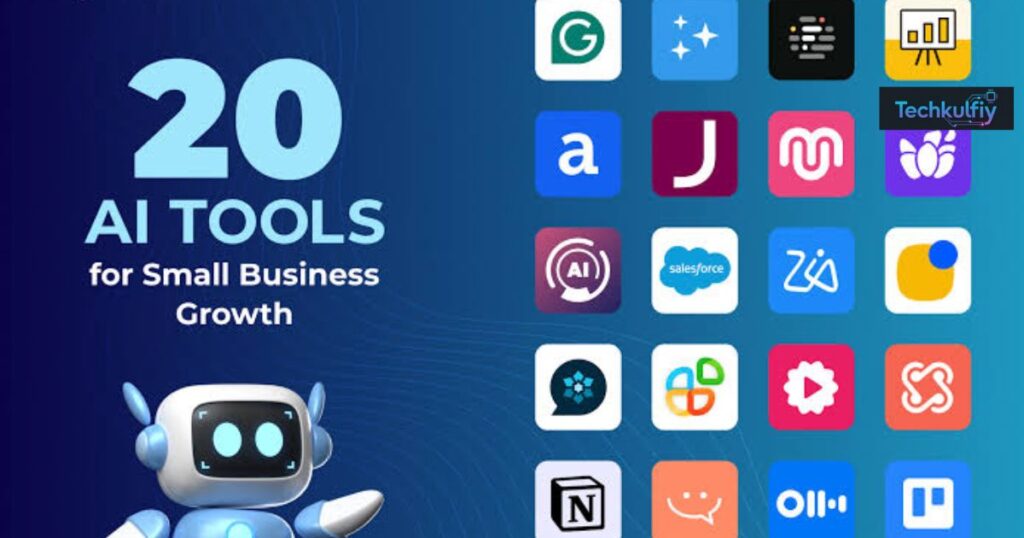
Artificial Intelligence tools for business are software that use AI to support business tasks.
They can help with data analysis, customer service, marketing, and daily work.
These tools help businesses work faster, smarter, and more efficiently.
Imagine finishing hours of business work in just a few minutes.
AI can automate repetitive tasks while you focus on important decisions.
That’s why more businesses are exploring AI tools today.
Artificial Intelligence tools for business can improve productivity and reduce manual work.
They can also help businesses understand customers and make better decisions.
From startups to large companies, many teams now use these tools.
What Are AI Marketing Tools?
AI marketing tools are software applications that use artificial intelligence to help businesses perform marketing tasks faster or more effectively. These platforms can analyze information, generate text and images, identify patterns, automate repetitive activities, personalize communication, and support marketing decisions.
The technology behind these products can include machine learning, natural language processing, generative AI, predictive analytics, computer vision, and conversational systems. In practical terms, you don’t need to understand the mathematics behind these technologies. You simply give the software a task, data, instructions, or a marketing goal, and the system helps produce an outcome.
For example, a traditional content workflow might require a marketer to research a topic, find keywords, create an outline, write a draft, edit it, optimize it, create an image, publish it, and promote it. Modern AI-powered marketing can assist with many of those stages. A marketer can still make the final decisions while AI reduces the amount of repetitive work.
Artificial intelligence in marketing doesn’t mean handing your entire marketing department to a robot. Instead, think of AI as an extremely fast assistant that can process information and generate ideas but still needs human direction.
Modern AI marketing software can work across almost every part of a marketing department. Some platforms specialize in SEO, while others focus on advertising, social media, customer support, content, analytics, or automation.
The following table shows how different types of AI software fit into marketing.
| Marketing Area | What AI Can Help With | Typical Result |
|---|---|---|
| Content Marketing | Research, writing, editing, repurposing | Faster content production |
| SEO | Keywords, SERP analysis, optimization | Better search visibility |
| Social Media | Captions, ideas, scheduling, analysis | More efficient publishing |
| Email Marketing | Personalization, subject lines, segmentation | Better campaigns |
| Advertising | Ad creative, targeting, optimization | More efficient campaigns |
| Customer Support | Chatbots, answers, routing | Faster responses |
| Analytics | Pattern detection, reporting, predictions | Better decisions |
| Automation | Repetitive workflows and integrations | Less manual work |
The biggest advantage is usually time. A task that once took several hours can sometimes be reduced to minutes. However, speed alone doesn’t guarantee good marketing. You still need strong positioning, accurate information, useful content, and a clear understanding of your audience.
What Can AI Marketing Tools Do?
Today’s Artificial Intelligence Tools for Business 30 Best AI Marketing Tools in 2026 can perform an impressive range of tasks. They can help with content creation, keyword research, competitor analysis, campaign planning, social media management, email campaigns, customer conversations, ad generation, image creation, video production, and marketing reporting.
Generative AI is particularly useful for producing first drafts. A marketer can ask an AI system to create several headline ideas, rewrite a landing page, summarize research, develop an email sequence, or transform a long article into social posts.
Other systems focus more heavily on analysis. They can examine customer data, website behavior, campaign performance, or search trends to identify patterns that may be difficult to spot manually.
The strongest results usually come from combining several capabilities. For example, a business might use one platform for SEO research, another for writing, another for design, and an automation platform to connect the entire process.
AI Marketing Tools vs. Traditional Marketing Tools
Traditional marketing software usually follows predefined rules and workflows. AI-enabled software can interpret language, identify patterns, generate new material, and adapt its output based on context.
That difference matters. Traditional automation might send an email whenever someone fills out a form. AI can potentially analyze the person’s behavior and help determine which message, timing, or offer makes more sense.
Still, traditional tools haven’t become useless. In many cases, the best solution combines conventional software with AI capabilities.
How Artificial Intelligence Tools for Business: 30 Best AI Marketing Tools in 2026Is Used in Marketing
AI now supports nearly every stage of modern digital marketing. It can help a business discover an audience, attract visitors, convert prospects, communicate with customers, and measure results.
The most effective approach isn’t to use Artificial Intelligence Tools for Business: 30 Best AI Marketing Tools in 2026 simply because it’s fashionable. Instead, identify repetitive or data-heavy tasks where AI can provide a measurable advantage.
AI for Content Marketing
Content marketing is one of the biggest areas affected by generative AI. Marketers can use AI to brainstorm topics, build outlines, draft copy, summarize research, improve readability, generate social captions, and repurpose existing material.
AI content generation can dramatically increase production speed. However, publishing raw AI output without editing can create shallow content. Search engines and readers both benefit from information that demonstrates real expertise and adds something useful.
A better workflow is simple: use AI for speed, then use human knowledge for quality.
AI for SEO and Search Marketing
SEO teams use AI for keyword research, search intent analysis, content planning, competitor research, and SEO optimization. AI can also help marketers understand relationships between topics and discover content gaps.
Modern search engine optimization requires more than repeating a keyword. Search systems increasingly evaluate the overall usefulness and relevance of a page. That means marketers should focus on answering real questions, covering important subtopics, demonstrating expertise, and creating a good user experience.
AI can accelerate this work, but it shouldn’t become an excuse for mass-producing generic pages.
AI for Social Media Marketing
Social media marketing involves constant content production. Marketers must develop ideas, write captions, create visuals, respond to audiences, analyze performance, and maintain consistent publishing schedules.
AI can assist with each stage. A social media manager might use AI to create variations of a campaign message for Instagram, LinkedIn, Facebook, or TikTok. The marketer can then adjust the wording for each platform.
This approach saves time while keeping the brand’s personality intact.
AI for Email Marketing
Email marketing is another strong use case. AI can help create subject lines, email drafts, personalized messages, customer segments, and campaign ideas.
For example, instead of sending one generic message to every subscriber, marketers can create different messages based on customer interests or behavior.
The goal isn’t simply to send more emails. It’s to make each communication more relevant.
AI for Advertising and Lead Generation
Paid campaigns generate enormous amounts of information. AI can help analyze that information and identify opportunities for better targeting, creative testing, and budget allocation.
Digital advertising platforms increasingly use machine learning to optimize campaigns. Marketers can also use specialized AI software to generate ad copy, design creatives, evaluate performance, and support lead generation.
This is particularly useful when a business runs many campaigns across multiple channels.
AI for Customer Experience
AI is also transforming customer interactions. Conversational AI can power chatbots and virtual assistants that answer questions, guide visitors, qualify leads, or route support requests.
Modern AI tools for customer support can analyze conversations and suggest responses. They can also summarize tickets and identify common customer problems.
When implemented carefully, these systems can improve the customer experience without removing human support completely.
How to Choose the Best AI Marketing Tools
Choosing the best AI marketing tools requires more than checking which platform has the longest feature list. A tool is only valuable if it solves a real problem for your business.
Start with your marketing objective. If you need more organic traffic, an SEO platform may provide greater value than a video generator. If your biggest problem is repetitive lead management, an automation platform may be the better investment.
The following factors deserve attention before you subscribe.
| Factor | What to Evaluate |
|---|---|
| Features | Does it solve your specific marketing problem? |
| Accuracy | Does its output require heavy correction? |
| Integrations | Can it connect with your existing software? |
| Ease of Use | Can your team learn it quickly? |
| Automation | Can it reduce repetitive work? |
| Analytics | Does it provide useful performance data? |
| Security | How does it handle business information? |
| Scalability | Can it support your business as it grows? |
| Pricing | Does the value justify the recurring cost? |
| Support | Can you get help when something goes wrong? |
Key Features to Look For
Good AI-powered marketing tools should provide more than a chatbot interface. Look for useful automation, strong integrations, customization, analytics, reliable outputs, and controls that allow your team to review the work.
For larger businesses, security and governance become even more important. Marketing teams may work with customer information, internal documents, campaign data, and confidential business plans.
Pricing and Free Plans
Many AI platforms offer free trials or limited free versions. These can help you test the product before committing to a subscription.
However, free plans often include usage limits. A business that generates thousands of pieces of content or runs complex automations may need a paid plan.
Don’t choose software solely because it’s cheap. The better question is whether the tool saves enough time or produces enough additional value to justify its cost.
AI Output Quality
Quality should be one of your first tests. Generate several realistic examples before subscribing.
For content tools, examine factual accuracy, originality, tone, structure, and depth. For analytics platforms, check whether the insights actually help you make better decisions.
Privacy, Security, and Data Protection
Businesses should understand how AI platforms handle uploaded information. Read the provider’s privacy and data policies before sending sensitive material.
This becomes especially important when working with customer records, proprietary strategies, unpublished campaigns, or confidential documents.
30 Best AI Marketing Tools in 2026
The following list focuses on practical marketing use cases. The “best” tool depends on your goals, budget, team size, and existing technology stack.
1. ChatGPT — Best AI Marketing Tool for Versatile Marketing Tasks
ChatGPT is one of the most flexible AI tools for marketing. Marketers can use it for brainstorming, research assistance, content drafts, copywriting, campaign ideas, data analysis, customer personas, and strategic planning.
It works especially well when you provide detailed context. Instead of asking for “a blog post about laptops,” you can describe your audience, search intent, tone, competitors, article structure, and desired outcome. The more useful context you provide, the more useful the output can become.
For small businesses, ChatGPT can function as a general-purpose marketing assistant. Larger teams can use it alongside specialized platforms for more focused workflows.
2. Claude — Best AI Tool for Long-Form Marketing Content
Claude is particularly useful for marketers working with long documents and detailed instructions. It can assist with research synthesis, long-form content, brand messaging, editing, and strategic thinking.
A content team could use it to analyze a large collection of marketing notes and turn those insights into a coherent campaign brief.
Its value increases when marketers need an AI assistant that can work with substantial context rather than producing only short responses.
3. Surfer — Best AI SEO and Content Optimization Tool
Surfer focuses heavily on SEO and content optimization. It helps marketers analyze search results, identify relevant topics, and improve content around search intent.
For publishers competing for organic traffic, tools like Surfer can support content optimization by showing areas where a page may need better topical coverage.
The important point is that optimization should support usefulness rather than create awkward keyword-heavy writing.
4. Jasper — Best AI Marketing Platform for Brand Content
Jasper is designed around business and marketing content. It can help teams create campaign copy, marketing materials, and brand-focused content.
One of its strongest use cases is maintaining consistency across larger marketing teams. When several people create content, brand voice can easily become inconsistent. AI-assisted workflows can help reduce that problem.
5. Copy.ai — Best AI Tool for Marketing Workflows
Copy.ai focuses on content creation and go-to-market workflows. Marketing teams can use it for copywriting, sales material, campaign content, and repetitive processes.
It becomes more useful when a team needs repeatable processes rather than isolated prompts.
6. HubSpot AI — Best AI Marketing Tool for CRM and Automation
HubSpot combines marketing, sales, CRM, and customer management capabilities. Its AI features can assist with content, customer communication, data analysis, and automation.
This makes it particularly attractive for businesses that want marketing activities connected to customer records.
Instead of keeping leads, emails, website interactions, and sales activities in separate systems, businesses can build a more unified marketing environment.
7. Semrush — Best AI Marketing and SEO Platform
Semrush is a broad digital marketing platform with strong SEO, keyword research, competitive analysis, and content capabilities.
It is especially valuable for businesses focused on organic growth. Marketers can investigate competitors, discover keyword opportunities, monitor rankings, and evaluate website performance.
For professional SEO teams, it can become a central research platform rather than a simple keyword tool.
8. Grammarly — Best AI Tool for Marketing Editing
Grammarly helps marketers improve grammar, clarity, tone, and readability. It can be useful for emails, website copy, advertisements, social posts, and other marketing materials.
Even strong AI-generated content often needs editing. Grammarly can provide another layer of quality control before publishing.
9. Canva — Best AI Tool for Marketing Design
Canva makes it easier for non-designers to create marketing materials. Its AI capabilities can support design generation, image editing, copy creation, presentations, and social media assets.
For small businesses without an in-house designer, Canva can reduce the time required to produce professional-looking visual content.
10. Buffer — Best AI Social Media Marketing Tool
Buffer is designed around social media publishing and management. Its AI features can help marketers generate and refine social content.
It works particularly well for small teams that need a simple way to maintain consistent social publishing without manually managing every post.
11. Hootsuite — Best AI Tool for Social Media Management
Hootsuite is built for broader social media management. It supports publishing, monitoring, analytics, and team workflows.
Businesses managing multiple social accounts can benefit from centralized management. AI features can further reduce the effort involved in creating and analyzing social content.
12. Zapier — Best AI Marketing Automation Tool
Zapier connects different applications and automates repetitive workflows. Its AI capabilities make it especially relevant to modern AI marketing automation.
For example, a marketing workflow might capture a lead, add the contact to a CRM, notify a sales representative, create a task, and send a follow-up message.
That type of workflow automation can eliminate many small manual tasks that quietly consume hours every week.
13. Notion AI — Best AI Tool for Marketing Productivity
Notion combines documentation, project management, databases, and knowledge management. Its AI features can help marketing teams summarize information, generate ideas, organize documents, and improve internal workflows.
It works well as one of the productivity tools used by marketing teams because strategy, campaign planning, research, and content calendars can live in one workspace.
14. Perplexity — Best AI Tool for Marketing Research
Perplexity is useful for research-oriented marketing tasks. Marketers can use it to investigate topics, compare information, discover sources, and explore market trends.
It can support data research and AI tools for competitor research, although important business claims should always be checked against reliable primary sources.
15. Originality.ai — Best AI Tool for Content Quality Checks
Originality.ai focuses on content quality-related checks, including AI-content detection and plagiarism detection.
Publishers can use such tools as part of an editorial process. However, AI detection isn’t perfect. It should never be treated as unquestionable proof that a person or machine wrote a piece of content.
16. Brand24 — Best AI Tool for Brand Monitoring
Brand24 helps businesses monitor mentions across online sources. This can support brand monitoring, reputation management, competitor observation, and customer sentiment analysis.
For brands operating in competitive markets, understanding what customers say outside your own website can reveal useful opportunities and potential problems.
17. Surfer AI — Best AI Tool for AI-Assisted SEO Content
Surfer AI combines AI-assisted content creation with SEO-focused optimization. It can help marketers move from keyword research toward content production.
However, the strongest results still require human editing, factual verification, and original insights.
18. Anyword — Best AI Copywriting Tool for Marketing Teams
Anyword focuses on marketing copy, including advertisements, emails, landing pages, and social content.
Its usefulness comes from combining generation with marketing-oriented optimization. Teams can create multiple versions of a message and test which approach performs better.
19. Writesonic — Best AI Tool for SEO Content Creation
Writesonic offers tools for content creation, SEO writing, and marketing workflows. It can help businesses produce drafts faster while incorporating search-focused requirements.
For publishers, the main advantage is workflow speed. The final content should still contain unique information and genuine value.
20. AdCreative.ai — Best AI Tool for Advertising Creatives
AdCreative.ai focuses on generating advertising creatives and supporting paid campaigns. It can help marketers produce variations of visual advertisements and marketing copy.
This is useful when advertisers need to test many creative concepts without manually designing every variation.
21. Albert.ai — Best AI Tool for Digital Advertising Automation
Albert.ai focuses on automated advertising optimization. Platforms in this category use data to support campaign decisions across paid channels.
This can be useful for companies running sophisticated paid advertising campaigns where manual optimization becomes difficult at scale.
22. FullStory — Best AI Tool for Digital Experience Analytics
FullStory focuses on understanding how people interact with digital products and websites.
Behavioral analytics can reveal where visitors struggle, which pages create friction, and where conversion opportunities may exist. This information can support better landing pages and stronger customer journeys.
23. Intercom — Best AI Tool for Conversational Marketing
Intercom combines customer communication with AI-powered support capabilities. Businesses can use it to answer common questions, assist customers, qualify leads, and manage conversations.
For companies with large volumes of repetitive customer questions, conversational systems can provide meaningful efficiency gains.
24. Manychat — Best AI Tool for Conversational Social Marketing
Manychat focuses heavily on automated conversations through social platforms and messaging channels.
It can support lead capture, customer engagement, promotional campaigns, and automated responses. This makes it particularly useful for businesses that generate customers through social media.
25. Midjourney — Best AI Image Generation Tool for Marketing
Midjourney is widely associated with generative visual creation. Marketers can use AI image generation for creative concepts, campaign inspiration, visual storytelling, and social content.
However, businesses should carefully consider branding, rights, consistency, and commercial-use requirements before deploying generated imagery at scale.
26. Runway — Best AI Video Marketing Tool
Runway focuses on generative video and creative production. It can help marketers experiment with AI video creation, visual effects, video concepts, and short-form creative content.
Video production can be expensive and time-consuming. AI can lower the barrier to experimentation, particularly for social campaigns and early creative concepts.
27. ElevenLabs — Best AI Voice Tool for Marketing
ElevenLabs provides AI-powered voice technology that can support narration, voiceovers, audio content, and video production.
Marketers creating educational videos, advertisements, podcasts, or multilingual content can use synthetic voices to accelerate production.
28. FeedHive — Best AI Tool for Social Content Optimization
FeedHive focuses on social media publishing and content workflows. AI features can help users create, improve, recycle, and manage social content.
This can be useful for creators and small marketing teams that need consistent publishing without building a large social media department.
29. Gumloop — Best AI Marketing Automation Tool for Advanced Workflows
Gumloop focuses on AI-powered workflows and automation. It can help businesses connect data, applications, and AI tasks into repeatable processes.
For advanced marketers, this opens opportunities for custom AI workflows for marketers rather than relying only on simple one-step automations.
30. PhotoRoom — Best AI Tool for Product Marketing Images
PhotoRoom focuses on image editing and product photography workflows. E-commerce businesses can use it to create cleaner product visuals, remove backgrounds, and prepare images for online campaigns.
For online stores, strong product presentation can have a direct effect on customer confidence and conversions.
Best AI Marketing Tools by Category
The best tool isn’t necessarily the one with the most features. It is the platform that solves your particular problem with the least friction.
The following comparison makes the major categories easier to understand.
| Marketing Category | Strong Options | Best Use |
|---|---|---|
| Content | ChatGPT, Claude, Jasper | Writing and ideation |
| SEO | Semrush, Surfer | Search optimization |
| Social Media | Buffer, Hootsuite, FeedHive | Publishing and management |
| Automation | Zapier, Gumloop | Workflow automation |
| Research | Perplexity, Semrush | Market and competitor research |
| Design | Canva, Midjourney, PhotoRoom | Visual content |
| Video | Runway | AI video production |
| HubSpot, Anyword | Email campaigns | |
| Customer Support | Intercom | AI-assisted support |
| Advertising | AdCreative.ai, Albert.ai | Paid campaigns |
Best Artificial Intelligence Tools for Business
For AI tools for content creation, ChatGPT, Claude, Jasper, Copy.ai, and Writesonic are strong choices. Your final choice should depend on whether you prioritize flexibility, brand controls, SEO workflows, or team collaboration.
Best AI Tools for SEO
For AI tools for SEO, Semrush and Surfer are strong specialized choices. ChatGPT and Perplexity can complement them by supporting research, brainstorming, analysis, and content planning.
Best AI Tools for Social Media Marketing
For AI tools for social media, Buffer, Hootsuite, FeedHive, Canva, and Manychat cover different parts of the social workflow. A business may use Canva for creative production and Buffer or Hootsuite for publishing.
Best AI Tools for Email Marketing
For AI tools for email marketing, HubSpot and Anyword can support different needs. General-purpose AI systems can also help marketers develop email ideas and drafts.
Best AI Marketing Automation Tools
For AI marketing automation tools, Zapier and Gumloop are useful for connecting different applications and automating multi-step processes.
Best AI Tools for Advertising
For AI tools for digital advertising, AdCreative.ai and Albert.ai focus more directly on paid campaigns, while broader platforms can support copy, creative ideas, and campaign analysis.
Best AI Tools for Marketing Design
For design, Canva is useful for everyday marketing assets, Midjourney is strong for generative visual concepts, and PhotoRoom is particularly useful for product images.
Best AI Tools for Marketing Research
For research, Perplexity, Semrush, ChatGPT, and Brand24 cover different needs, from web research to SEO intelligence and online brand monitoring.
Best Free AI Marketing Tools in 2026
Free tools can be surprisingly capable. They’re especially useful for freelancers, students, startups, and small businesses that need to control expenses.
However, “free” often means limited usage rather than unlimited access. Features, message limits, storage, exports, and automation capacity may differ between plans.
| Free or Freemium Tool | Useful For | Best Starting Point |
|---|---|---|
| ChatGPT | Writing and research | General marketing |
| Canva | Design | Social and visual content |
| Grammarly | Editing | Marketing copy |
| Buffer | Social publishing | Small social teams |
| Perplexity | Research | Topic and competitor research |
| PhotoRoom | Product images | E-commerce |
| Notion | Organization | Content planning |
Best Free AI Tools for Content Creation
ChatGPT, Claude where a free tier is available, Grammarly, and Canva can help beginners create and polish marketing content without immediately paying for expensive software.
Best Free AI Tools for SEO
Free AI tools can help with brainstorming, content planning, search-intent analysis, and research. However, serious SEO campaigns often benefit from dedicated paid platforms because professional keyword databases and competitive data require significant infrastructure.
Best Free AI Tools for Social Media
Canva and Buffer can provide a practical starting point for small businesses. A marketer can create graphics, write captions with AI, and organize a basic publishing workflow.
Are Free AI Marketing Tools Good Enough?
For learning and experimentation, absolutely. For a growing business, free plans may eventually become restrictive.
A sensible approach is to start free, establish a workflow, measure the results, and upgrade only when the limitations begin affecting productivity or revenue.
How to Use AI Marketing Tools Effectively
Using AI well requires more than typing random prompts. The quality of the input strongly affects the quality of the output.
Start by identifying a clear marketing objective. You might want more organic traffic, better lead generation, higher email engagement, stronger social reach, or improved customer retention.
Then design a workflow around that objective.
For example, an SEO campaign might begin with competitor research. Next, the team identifies search intent and content gaps. AI can assist with the outline and first draft. A human editor adds expertise, verifies claims, improves examples, and checks the final page. SEO software can then support SEO content optimization before publication.
This approach is much stronger than asking an AI system to “write 100 articles.”
Start With a Clear Marketing Goal
Your goal should be measurable. “Use AI for marketing” isn’t a strategy. “Increase qualified organic traffic by 30% over six months” gives your team something meaningful to work toward.
The goal determines the tools you actually need.
Build an AI-Powered Marketing Workflow
A practical workflow might look like this:
| Stage | AI Assistance | Human Responsibility |
|---|---|---|
| Research | Topic and competitor analysis | Validate information |
| Strategy | Ideas and planning | Make strategic decisions |
| Creation | Drafts and variations | Add expertise |
| Optimization | SEO and content suggestions | Protect readability |
| Publishing | Scheduling and automation | Final approval |
| Promotion | Social and email drafts | Adapt messaging |
| Analytics | Pattern detection | Decide what to change |
This creates automated marketing workflows without removing human judgment.
Give AI Better Instructions
AI performs better when you provide context. Tell it who the audience is, what problem you’re solving, what tone you want, what information matters, and what the final output should accomplish.
A vague prompt creates generic content. A detailed prompt creates a more useful starting point.
Always Review AI-Generated Content
Human review remains essential. Check facts, statistics, examples, claims, brand messaging, and recommendations.
AI-generated content can contain incorrect information or confidently state something that sounds reasonable but isn’t true.
Your editorial process should therefore treat AI output as a draft rather than an unquestionable final answer.
Combine Multiple AI Marketing Tools
The real power appears when different systems work together.
Imagine a U.S. e-commerce company launching a new product. A research platform identifies competitors. An SEO platform finds relevant search opportunities. ChatGPT or another writing system develops messaging. Canva creates campaign visuals. An advertising platform produces creative variations. Zapier connects the applications. Analytics software measures performance.
That’s marketing automation with AI rather than simply using one chatbot.
Benefits of AI Marketing Tools
The strongest argument for AI is productivity. Marketing teams spend enormous amounts of time on repetitive work. AI can reduce that workload and give people more time for creative and strategic activities.
One major benefit is speed. AI can generate multiple ideas in seconds, summarize large amounts of information, and assist with repetitive content tasks.
Another advantage is scale. A small team can manage more campaigns when software handles repetitive processes.
AI can also improve personalization. Instead of treating every customer identically, businesses can use behavioral information to create more relevant experiences.
Marketing analytics is another major benefit. AI systems can process large datasets and identify patterns that may otherwise require substantial manual analysis.
The biggest benefits can be summarized as follows.
| Benefit | Marketing Impact |
|---|---|
| Faster production | More content and campaigns |
| Automation | Less repetitive manual work |
| Personalization | More relevant customer communication |
| Data analysis | Better decision-making |
| Scalability | Larger marketing output |
| Productivity | More time for strategy |
| Customer support | Faster responses |
| Testing | More campaign variations |
AI can also support AI agents, which are systems designed to perform multi-step tasks rather than simply answer one question. In marketing, AI agents for marketing could potentially assist with research, reporting, campaign operations, or repetitive business processes.
The technology is moving from simple AI assistants toward systems capable of completing longer sequences of actions.
Limitations and Risks of AI Marketing Tools
AI marketing tools are powerful, but they’re not magic.
The first major limitation is accuracy. AI systems can produce incorrect facts, outdated information, misleading claims, or fabricated references. Every important business claim should be checked.
The second concern is generic content. If thousands of businesses use similar prompts, their content can begin to sound remarkably similar. Your competitive advantage still comes from original research, experience, strong opinions, useful examples, and genuine expertise.
Privacy is another concern. Businesses must understand what happens to the information they provide to an AI platform. Sensitive customer information should never be uploaded casually.
Cost can also become an issue. A company may begin with one inexpensive AI subscription and eventually accumulate ten different subscriptions. The total monthly bill can become surprisingly large.
Another problem is over-automation. When every customer interaction becomes automated, the brand can feel cold and impersonal.
The following table highlights the major risks and appropriate responses.
| Risk | Why It Matters | Better Approach |
|---|---|---|
| Incorrect information | Can damage trust | Fact-check important claims |
| Generic content | Weakens differentiation | Add original expertise |
| Privacy issues | Can expose sensitive data | Review data policies |
| High costs | Reduces marketing ROI | Audit subscriptions |
| Over-automation | Can hurt customer experience | Keep human support |
| Poor prompts | Produces weak outputs | Give detailed context |
| AI dependency | Reduces human creativity | Keep strategic oversight |
The smartest marketing teams don’t ask whether AI can replace people. They ask which work AI can improve.
AI Should Support Strategy, Not Replace It
A successful artificial intelligence marketing strategy starts with business goals, not software.
Your audience, positioning, product, pricing, customer needs, and competitive advantage should come first. AI should then help execute and improve that strategy.
That distinction matters because software can generate thousands of words, images, emails, or advertisements. It cannot automatically determine what your brand should stand for.
Which AI Marketing Tools Are Best for Your Business?
There is no single winner among the best AI marketing tools 2026. The right choice depends on your business model, team size, marketing channels, budget, and goals.
A small business may need only ChatGPT, Canva, Buffer, and an automation platform. A large enterprise could require a much broader technology stack involving CRM, analytics, advertising, customer support, SEO, content, and automation systems.
| Business Type | Recommended Starting Tools | Main Reason |
|---|---|---|
| Small Business | ChatGPT, Canva, Buffer, Zapier | Affordable productivity |
| Startup | ChatGPT, Claude, Canva, HubSpot | Speed and growth |
| SEO Agency | Semrush, Surfer, ChatGPT | Research and optimization |
| Content Team | Claude, ChatGPT, Jasper | Content production |
| E-commerce | Canva, PhotoRoom, HubSpot | Product marketing |
| Social Media Team | Buffer, Hootsuite, Canva | Publishing and creative |
| Marketing Agency | Semrush, Jasper, Zapier | Scale and automation |
| Customer Support Team | Intercom, ChatGPT | Faster customer communication |
Best AI Marketing Tools for Small Businesses
Small businesses should prioritize versatility. A general-purpose AI assistant combined with design, social scheduling, and automation software can cover a surprising amount of marketing work.
The objective isn’t to build a complicated technology stack. It’s to eliminate the tasks that consume the most time.
Best AI Marketing Tools for Startups
Startups usually need speed and flexibility. They may have a small team but ambitious growth targets.
A combination of AI for research, content, design, CRM, and automation can help a startup compete with larger companies without immediately hiring a huge marketing department.
Best AI Marketing Tools for Marketing Agencies
Agencies need scalable workflows. They often manage several clients, industries, campaigns, and content calendars simultaneously.
Tools such as Semrush, ChatGPT, Jasper, and Zapier can support research, production, optimization, and workflow automation.
Best AI Marketing Tools for E-Commerce Businesses
E-commerce businesses need strong product presentation, advertising, email communication, and customer support.
AI image tools can improve product visuals. AI writing tools can help with descriptions and campaigns. Automation can connect customer actions to follow-up workflows.
Best AI Marketing Tools for SEO Professionals
SEO professionals can benefit from combining specialized SEO platforms with general-purpose AI.
Semrush and Surfer can provide structured SEO data, while ChatGPT and Perplexity can assist with research, content planning, analysis, and ideation.
Best AI Marketing Tools for Social Media Managers
Social media managers should focus on tools that reduce repetitive publishing work without making content feel robotic.
Canva can handle creative production, while Buffer, Hootsuite, or FeedHive can support scheduling and management.
Best AI Marketing Tools for Content Creators
Content creators can build a flexible stack around writing, visual creation, video, and voice.
ChatGPT or Claude can support ideas and scripts. Canva and Midjourney can assist with visual content. Runway can support video production, while ElevenLabs can provide voice capabilities.
Best Overall AI Marketing Tools in 2026
For general marketing work, ChatGPT is one of the most versatile choices. For SEO, Semrush and Surfer are strong specialized options. For design, Canva is highly accessible. For automation, Zapier and Gumloop stand out for different workflow needs.
However, the “best” tool is ultimately the one that improves your specific workflow.
Frequently Asked Questions About AI Marketing Tools
What Are the Best AI Marketing Tools in 2026?
The best AI marketing tools depend on your objective. ChatGPT is highly versatile, Semrush and Surfer are useful for SEO, Canva supports marketing design, Zapier supports automation, and HubSpot provides broader CRM and marketing capabilities.
What Is the Best AI Tool for Marketing?
There isn’t one universal answer. General-purpose AI tools are excellent for brainstorming, writing, research, and strategy, while specialized platforms can provide deeper features for SEO, advertising, social media, analytics, or automation.
What Is the Best Free AI Marketing Tool?
ChatGPT, Canva, Grammarly, and Perplexity can be useful starting points depending on the task and the features available on their free plans.
Can AI Replace Marketing Professionals?
AI can automate many marketing tasks, but it doesn’t eliminate the need for skilled marketers. Strategy, positioning, creativity, judgment, relationships, and industry expertise remain important.
How Do AI Marketing Tools Work?
Most AI marketing platforms combine artificial intelligence with marketing data, predefined workflows, integrations, or generative models. Depending on the product, the system can analyze information, generate content, predict outcomes, or automate tasks.
Are AI Marketing Tools Worth Paying For?
They can be worthwhile when they save significant time, improve campaign performance, or replace expensive manual processes. Before paying, calculate whether the expected business value exceeds the subscription cost.
Which AI Tools Are Best for SEO?
Semrush and Surfer are strong choices for specialized SEO workflows. General AI platforms such as ChatGPT can complement them with research, content planning, and analysis.
What Is the Best AI Tool for Content Creation?
ChatGPT, Claude, Jasper, Copy.ai, and Writesonic are useful for different content workflows. The right choice depends on your preferred workflow, editorial requirements, and budget.
How Can Small Businesses Use AI for Marketing?
Small businesses can use AI to create content, research competitors, manage social media, write emails, analyze customer questions, generate marketing visuals, automate repetitive workflows, and improve customer support.
Final Thoughts
The Artificial Intelligence tools for business aren’t simply a collection of futuristic software products. They represent a broader shift in how marketing work gets done.
AI can research faster, generate ideas, automate repetitive tasks, analyze enormous amounts of information, and help businesses personalize communication. At the same time, successful marketing still depends on human judgment.
The strongest approach is therefore neither “AI does everything” nor “AI doesn’t belong in marketing.” The better approach is to combine human expertise with carefully selected AI marketing automation software.
Start with one problem. Choose one tool. Build one workflow. Measure the result. Then expand.
If an AI system saves your team five hours every week, improves campaign quality, or helps you serve customers faster, you’ve found genuine value.
And that’s the real promise of AI in marketing: **less repetitive work, better decisions, faster execution, and more time for the work that actually moves your business .
FAQS
Here are simple FAQs for Artificial Intelligence tools for business:
1. What are Artificial Intelligence tools for business?
Artificial Intelligence tools for business use AI to automate tasks, analyze data, improve productivity, and support better decisions.
2. How can AI tools help a business?
AI tools can save time, reduce repetitive work, improve customer service, and help businesses understand their customers better.
3. What are the best AI tools for businesses?
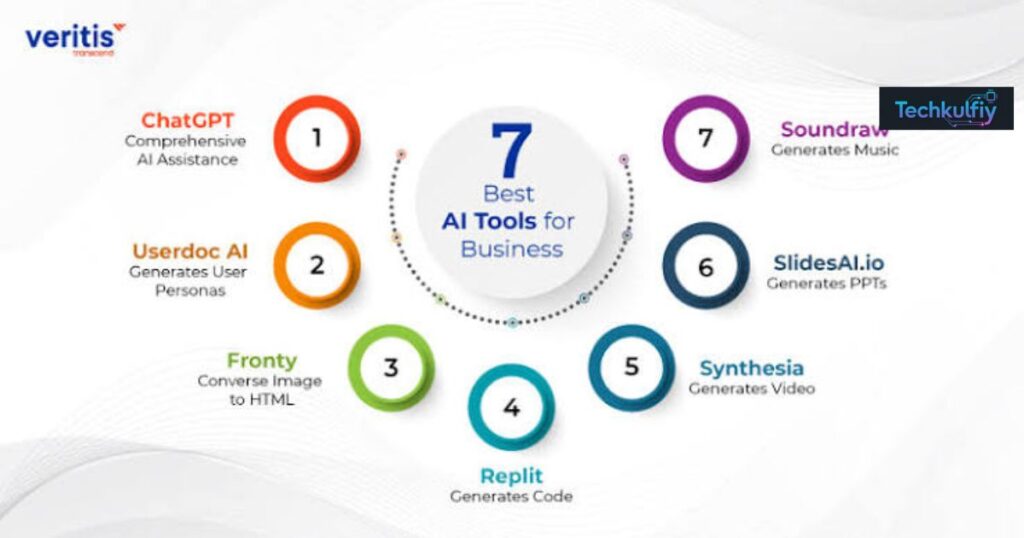
Popular options include ChatGPT, Microsoft Copilot, Gemini, Canva, Grammarly, and various AI marketing and automation tools.
4. Can small businesses use AI tools?
Yes, small businesses can use affordable AI tools for content creation, marketing, customer support, data analysis, and daily operations.
5. Are AI tools worth using for business?
Yes. The right AI tools can improve efficiency, lower manual workload, and help your business grow faster when used properly.
Meta Description
Discover the best Artificial Intelligence tools for business to automate tasks, improve productivity, boost marketing, and grow faster.
