
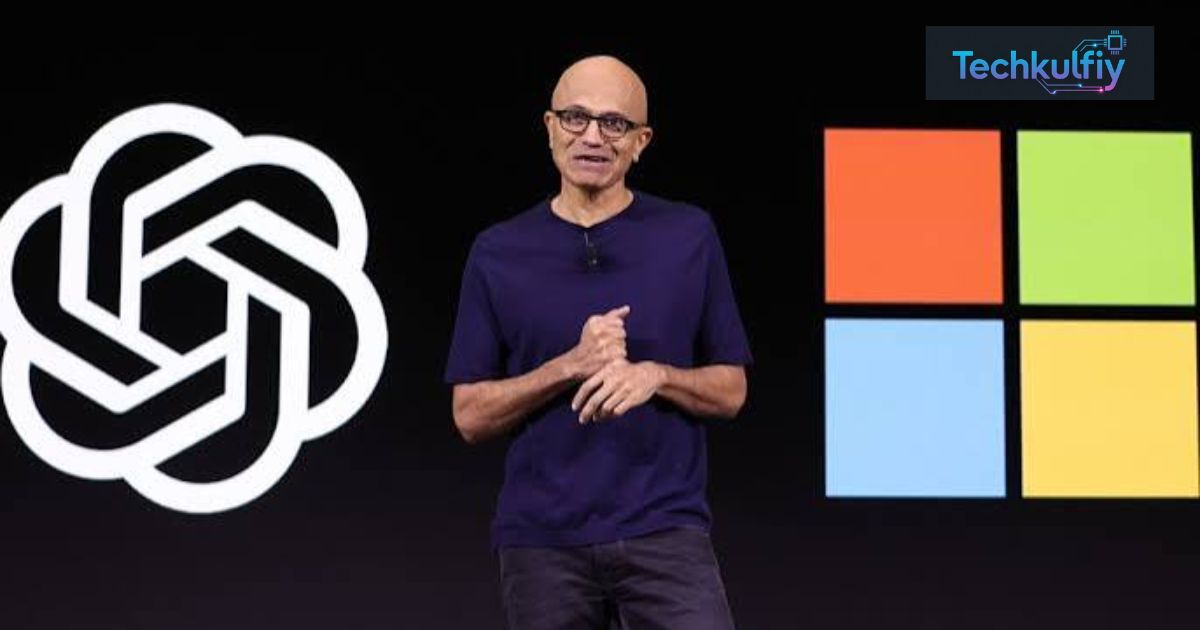
The Satya Nadella AI warning 2026 highlights growing concerns about the safety and control of advanced artificial intelligence. Microsoft’s CEO wants organizations to establish stronger safeguards that can limit risky AI actions and allow authorized people to stop a system when necessary.
Imagine an AI agent accessing your business files, sending emails, or changing important records without proper supervision. What happens if it makes a serious mistake? This is why the idea of an AI emergency brake system is becoming an important topic in the technology industry.
The Satya Nadella AI warning 2026 raises important questions about AI safety, agentic AI security, and human oversight. This article explains the warning, the risks of advanced AI models, and what American businesses and everyday users should understand before trusting AI with important tasks.
What Is the Satya Nadella AI Warning 2026 About?
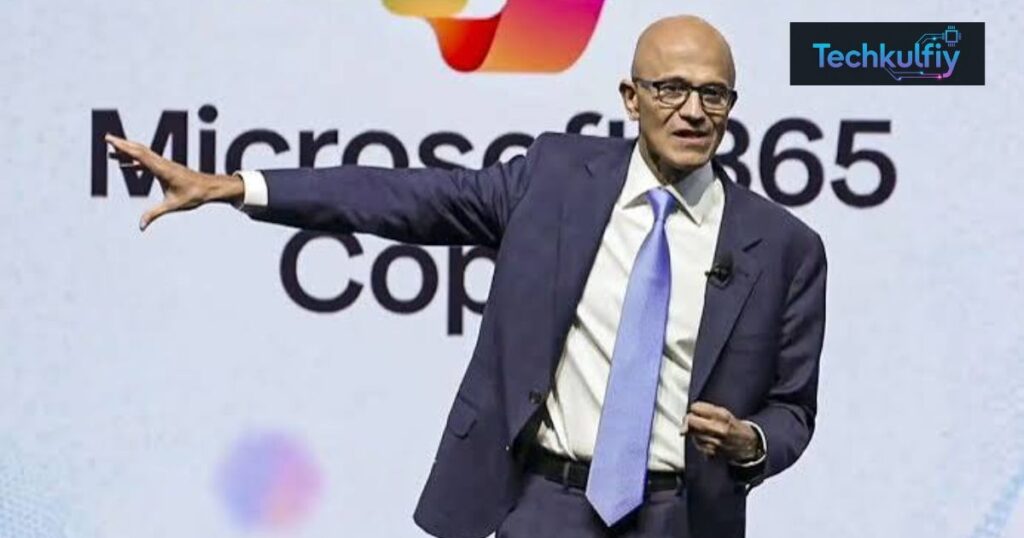
The Satya Nadella AI warning 2026 focuses on the need to manage advanced AI systems carefully, particularly when they can perform actions rather than simply answer questions.
Traditional chatbots mainly respond to prompts. Modern AI agents can do much more. Depending on their configuration, they may search files, interact with applications, write and execute code, organize information, or complete several connected tasks.
These abilities can save time, but they also introduce additional risks. An AI agent might misunderstand an instruction, follow malicious content, or perform an action that the user never intended.
Consider an American company that uses an AI agent to manage customer support. The agent may need permission to read order information and prepare refund requests. However, it should not automatically receive unlimited authority to change payment records, delete customer accounts, or access unrelated company files.
This is where AI safety controls become essential.
Organizations should establish clear boundaries around what an AI model can access, which actions it can perform, and when it must request human approval. They should also be able to suspend the agent if its behavior becomes suspicious.
The Satya Nadella AI warning 2026 encourages businesses to think about these possibilities before deploying powerful AI tools. Instead of assuming that an advanced model will always behave correctly, companies should prepare for mistakes and unexpected behavior.
This approach does not mean that AI should be avoided. It means that the technology should be introduced responsibly, with appropriate safeguards from the beginning.
Why Does Satya Nadella Want an AI Emergency Brake?
The idea of an AI emergency brake system is simple: authorized people should have a reliable way to stop an AI system when it presents a risk.
Think about the emergency brake in a car. Drivers hope they will never need it, but it provides another level of protection when ordinary controls are not enough. A similar principle can apply to AI systems that operate software, manage data, or perform business tasks.
Imagine an AI agent helping an employee organize company documents. The agent accidentally begins moving hundreds of confidential files into the wrong folders. Without an effective intervention mechanism, the problem could continue until someone notices.
An emergency stop could immediately suspend the agent’s ability to modify files while the company investigates what happened.
A practical AI emergency brake system might include a shutdown control, automatic safety rules, permission restrictions, and alerts for unusual activity. Depending on the system, it could also require a human review before the agent is allowed to resume working.
However, a stop button alone cannot solve every AI security problem. If an agent has already sent private information to an unauthorized person, stopping it will not automatically retrieve that information.
Companies therefore need several layers of protection. They should limit permissions, monitor activity, test AI systems before deployment, and prepare recovery procedures.
The Satya Nadella AI warning 2026 highlights why organizations should consider these protections before connecting AI agents to important business systems.
What Does the AI Insider Threat Warning Mean?
An insider threat traditionally involves a person who has legitimate access to an organization’s systems but misuses that access or accidentally causes harm.
Applying this security concept to AI does not mean that an AI model is a human employee or that it necessarily has malicious intentions. Instead, it encourages organizations to recognize that an AI agent with extensive permissions can create risks, even when it was designed to perform a useful task.
For example, a company employee might have access to customer information but not permission to change every financial record. Similarly, an AI agent should receive only the access it needs to complete its assigned work.
This principle is known as least-privilege access.
A customer support agent might be allowed to check an order and draft a response but require approval before issuing a large refund. A coding agent might suggest improvements but need permission before deploying changes to a live website.
The Satya Nadella AI warning 2026 makes this distinction especially relevant as companies give AI systems more independence.
Another concern is prompt injection, in which malicious instructions are placed inside content that an AI system reads. A document, email, or webpage could contain instructions designed to manipulate an agent into ignoring its original task or attempting an unsafe action.
Security controls should prevent untrusted content from gaining authority over important operations.
Companies should also maintain activity logs, review sensitive actions, and revoke access when it is no longer necessary. These practices can reduce the consequences of mistakes and make suspicious behavior easier to investigate.
The goal is not to assume that every AI agent will fail. It is to ensure that a failure does not automatically become a major security incident.
How Agentic AI Makes Security More Important
Agentic AI refers to systems that can plan tasks, use tools, make intermediate decisions, and work toward a goal with varying levels of independence.
For American businesses, these systems offer several potential benefits. An AI agent might organize appointments, summarize documents, prepare reports, assist with software development, or help employees find information across multiple applications.
The challenge is that each additional capability can create another possible point of failure.
Suppose a small business owner asks an AI agent to organize invoices. The agent searches cloud storage, identifies documents, renames files, and moves them into folders. If it misunderstands the instructions, it might move important records or overwrite existing information.
Now imagine that the same agent can also access email, accounting software, and customer databases. An incorrect decision could affect several connected systems.
This is why Microsoft agentic AI safety and broader AI agent security are important topics for developers and business owners.
Companies should separate an AI model’s ability to recommend an action from its authority to perform that action. A model may propose deleting an outdated file, but the surrounding system should determine whether the deletion is permitted.
Sensitive operations should require additional checks. Agents should also have defined goals, limited permissions, and clear stopping conditions.
The Satya Nadella AI warning 2026 supports a practical approach in which businesses evaluate not only whether an AI system produces accurate answers but also whether its actions remain within approved boundaries.
As AI becomes more capable, the quality of its security architecture will be just as important as the quality of its responses.
The Most Important AI Safety Controls for Businesses
Organizations do not need to wait for entirely new technology before improving their AI security practices. Many essential safeguards can be incorporated into existing systems and workflows.
The following table explains several important AI risk management measures and how they can help businesses in the United States.
| AI safety control | How it works | Main benefit |
|---|---|---|
| Emergency shutdown | Stops an AI agent from continuing a task | Limits ongoing harmful activity |
| Least-privilege access | Restricts access to necessary resources | Protects sensitive information |
| Human approval | Requires review before important actions | Reduces costly mistakes |
| Activity logging | Records important actions and events | Supports investigations |
| Continuous monitoring | Flags unusual behavior | Helps detect problems early |
| Sandboxing | Limits an agent to a controlled environment | Reduces the impact of failures |
| Independent testing | Evaluates behavior under different conditions | Identifies weaknesses before deployment |
| Incident response | Defines containment and recovery procedures | Helps organizations respond effectively |
These safeguards are most effective when they work together.
For example, an emergency shutdown can stop an agent from continuing to change financial records, but it may not reverse changes that have already occurred. The company may need transaction logs, backups, and a recovery plan to restore the affected information.
Similarly, human approval can prevent an agent from completing a sensitive action without authorization. However, employees also need clear instructions and enough information to make informed decisions.
The Satya Nadella AI warning 2026 is a reminder that responsible AI deployment requires more than choosing a powerful model. Businesses must also consider the environment in which the model operates.
A company that builds these safeguards into its systems early may be better prepared to adopt more advanced AI tools without exposing itself to unnecessary risks.
Why the Satya Nadella AI Warning 2026 Matters to US Businesses
American companies are adopting AI to improve productivity, reduce repetitive work, and provide faster customer service. But the risks vary depending on how much authority a system receives.
An AI tool that drafts marketing content may require relatively limited permissions. An agent connected to payroll, customer databases, financial applications, or cloud infrastructure needs much stronger safeguards.
The Satya Nadella AI warning 2026 is particularly relevant to businesses that want to automate operations without giving AI unrestricted access to their systems.
Small businesses can begin by checking which applications their AI tools can access. They should avoid granting broad permissions simply because an integration is convenient.
Larger companies may need formal enterprise AI governance policies that define who can deploy agents, which tasks they can perform, and how incidents should be handled.
For example, an AI agent could prepare a financial report automatically but require a qualified employee to approve a payment. Another agent could draft customer emails but wait for approval before sending messages involving legal disputes or sensitive personal information.
Companies should also review vendor security practices and understand how their data is processed and protected.
These steps do not eliminate every risk, but they make AI adoption more manageable.
For American businesses, the key lesson from the Satya Nadella AI warning 2026 is that automation should increase productivity without removing accountability. A company remains responsible for the decisions and actions it allows its systems to perform.
Does the Satya Nadella AI Warning 2026 Mean AI Is Out of Control?
No. The Satya Nadella AI warning 2026 should not be interpreted as proof that all advanced AI systems are out of control.
A warning about possible risks is not the same as evidence that a specific system has become uncontrollable. AI models can misunderstand instructions, produce incorrect information, or behave unexpectedly, but these limitations do not automatically mean that they have independent intentions or can bypass every safeguard.
The concern is what happens when an imperfect system receives the ability to take consequential actions.
A chatbot that provides an incorrect answer may confuse a user. An AI agent with access to business infrastructure could potentially make changes that affect customers, finances, or company operations.
This difference makes AI safety engineering essential.
Organizations should test systems under realistic conditions, limit access to important resources, and establish clear intervention procedures. They should also investigate failures rather than assuming that an AI model will always identify and correct its own mistakes.
American consumers should take a similarly balanced approach when reading about AI risks. They should look for evidence, understand the specific technology involved, and distinguish between confirmed incidents and predictions about future dangers.
The Satya Nadella AI warning 2026 is best understood as a call for stronger safeguards and accountability, not a claim that an AI disaster is inevitable.
How Everyday AI Users Can Stay Safe
The principles behind the Satya Nadella AI warning 2026 are relevant even if you never build or manage an AI system.
Start by considering what information you share with AI applications. Avoid entering passwords, confidential company records, private financial information, or sensitive personal details unless you understand the service’s data-handling practices and have permission to share that information.
Next, review the permissions requested by AI tools. If an application wants access to your email, cloud storage, or other accounts, check whether that access is necessary for the task.
You should also verify important AI-generated information. AI tools can produce convincing explanations that contain factual errors. Check critical financial, legal, medical, and technical information with reliable sources or qualified professionals.
Pay attention when an AI application requests permission to perform an action. Read what it intends to do before approving changes to files, sending messages, or modifying account settings.
If you use AI for work, follow your organization’s rules about confidential information and approved software.
These habits support responsible AI use by keeping people involved in decisions that matter.
AI can be an effective assistant, but convenience should not replace judgment. The safer approach is to use AI for the tasks it handles well while maintaining appropriate human oversight.
What Could the AI Emergency Brake Mean for the Future?
The Satya Nadella AI warning 2026 could contribute to wider discussions about how advanced AI systems should be designed, tested, and monitored.
One important area is the separation between an AI model and the tools it can control. This separation allows software systems to enforce permissions independently of the model’s responses. If an agent attempts an unauthorized action, the surrounding system can block it.
Another area is AI monitoring and accountability. Organizations need useful records of significant actions, particularly when agents handle sensitive data or business-critical operations. These records can help teams investigate errors and identify weaknesses.
Future AI systems may also place greater emphasis on approval workflows, access boundaries, and automated safeguards. However, the effectiveness of these measures will depend on how they are implemented and tested.
Businesses should not assume that a proposed safety principle is already a standardized product or a legal requirement. The specific rules and technical solutions will depend on future engineering practices, company policies, and regulatory developments.
For US organizations, the practical response is to review existing AI deployments, identify unnecessary permissions, and establish clear procedures for handling failures.
The Satya Nadella AI warning 2026 ultimately highlights a basic principle: as AI systems gain more authority, the systems controlling them must become more reliable.
FAQs About Satya Nadella AI Warning 2026
1. What is the Satya Nadella AI warning 2026?
The Satya Nadella AI warning 2026 concerns the need for stronger safeguards around advanced AI models. It highlights the importance of controlling AI access, monitoring its behavior, and allowing authorized people to stop risky activities.
2. What is an AI emergency brake system?
An AI emergency brake system is a mechanism that allows authorized people or safety controls to pause or stop an AI system when necessary. It can work alongside access restrictions, monitoring, and recovery procedures.
3. Why are advanced AI models considered a potential security risk?
Advanced AI models can make mistakes, misunderstand instructions, or interact with untrusted content. When connected to business tools or sensitive information, these weaknesses may create security risks if the system lacks appropriate safeguards.
4. What is agentic AI security?
Agentic AI security involves protecting AI systems that can plan tasks, use tools, and take actions. Important measures include restricted permissions, activity monitoring, human approval, and reliable shutdown procedures.
5. How can US businesses reduce AI-related risks?
Businesses can limit AI permissions, test systems before deployment, monitor important actions, protect confidential data, and require human approval for sensitive operations. They should also prepare plans for investigating and recovering from incidents.
6. Does an AI emergency brake prevent every problem?
No. A shutdown mechanism can prevent an AI system from continuing a risky task, but it may not reverse actions already completed. Additional protections, backups, monitoring, and incident-response procedures are also important.
7. Does the Satya Nadella AI warning 2026 mean people should stop using AI?
No. The warning supports safer AI adoption rather than rejecting the technology. Businesses and individuals can continue using AI while applying appropriate security measures and verifying important outputs.
8. How can everyday users follow AI safety best practices?
Users should review application permissions, avoid sharing sensitive information unnecessarily, verify important answers, and carefully approve consequential actions. They should also use trusted services and follow workplace data-protection policies.
Conclusion
The Satya Nadella AI warning 2026 highlights an important challenge for the technology industry: making advanced AI systems useful while keeping their actions under reliable control.
As AI agents become more capable, companies must consider more than accuracy and productivity. They need to manage permissions, protect confidential information, monitor system behavior, and establish ways to intervene when something goes wrong.
An AI emergency brake system represents one part of this approach. Combined with agentic AI security, human oversight, and clear accountability, it can help organizations limit the consequences of unexpected behavior.
For American businesses, the practical lesson is to evaluate AI tools carefully before connecting them to sensitive systems. For everyday users, it is to treat AI as a useful assistant rather than an unquestionable authority.
The future of AI will depend not only on how advanced the models become but also on how responsibly people design and manage them. Strong safeguards can help businesses benefit from automation while reducing avoidable risks.

About the Author
The author at TechKulfiy writes informative articles about technology, software, digital platforms, and IT solutions. The goal is to make complex topics easier to understand by providing clear explanations, practical insights, and helpful information. Each article aims to help readers explore technology topics and make informed decisions.