
OpenAI Math Proofs are mathematical results created with the help of advanced artificial intelligence. They show how AI can solve complex problems and support mathematical research.
Can artificial intelligence solve problems that challenge expert mathematicians for years? OpenAI Math Proofs are raising new questions about the future of mathematics and AI reasoning.
From advanced mathematical discoveries to formal proof verification, OpenAI Math Proofs could change how researchers work. Discover their benefits, limitations, and impact on future mathematical research.
What Are OpenAI Math Proofs?
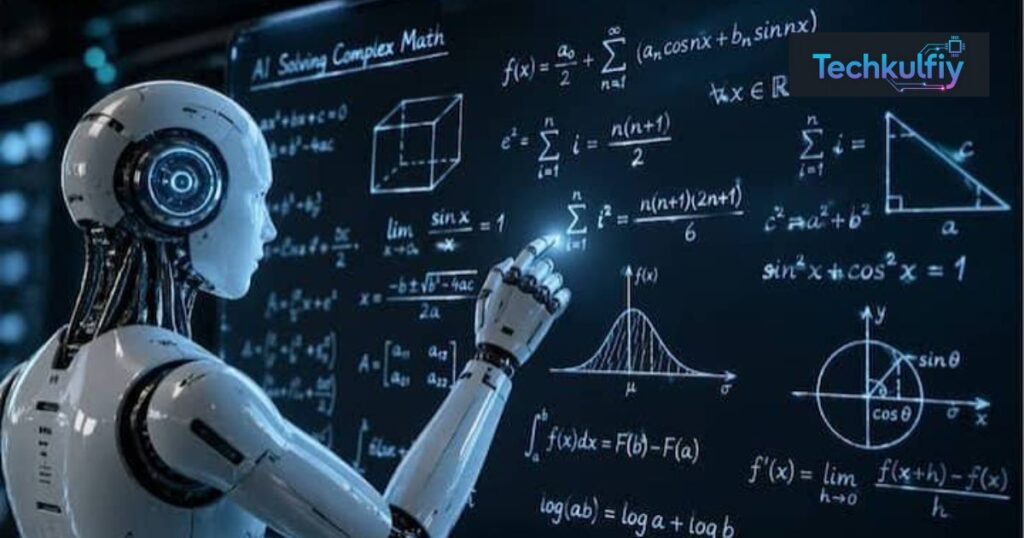
OpenAI Math Proofs refer to mathematical arguments and research results produced with assistance from OpenAI’s advanced AI models. These results can involve complicated equations, abstract mathematical structures, and problems that require several connected steps of logical reasoning.
On October 6, 2026, OpenAI announced a broad collection of mathematical results generated by an internal frontier model. The company published research materials in a GitHub repository and shared information about its methods, computational resources, and formal proof development.
The announcement attracted attention because the results covered numerous mathematical areas. Rather than presenting AI as a tool for basic calculations, OpenAI demonstrated how an advanced model could contribute to specialized research.
To understand OpenAI Math Proofs, it is important to distinguish between a mathematical answer and a mathematical proof. An answer provides a result, while a proof establishes why that result follows logically from accepted assumptions.
For example, an AI model might propose a formula that appears to solve a difficult equation. A mathematician must still determine whether the formula works in every required case, whether the reasoning contains hidden assumptions, and whether the result addresses the original problem.
This process makes mathematical proof verification essential. Even an impressive AI-generated explanation can contain an error that becomes visible only after detailed examination.
OpenAI Math Proofs therefore represent both an opportunity and a challenge. AI systems may help researchers explore difficult questions faster, but the mathematical community must establish the reliability and significance of the resulting discoveries.
Why OpenAI Math Proofs Are Making Headlines
The recent OpenAI mathematics announcement attracted attention because of the scale of the research material and the difficulty of the problems involved.
OpenAI reported a collection of results produced by an internal model and provided access to research manuscripts, formalizations, and additional technical information. Independent reporting described the release as hundreds of manuscripts grouped into hundreds of related result families.
The scale matters because traditional mathematical research usually develops through a gradual process. Researchers study existing literature, formulate questions, investigate possible solutions, and submit their findings for examination by other experts.
An AI system can generate candidate results much faster than a traditional research workflow. However, faster production does not necessarily mean faster scientific acceptance.
The community must still investigate whether each argument is correct, whether its assumptions are appropriate, and whether it contributes something genuinely new. Some results may be important, while others may need clarification, revision, or additional verification.
This is one reason OpenAI Math Proofs have generated mixed reactions. Researchers may welcome new ideas while questioning the quality of the explanations or the process used to communicate the discoveries.
Another issue is the difference between announcing progress and establishing a widely accepted mathematical result. An AI-generated manuscript is not automatically equivalent to a fully reviewed, independently verified discovery.
The announcement is therefore important not simply because of the number of papers produced. It also raises a larger question: how should the scientific community evaluate research when AI can generate mathematical material at an unprecedented scale?
How Advanced Mathematics AI Solves Difficult Problems
Advanced Mathematics AI combines machine learning with mathematical problem-solving techniques. Instead of relying only on memorized information, an advanced model may explore possible approaches, identify patterns, develop intermediate steps, and revise its reasoning when an approach fails.
A difficult mathematical problem may have several possible paths toward a solution. Some methods may produce complicated expressions, while others reveal a simpler structure. AI systems can help investigate these alternatives and identify approaches worth examining.
For instance, consider a researcher working on a complex equation. The researcher might investigate different substitutions, compare special cases, and look for relationships with established theorems. An AI model could propose several possible strategies and help test their mathematical consequences.
This capability can be useful when a problem requires extensive calculations or when researchers need to explore many possible approaches.
However, AI mathematical reasoning is not the same as guaranteed correctness. A model may generate an argument that looks convincing but contains a logical gap. It may also apply a theorem outside the conditions under which that theorem is valid.
The strongest research workflow combines AI-generated suggestions with rigorous verification. Researchers can use a model to explore possibilities, examine promising results independently, and employ formal tools when appropriate.
OpenAI Math Proofs demonstrate why this combination matters. AI can expand the range of ideas available to researchers, while mathematical expertise helps determine which ideas survive detailed scrutiny.
What Makes AI-Generated Mathematical Proofs Different?
Traditional mathematical research depends on human reasoning, existing literature, experimentation, and logical analysis. AI-assisted research can include many of these elements, but it changes how researchers generate and investigate possible solutions.
An AI model may explore numerous approaches before producing a candidate proof. This can help researchers investigate questions that would otherwise require substantial time and effort.
Nevertheless, the quantity of generated reasoning creates its own challenge. A long explanation can be difficult to inspect, particularly when it introduces unfamiliar definitions or depends on several intermediate claims.
AI-generated mathematical proofs must therefore be judged by their logical structure rather than their length or apparent complexity.
A useful proof should identify its assumptions, explain the necessary steps, and establish the conclusion. If a key step is missing, the proof may fail even when the final statement happens to be correct.
Originality also matters. A mathematically valid result may already exist in published literature. Researchers must compare a candidate discovery with previous work before describing it as new.
The following table explains the main differences between AI-assisted mathematics and traditional research.
| Research factor | AI-assisted mathematics | Traditional mathematical research |
|---|---|---|
| Idea generation | Can explore multiple candidate approaches quickly | Relies on human investigation and creativity |
| Calculations | May automate complicated or repetitive work | Uses manual calculations and computational tools |
| Proof development | Can generate candidate arguments | Develops arguments through human reasoning |
| Verification | Requires logical checking and expert review | Requires logical checking and expert review |
| Originality | Must be compared with existing research | Must be compared with existing research |
| Main challenge | Reliability and interpretation of generated results | Time, complexity, and human limitations |
The important point is that neither method should be accepted without examination. OpenAI Math Proofs could become more valuable as researchers develop better methods for evaluating AI-generated arguments.
Can OpenAI Math Proofs Reach the Fields Medal Standard?
The Fields Medal is one of the most prestigious honors in mathematics. It recognizes outstanding mathematical achievement, and its significance comes from the depth and importance of the work being recognized.
Comparing OpenAI Math Proofs with the Fields Medal standard requires more than counting the number of results an AI system produces.
A mathematical discovery may solve a difficult technical question without changing the direction of its field. Another discovery may introduce a new method that influences research for decades.
Researchers must therefore examine the originality, depth, usefulness, and broader influence of an AI-generated result before making comparisons with exceptional human mathematical achievements.
The same distinction applies to famous unsolved problems. A claim that an AI system has solved a major conjecture requires careful examination of the exact mathematical statement, the proof, and the assumptions involved.
A modified version of a famous problem is not necessarily equivalent to solving the original problem. Likewise, a promising partial result should not be described as a complete solution.
The Fields Medal standard is therefore better understood as a question about mathematical significance than a simple performance score.
OpenAI Math Proofs may help researchers investigate difficult questions and generate new approaches. Whether individual results become major mathematical achievements depends on their validity, originality, and influence.
AI does not need to replace human mathematicians to make an important contribution. A system that helps researchers develop a useful theorem or discover a powerful new technique could still have a lasting impact.
The Role of Formal Proof Verification in OpenAI Math Proofs
Formal proof verification is one of the most important methods for checking mathematical arguments generated by AI.
In ordinary mathematical writing, researchers explain their reasoning using natural language, equations, and established results. Other mathematicians examine the argument to determine whether each step is justified.
Formal verification takes a more structured approach. A proof is represented in a formal language, allowing software to check whether the logical steps follow from the stated assumptions and rules.
OpenAI has shared formalizations of many of its mathematical proofs using Lean. Lean is a proof assistant that allows users to express mathematical statements and construct proofs that a computer can check.
This is a significant part of the OpenAI Math Proofs story because it provides a way to inspect certain results beyond simply reading an AI-generated explanation.
However, formal verification has limitations. A computer can verify a formal proof within a specified system, but researchers must still ensure that the formal statement accurately represents the original mathematical problem.
A formally verified result may also be less important than it initially appears. It could establish a known theorem, rely on assumptions that limit its usefulness, or contribute little to the wider field.
Formalization can also require considerable effort. If an AI-generated argument is incomplete or difficult to understand, researchers may need to revise it before expressing it in a formal proof system.
The future of AI proof verification will depend on making these processes more reliable and accessible. Better tools could help mathematicians inspect results, identify gaps, and reproduce discoveries more efficiently.
For OpenAI Math Proofs, formal verification offers an important safeguard, but it should work alongside independent mathematical review rather than replace it.
How OpenAI Math Proofs Could Affect Graduate Students
The Graduate Students Impact of AI mathematics deserves serious attention because graduate education involves more than obtaining correct answers.
Students learn how to formulate research questions, understand previous work, identify useful methods, and develop independent mathematical judgment. These skills often require years of practice.
AI tools could support this process by explaining difficult concepts, suggesting alternative approaches, and helping students explore unfamiliar mathematical topics.
For example, a graduate student investigating a theorem might use AI to understand a technical definition or test a possible approach. The student could then discuss the idea with a supervisor and determine whether it contributes to the research.
This type of AI-assisted learning can make mathematical research more accessible. Students may be able to investigate more ideas and receive additional explanations when working through difficult material.
However, excessive dependence on AI could create problems. If students accept generated proofs without understanding them, they may miss the reasoning skills that graduate education is intended to develop.
There is also a challenge involving research opportunities. If AI systems can generate large quantities of candidate results, students may need new ways to identify meaningful questions and distinguish important discoveries from routine output.
Universities will need clear policies explaining how AI can be used in assignments, research projects, and publications. Students should understand disclosure requirements and remain responsible for the accuracy of their work.
The impact will not be identical across every mathematical field. Some tasks may become easier to automate, while other areas will continue to depend heavily on conceptual understanding, interpretation, and creative problem selection.
Ultimately, Graduate Students Impact will depend on how universities and researchers adapt. AI can become a useful research assistant, but students still need to learn how to think mathematically and defend their conclusions.
OpenAI Math Proofs and the Future of Mathematical Research
OpenAI Math Proofs could change the way researchers approach mathematical discovery. AI models may help investigate conjectures, explore complicated structures, and generate possible proofs that researchers can examine.
One important possibility is faster exploration. Researchers often investigate several approaches before discovering which one is promising. AI may help generate candidate methods and identify useful intermediate results.
Another possibility is improved access to technical knowledge. A model may help explain unfamiliar terminology, summarize established methods, or suggest connections between different mathematical topics.
However, the future of AI-assisted mathematical research will depend on the quality of these contributions. Generating many results is not enough if researchers cannot understand, verify, or reproduce them.
Scientific transparency will therefore become increasingly important. Research teams need to document their methods, explain their assumptions, and provide enough information for independent experts to evaluate their claims.
Academic institutions may also need to reconsider how they evaluate research output. The number of papers produced should not become more important than the quality and significance of the findings.
For OpenAI Math Proofs, a responsible approach would encourage collaboration between AI developers, mathematicians, universities, and independent reviewers.
Such collaboration could improve the reliability of AI-generated research while helping researchers identify applications in areas such as optimization, computer science, physics, and engineering.
The broader lesson is that mathematical progress depends on more than computation. Researchers must choose meaningful questions, understand the results, and determine how new findings relate to existing knowledge.
Benefits and Risks of Advanced Mathematics AI
Advanced Mathematics AI offers several potential benefits. It can help researchers explore alternative solutions, investigate complicated calculations, and develop ideas that might otherwise take longer to discover.
AI tools may also support mathematical education by explaining difficult concepts and helping students understand different solution strategies. When used carefully, they can make technical material easier to explore.
Another benefit is the possibility of combining AI with automated theorem proving. This approach could help researchers check formal arguments and identify logical errors more efficiently.
However, these advantages come with risks. AI-generated proofs may contain mistakes, repeat known results, or present unclear arguments. Researchers may also struggle to review large amounts of generated material.
A further concern is unequal access. If the most capable mathematical AI systems are expensive or restricted, some universities and independent researchers may find it harder to participate in AI-assisted discoveries.
There are also questions about credit and responsibility. When a researcher uses AI to develop a result, academic communities must consider how contributions should be documented and who is responsible for errors.
The following comparison summarizes these issues.
| Potential benefits | Possible risks |
|---|---|
| Faster exploration of mathematical ideas | Incorrect or incomplete arguments |
| Support for complex calculations | Difficulty evaluating large research collections |
| New approaches to established problems | Confusion between partial and complete solutions |
| Assistance with learning technical concepts | Overdependence on AI-generated explanations |
| More formal proof checking | Incorrectly formalized problem statements |
| Collaboration between humans and AI | Questions about attribution and research credit |
The best approach is to use AI as a tool for mathematical investigation while preserving independent verification and human responsibility.
OpenAI Math Proofs may represent meaningful progress, but the lasting value of that progress will depend on how well researchers manage these challenges.
What Readers Should Know About OpenAI Math Proofs
The growing attention around OpenAI Math Proofs can make it tempting to assume that AI has already solved every major mathematical challenge. That conclusion would be premature.
OpenAI has announced a large collection of mathematical results, but each result must be assessed individually. Some may prove highly valuable, while others may require corrections or further explanation.
Readers should distinguish between a company’s announcement, an independently verified result, and a discovery that has gained wider acceptance among mathematicians.
These are different stages of scientific evaluation. A research announcement can introduce a promising result, but independent experts still need to examine the details.
It is also important to understand that the model responsible for the October 2026 release was described as an internal frontier model. The announcement did not establish that every public AI assistant can reproduce the same research performance.
For students, developers, and researchers, the practical lesson is straightforward: use AI to explore ideas, but do not treat generated mathematical claims as automatically correct.
When a result matters, inspect its assumptions, examine its reasoning, compare it with existing literature, and seek independent verification.
This approach makes it possible to benefit from AI mathematical discoveries without confusing promising research with established mathematical knowledge.
FAQs About OpenAI Math Proofs
What are OpenAI Math Proofs?
OpenAI Math Proofs are mathematical arguments and research results produced with the help of OpenAI AI models. Their value depends on logical correctness, originality, and mathematical significance.
What did OpenAI announce on October 6, 2026?
OpenAI announced a broad collection of mathematical results produced by an internal frontier model. It also shared research materials, information about its computational methods, and formalizations of many proofs using Lean.
Can AI solve advanced mathematics problems?
AI systems can contribute to difficult mathematical problems by generating candidate solutions and exploring possible reasoning paths. However, the correctness and originality of each result must be checked.
What is formal proof verification?
Formal proof verification uses precise logical rules and specialized software to check mathematical arguments. It can help researchers identify errors and establish whether a formalized proof follows from its assumptions.
Have OpenAI Math Proofs reached the Fields Medal standard?
There is no single benchmark that establishes equivalence with the Fields Medal standard. Individual results must be evaluated for originality, depth, correctness, and their influence on mathematical research.
How could OpenAI Math Proofs affect graduate students?
AI may help graduate students explore mathematical concepts and investigate possible solutions. However, students must continue developing independent reasoning skills and follow their institutions’ policies on AI use.
Can AI-generated mathematical proofs contain errors?
Yes. AI-generated proofs may include missing steps, invalid assumptions, or incorrect reasoning. Independent mathematical review and formal verification can help identify such problems.
Will AI replace mathematicians in the future?
AI may automate certain mathematical tasks and change research workflows, but choosing important problems, interpreting discoveries, and evaluating their significance will remain essential. The extent of future automation is still uncertain.
Conclusion
OpenAI Math Proofs highlight how artificial intelligence is expanding into advanced mathematical research. AI models can explore difficult problems, propose candidate solutions, and help researchers investigate ideas at a scale that was previously challenging.
However, mathematical progress requires more than generating answers. Researchers must establish that proofs are correct, results are original, and discoveries contribute meaningful knowledge.
The future of Advanced Mathematics AI will depend on reliable verification, transparent research practices, and effective collaboration between humans and machines. If these foundations improve, AI could become an increasingly valuable partner in mathematical discovery without removing the need for human expertise.
