


NeuraLynx is a neurotechnology company focused on neural recording and electrophysiology.
It develops systems for capturing and studying electrical brain signals.
Its ATLAS platform supports advanced clinical and research applications.
What if you could record brain signals while studying neural responses?
NeuraLynx technology helps make this kind of detailed recording possible.
Its systems connect electrodes, hardware, and software in one workflow.
NeuraLynx offers the ATLAS Neurophysiology System and specialized headboxes.
Its ATLAS Stim Headbox supports recording and controlled electrical stimulation.
These solutions are useful in clinical neuroscience and electrophysiology research.
What Is NeuraLynx?
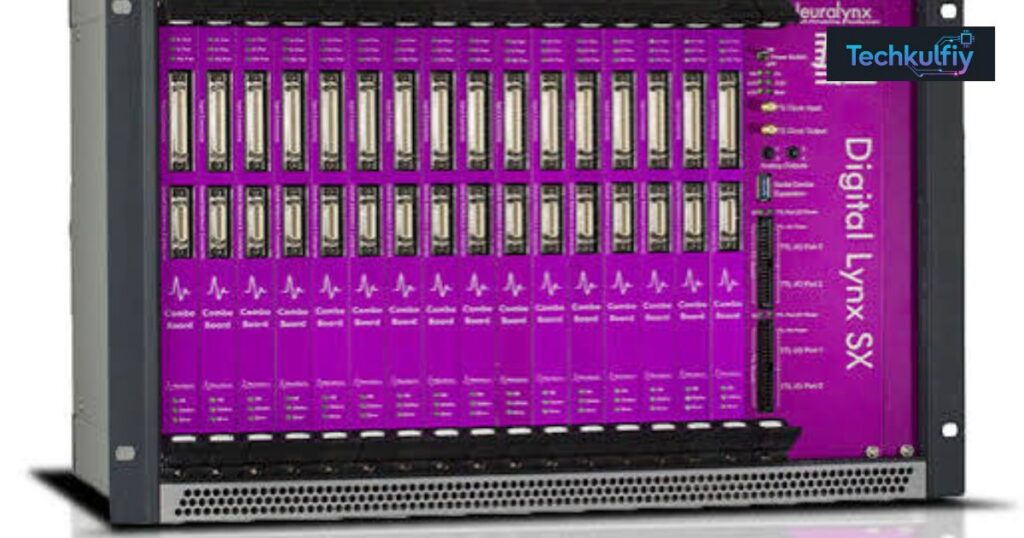
NeuraLynx is a neurotechnology company focused on electrophysiology data recording systems and solutions for neuroscience research and human medical data recording. Its technology covers both research-oriented systems and clinical products. The company describes its work around data acquisition, electrophysiology recording, experiment accessories, and long-term technical support.
At its simplest, NeuraLynx helps researchers and clinical teams turn tiny electrical signals from neural tissue into usable digital information. Think of the brain as a huge electrical network. Neurons communicate through electrical and chemical processes, yet the signals available at an electrode can be extremely small. A reliable neural recording system therefore needs much more than a simple wire. It needs appropriate electrode interfaces, signal conditioning, amplification, digitization, software, and careful handling of noise.
This is why electrophysiology systems are so important. They allow specialists to observe electrical activity from different parts of the nervous system. Depending on the setup, the recording may involve surface EEG, cortical electrodes, intracranial electrodes, microwires, or other specialized interfaces.
NeuraLynx’s clinical portfolio includes the ATLAS Neurophysiology System, ATLAS acquisition hardware, ATLAS headboxes, ATLAS headstages, and software. Its research portfolio also includes systems such as FreeLynx and LabLynx. (
The company says its ATLAS platform was released as an FDA-cleared system for human use in 2011. Its current ATLAS ecosystem is designed around high-performance data acquisition and flexible electrophysiology workflows. (NeuraLynx)
| Area | Role in Neurophysiology |
|---|---|
| NeuraLynx | Develops electrophysiology recording and related neurotechnology |
| ATLAS | Provides a clinical and research neural acquisition platform |
| Headbox | Connects electrode interfaces with acquisition hardware |
| Acquisition amplifier | Converts and processes incoming neural signals |
| Software | Supports recording, visualization, processing, and control |
| Electrode array | Captures electrical activity from neural tissue |
The important point is that NeuraLynx isn’t simply one device. It is an ecosystem of neural recording hardware, software, interfaces, and accessories designed around electrophysiology workflows.
How Does NeuraLynx Technology Work?
The basic concept behind NeuraLynx technology is easier to understand when you follow the signal from the electrode to the computer. An electrode first detects electrical activity. The system then receives that signal through an appropriate electrode interface. From there, the signal can be buffered, amplified, digitized, transmitted, displayed, recorded, and analyzed.
In a typical workflow, the path looks like this:
Electrode → Headbox/Interface → Amplifier → Signal Digitization → ATLAS System → Software → Recording and Analysis
A headbox is especially important because it sits between the electrode array and the acquisition system. The interface needs to preserve useful signals while reducing unwanted interference. NeuraLynx describes active high-impedance buffering in its ATLAS headbox family as a way to maintain signal fidelity and reduce noise in clinical environments.
The next stage involves signal acquisition. Neural signals are analog signals in the physical world. Computers work with digital information. The system therefore needs accurate signal digitization to convert the incoming electrophysiological signals into digital data.
The ATLAS Acquisition Amplifier, for example, supports simultaneous sampling and high-resolution acquisition across its supported channels. NeuraLynx states that the amplifier can sample at 40 kHz per channel and support up to 512 channels, depending on the configuration.
This process matters because neural activity can contain information at different time scales. A system designed for electrophysiology may need to capture slower field potentials as well as much faster neural events. That is why bandwidth, sampling rate, input range, reference selection, and noise performance all matter.
The ATLAS system also uses configurable references. In simple terms, a reference gives the recording system a comparison point for interpreting electrical signals. Good reference selection can make a major difference when researchers work with multiple types of electrodes or signals.
The software side is equally important. NeuraLynx’s Pegasus software, for example, supports integrated electrophysiology recording, experiment control, digital signal processing, and responsive displays. It can process signals such as LFP, EEG, and single-unit action potentials.
This combination of hardware and software turns raw electrical activity into information that researchers and clinical teams can actually examine.
NeuraLynx ATLAS Neurophysiology System
The NeuraLynx ATLAS Neurophysiology System is the central platform in NeuraLynx’s clinical technology ecosystem. NeuraLynx describes ATLAS as a complete solution for human single-unit recording with an integrated high-performance data acquisition system. The system is designed for clinical environments while also supporting research signals from macro and microelectrodes.
One of the strongest aspects of the ATLAS Neurophysiology System is its ability to handle different types of electrophysiological signals within one acquisition environment. NeuraLynx states that ATLAS can record surface EEG, intracranial signals, and microwire signals. Its configurations can range from 32 to 512 DC-wideband channels.
That flexibility becomes valuable in clinical neuroscience because neural signals aren’t all the same. A macroelectrode might capture a broad electrical pattern across an area, while a microwire can target much more localized activity. A useful acquisition platform needs to accommodate those differences without forcing researchers into an overly rigid setup.
The system also supports real-time access to acquired data. This can be important for experiments where researchers need to observe signals while an experiment is running rather than waiting until the entire recording session ends.
Another important feature is the relationship between the ATLAS amplifier, headboxes, headstages, and software. These components aren’t isolated gadgets. They work together as a system.
| ATLAS Component | Main Function |
|---|---|
| ATLAS Acquisition Amplifier | High-resolution neural data acquisition |
| ATLAS Headboxes | Electrode interfacing and buffered recording |
| ATLAS Headstages | Interface with electrode tails and related connections |
| Pegasus Software | Recording, processing, display, and experiment control |
| ATLAS Stim Headbox | Recording interface with controlled stimulation capability |
The platform is particularly relevant to areas such as epilepsy research, deep brain stimulation research, and cognitive electrophysiology. NeuraLynx specifically identifies advanced recording applications in these research environments.
A useful way to understand ATLAS is to imagine a professional recording studio. The electrodes are like microphones collecting different sounds. The acquisition hardware is the recording console. The software is the control room. Each component must work correctly because poor performance at one stage can affect the final recording.
NeuraLynx ATLAS Stim Headbox
The NeuraLynx ATLAS Stim Headbox is a specialized clinical interface designed for recording and controlled stimulation. NeuraLynx states that it connects third-party macro electrode contact arrays, including ECoG, depth, grid, and strip arrays, to the ATLAS Neurophysiology System.
The device is described as a 64-channel headbox that can continuously record from intracranial electrodes while stimulation takes place. According to NeuraLynx, the system can record neural activity occurring as little as 200 microseconds after stimulation.
This capability is important because stimulation can create electrical artifacts that make recording difficult. A system designed specifically for recording during stimulation needs hardware and software that can handle that demanding environment.
The ATLAS Stim Headbox buffers incoming electrode signals so the ATLAS system can digitize them. At the same time, the device can deliver controlled stimulation to electrodes. NeuraLynx says the hardware contains an encased amplifier and embedded firmware responsible for generating and delivering stimulation energy.
The device isn’t designed to operate independently. NeuraLynx specifically states that the ATLAS Stim Headbox is an accessory to the ATLAS Neurophysiology System and cannot be used as a stand-alone stimulator. The dedicated ATLAS Stim Headbox Software also works with NeuraLynx’s Pegasus software rather than functioning as standalone software.
“Stimulate while recording continuously from 64 channels of intracranial electrodes.” — NeuraLynx
That short description captures the key idea. The system isn’t simply a stimulation device. Its value comes from combining stimulation with continuous neural recording within an integrated ATLAS environment.
Key Features and Specifications of the ATLAS Stim Headbox
The NeuraLynx ATLAS Stim Headbox combines several functions that are useful in demanding electrophysiology workflows. Its core design supports recording, stimulation, electrode impedance measurement, and communication with the control software.
NeuraLynx lists 64 channels with constant-current and voltage-mode stimulation. It also lists eight references that can be used for stimulation and impedance measurement. The system provides high-input-impedance buffering and per-channel safety limits for stimulation voltage and current.
The device uses a fiber optic Ethernet connection for communication between the headbox and its control software. This connection handles stimulus upload, status information, and sampled stimulation waveform data. NeuraLynx also states that the system can record delivered voltage and current stimulation waveforms.
| Specification | ATLAS Stim Headbox |
|---|---|
| Channel configuration | 64 channels |
| Device category | clinical headbox |
| Electrode interface | Third-party macro electrode arrays |
| Recording | Continuous intracranial recording |
| Stimulation modes | Constant current and voltage mode |
| References | 8 references |
| Impedance measurement | Available across channels and references |
| Communication | fiber optic Ethernet connection |
| Control | ATLAS Stim Headbox Software |
| Firmware | Embedded stimulation-control firmware |
The FDA record identifies the ATLAS Stim Headbox and associated components under 510(k) K250094. The listed device family includes several connector configurations, fiber-optic connections, interface cables, an expansion panel, and the ATLAS Stim Headbox Software.
Another useful detail is that NeuraLynx offers different connector options for the headbox. The official product page lists Nihon Kohden, Touchproof, and Natus high-density configurations.
These details may sound technical, but they have a practical purpose. In a clinical or research environment, the interface has to match the electrode system being used. A connector isn’t just a plug. It is part of the complete signal pathway.
NeuraLynx Products and Neurophysiology Solutions
The NeuraLynx neurophysiology system extends beyond one headbox. The company offers a wider group of clinical and research products designed around electrophysiology recording and experiment workflows.
The clinical portfolio includes the ATLAS Neurophysiology System, ATLAS Acquisition Amplifier, ATLAS Headboxes, ATLAS Headstages, ATLAS Modular Headstages, Pegasus software, and related accessories.
On the research side, NeuraLynx also offers systems such as FreeLynx and LabLynx. LabLynx, for example, uses digital multiplexing headstages available in 16-, 32-, and 64-channel configurations. The company describes this approach as reducing wire count, weight, size, and cost.
| Product or System | Main Focus |
|---|---|
| ATLAS Neurophysiology System | Clinical and research electrophysiology |
| ATLAS Acquisition Amplifier | High-bandwidth neural acquisition |
| ATLAS Stim Headbox | Recording with controlled stimulation |
| Pegasus Software | Recording and signal processing |
| FreeLynx | Wireless neural data acquisition |
| LabLynx | Portable research data acquisition |
The distinction between these products matters. Not every NeuraLynx product has the same intended use or regulatory status. A research device and a clinical device shouldn’t be treated as interchangeable simply because they both record neural signals.
This broader ecosystem also shows why NeuraLynx is better understood as a neurophysiology technology platform rather than a single medical device.
Clinical Applications of NeuraLynx Technology
The clinical value of NeuraLynx technology comes from its ability to support detailed recording of electrophysiological signals. Depending on the specific product and approved configuration, these systems can support clinical neuroscience workflows involving surface and intracranial recordings.
Intracranial neural recording is one important area. Instead of recording electrical activity only from the scalp, intracranial systems can acquire signals much closer to the source. This can provide more localized information about brain activity.
ECoG electrodes, depth electrodes, grid electrodes, and strip electrodes can serve different recording purposes. ECoG and grid or strip configurations can capture cortical activity, while depth electrodes can record from deeper brain structures.
The ATLAS platform is also relevant to cognitive electrophysiology and epilepsy-related research. NeuraLynx describes ATLAS as supporting applications involving epilepsy, DBS, and cognitive electrophysiology research.
The ATLAS Stim Headbox adds clinical brain stimulation capability to the recording workflow. Its controlled stimulation functions can allow investigators to deliver electrical stimulation through supported electrode contacts while recording the resulting activity.
This creates an important feedback loop. A researcher can stimulate a neural site and then observe how the brain responds. In that sense, electrical stimulation and neural signal recording become two parts of the same experimental workflow.
A Practical Case Study: Recording During Stimulation
Consider a hypothetical clinical neuroscience research session involving intracranial electrodes. A research team wants to observe neural activity while applying controlled stimulation to selected electrode contacts.
The electrode array connects to the ATLAS Stim Headbox. The headbox buffers incoming signals and provides the connection to the ATLAS acquisition environment. The stimulation parameters are managed through the dedicated software. During stimulation, the system continues recording the neural signals rather than simply disconnecting the recording pathway.
After stimulation, the team can examine the recorded data to determine how neural activity changed. This kind of workflow illustrates why an integrated electrode stimulation interface can be useful. Instead of treating recording and stimulation as completely separate operations, the system brings them together within one controlled environment.
This example doesn’t mean the device independently diagnoses or treats a patient. Its purpose and permitted use depend on the specific regulatory authorization, clinical protocol, hardware configuration, and professional oversight involved.
FDA 510(k) Clearance and Regulatory Status
For a USA audience, the regulatory status of the ATLAS Stim Headbox deserves careful attention. The FDA lists K250094 for the ATLAS Stim Headbox. The FDA record identifies Neuralynx, Inc. as the applicant and gives an April 14, 2025 decision date with a “Substantially Equivalent” determination.
The FDA record lists the device under the classification name “Electrode, Cortical” and identifies it as a Class II device under the applicable regulation. The filing includes the ATLAS Stim Headbox variants, fiber-optic connections, interface cables, expansion panel, and software.
This is where an important distinction comes in. FDA 510(k) clearance is not the same as saying that FDA “approved” the device through the PMA pathway. A 510(k) decision is based on a determination of substantial equivalence to a legally marketed predicate device for the intended use.
The FDA summary for K250094 identifies the submission as a traditional 510(k) and gives the relevant device and classification information.
Therefore, calling the ATLAS Stim Headbox an FDA-cleared medical device is more precise than casually calling it an “FDA-approved” device.
There is also an important historical point. FDA records show a 2022 Class II recall involving an earlier ATLAS Stim Headbox configuration. The recall record stated that the earlier product had been distributed under an investigational-use premise without an approved IDE and had not received regulatory clearance.
That historical record should not be confused with the later K250094 clearance. The 2025 FDA record represents a separate regulatory decision for the listed device family.
For readers researching the device today, the safest approach is to check the current FDA record and the manufacturer’s current product documentation rather than relying on older pages or outdated product descriptions.
NeuraLynx Electrode Arrays and Stimulation Capabilities
Electrode selection is central to any neural recording setup. Different electrodes provide different access to neural signals, which is why the NeuraLynx ATLAS Stim Headbox supports several types of macro electrode interfaces.
The official product information identifies ECoG, depth, grid, and strip arrays as examples of compatible third-party macro electrode contact arrays.
Macro electrode arrays generally provide recordings across multiple electrode contacts. A grid may cover a broader cortical region, while a strip may provide a narrower arrangement. Depth electrodes can reach deeper structures and provide a different view of neural activity.
| Electrode Type | General Location | Typical Recording Role |
|---|---|---|
| ECoG electrodes | Near the cortical surface | Cortical electrical activity |
| grid electrodes | Across a cortical region | Multi-site cortical recording |
| strip electrodes | Along a narrower cortical area | Focused cortical recording |
| depth electrodes | Deeper neural structures | Intracranial recording |
| intracranial electrodes | Inside or directly adjacent to the brain | High-localization neural recording |
The headbox acts as the interface between these electrode contacts and the acquisition system. It provides electrode signal buffering so the incoming signals can be handled by the ATLAS platform.
On the stimulation side, the system supports controlled electrical stimulation through its specified channels and modes. NeuraLynx lists constant-current and voltage-mode stimulation along with safety voltage and current limits per channel.
This is an important part of modern neural stimulation technology. Stimulation isn’t simply about sending electricity into tissue. The system must manage parameters carefully and provide a controlled pathway for the delivered energy.
The ATLAS Stim Headbox also measures electrode impedance. That can help users assess the electrical characteristics of electrode contacts before or during a workflow.
The result is a more complete clinical neural recording system that combines acquisition, electrode interfacing, impedance measurement, and stimulation-related functions.
NeuraLynx: Benefits, Limitations, and Future of Neurophysiology
The biggest benefit of NeuraLynx technology is integration. Instead of treating acquisition, electrode interfaces, recording software, and stimulation hardware as unrelated pieces, the ATLAS ecosystem connects these components into a coordinated workflow.
The platform also provides flexibility. The ATLAS Neurophysiology System supports multiple signal types and channel configurations. The acquisition amplifier can handle up to 512 channels in its specified configuration, while the ATLAS Stim Headbox focuses on a 64-channel intracranial recording and stimulation interface.
Another strength is the combination of recording and stimulation. The brain stimulation system functionality in the ATLAS Stim Headbox allows researchers to study neural responses while recording from the connected electrode array.
The technology also supports important elements of clinical stimulation technology, including controlled stimulation parameters, impedance measurement, stimulation waveform recording, and software communication.
However, sophisticated neurotechnology comes with limitations. These systems require specialized equipment, appropriate electrode configurations, trained personnel, and carefully designed workflows. They aren’t consumer electronics that someone can simply plug in and use.
Regulatory scope also matters. A product’s clinical authorization does not automatically apply to every possible research question or medical procedure. Users must follow the intended use, labeling, applicable regulations, institutional requirements, and professional standards.
Cost and infrastructure can also matter. A high-performance neural recording system requires compatible hardware, software, electrodes, data storage, technical support, and trained operators. For large research programs, those requirements can become a significant part of project planning.
Looking ahead, the field of neurophysiology is moving toward more integrated recording and stimulation. Higher-density electrodes, better signal processing, real-time analysis, closed-loop systems, and brain-computer interface technology could make neural experiments increasingly responsive.
Artificial intelligence may also help researchers process enormous electrophysiology datasets. However, AI should be viewed as an analysis tool rather than a replacement for validated acquisition hardware, clinical judgment, or regulatory oversight.
The broader future of medical neurotechnology will likely depend on how well hardware and software work together. Better sensors are useful. Better algorithms are useful. But the real value appears when the entire signal pathway works reliably from electrode to analysis.
FAQs About NeuraLynx
What is NeuraLynx?
NeuraLynx develops electrophysiology data recording systems and solutions for neuroscience research and human medical data recording. Its portfolio includes research systems and clinical products such as the ATLAS Neurophysiology System.
What is the NeuraLynx ATLAS Neurophysiology System?
The NeuraLynx ATLAS Neurophysiology System is an integrated high-performance acquisition platform designed for human electrophysiology. NeuraLynx says it can manage signals from macro and microelectrodes and supports channel configurations ranging from 32 to 512 DC-wideband channels.
What is the ATLAS Stim Headbox?
The ATLAS Stim Headbox is a clinical interface that connects supported third-party macro electrode arrays to the ATLAS Neurophysiology System. It provides buffered recording and controlled stimulation capabilities across 64 channels.
Is the ATLAS Stim Headbox FDA cleared?
Yes. The FDA lists the device under 510(k) number K250094 with a decision date of April 14, 2025. The FDA determined the submission substantially equivalent under the 510(k) pathway.
What is the difference between FDA clearance and FDA approval?
FDA clearance through the 510(k) pathway means the FDA determined that a device is substantially equivalent to a legally marketed predicate for its intended use. It is different from approval through the PMA pathway. Therefore, FDA 510(k) clearance should not automatically be described as FDA approval.
What electrode arrays can the ATLAS Stim Headbox connect to?
The official NeuraLynx product page identifies third-party macro electrode contact arrays including ECoG, depth, grid, and strip arrays.
Can the ATLAS Stim Headbox record while stimulation is delivered?
Yes. NeuraLynx specifically describes the device as supporting continuous recording from 64 channels while stimulation is delivered. It also states that neural activity can be recorded as little as 200 microseconds after stimulation.
Is the ATLAS Stim Headbox a standalone stimulator?
No. NeuraLynx states that the ATLAS Stim Headbox is an accessory to the ATLAS Neurophysiology System and cannot operate as a standalone stimulator. The associated software also works with Pegasus rather than functioning independently.
What does the ATLAS Stim Headbox Software do?
The ATLAS Stim Headbox Software manages stimulation-related communication with the headbox. NeuraLynx states that it communicates through a fiber-optic Ethernet connection for functions including stimulus upload, status information, and sampled stimulation waveform data transfer.
What is neural signal recording?
Neural signal recording means capturing electrical activity generated by or associated with nervous system activity. Depending on the system, recordings can include EEG, intracranial signals, microwire signals, and other electrophysiological measurements.
Is NeuraLynx used for clinical neuroscience?
Yes. NeuraLynx describes its systems as supporting neuroscience research and practical human medical data recording. The ATLAS platform is specifically designed for clinical environments and has applications in areas including epilepsy, DBS, and cognitive electrophysiology research.
What is the role of an electrode interface?
An electrode interface connects the physical electrode array with the acquisition electronics. It helps move neural signals into the recording system while supporting appropriate signal handling and electrical connections.
Can NeuraLynx technology be used for brain-computer interfaces?
NeuraLynx systems provide technology relevant to neural data acquisition and electrophysiology, which are important components of some brain-computer interface technology research. However, a particular BCI application depends on the complete system, electrodes, software, research protocol, and intended use.
Conclusion
NeuraLynx occupies an important part of the modern electrophysiology landscape by combining neural recording hardware, electrode interfaces, acquisition systems, software, and clinical neurophysiology technology. The ATLAS platform provides a foundation for recording different types of electrophysiological signals, while its related hardware extends the system into more specialized clinical and research workflows.
The NeuraLynx ATLAS Stim Headbox is particularly notable because it connects third-party macro electrode arrays with the ATLAS Neurophysiology System while supporting continuous recording and controlled electrical stimulation. Its 64-channel architecture, impedance measurement, stimulation controls, embedded firmware, and fiber-optic communication make it a specialized piece of neurophysiology equipment rather than a simple connector box.
For the USA market, its regulatory history is equally important. The FDA’s K250094 record documents the 2025 510(k) decision for the ATLAS Stim Headbox device family. Understanding that regulatory status helps separate current cleared technology from older regulatory records and prevents misleading claims about what the device is authorized to do.
As neuroscience continues to explore intracranial recording, neural stimulation, cognitive electrophysiology, and increasingly sophisticated data analysis, integrated platforms such as ATLAS show where the field is heading. The future isn’t only about recording more signals. It’s about recording them accurately, connecting them to the right interfaces, managing stimulation carefully, and turning complex neural data into useful scientific information.
The article keeps the required keywords bolded and uses them in context rather than stuffing them into every paragraph. It also avoids bullet points as requested while still using tables for technical comparisons.
