

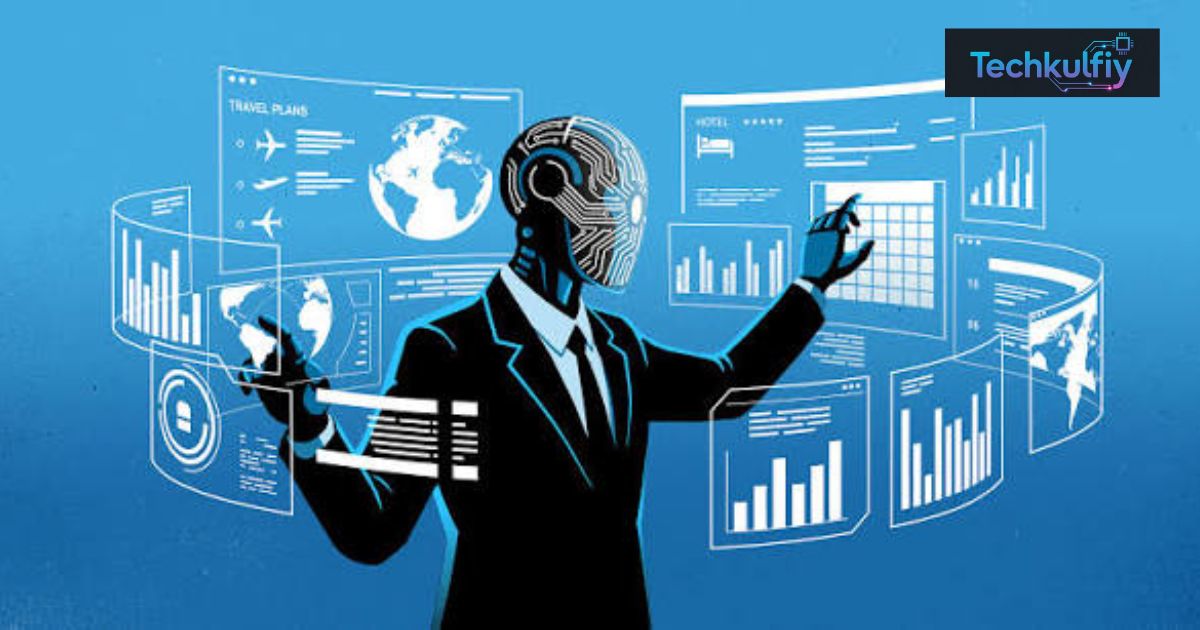
Agentic AI is becoming one of the biggest technology trends in the United States in 2026. Unlike traditional chatbots, these advanced systems can plan tasks, use digital tools, and complete multi-step workflows with limited human intervention. From business automation to software development, autonomous AI agents are changing how American companies approach everyday work.
The growth of Agentic AI is also connected to other major developments, including humanoid robots, multimodal AI, AI data centers, and healthcare AI. Technology companies are investing in smarter systems, advanced computer chips, and automation tools that can improve productivity. At the same time, rising electricity demand, data privacy concerns, and AI safety regulations are becoming important topics across the US technology industry.
For American businesses, workers, students, and everyday users, understanding these changes can help them prepare for the future. Agentic AI offers opportunities to save time and simplify complex tasks, but it also creates challenges involving security, reliability, and human oversight. Exploring the biggest AI trends in the USA in 2026 reveals how these technologies may influence jobs, businesses, healthcare, and daily life.
1. Agentic AI: Moving Beyond Traditional Chatbots
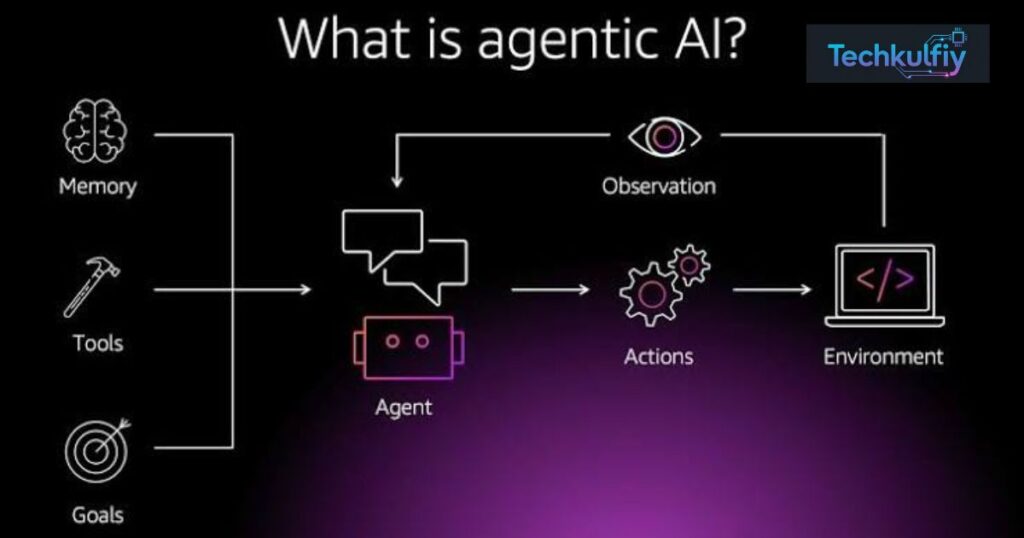
Traditional chatbots are generally designed to respond to prompts. You ask a question, receive an answer, and decide what to do next. More advanced AI systems can use tools, remember relevant context within an authorized workflow, and perform several connected actions.
Agentic AI describes systems that can work toward a defined objective by planning steps, selecting tools, taking actions, and evaluating results. Depending on their design, these systems may complete tasks with limited supervision or request human approval before important decisions.
For example, a software development agent might examine a reported bug, inspect relevant code, suggest a fix, run tests, and prepare a proposed update for a developer to review. A customer support agent might retrieve an order, check an approved refund policy, draft a response, and route unusual cases to a human representative.
Financial teams may use AI workflow automation to organize documents, identify missing information, summarize reports, and flag transactions that require further review. These capabilities can reduce repetitive work, although they do not eliminate the need for accurate data and human oversight.
The growing interest in autonomous AI agents comes from their ability to connect several activities into one workflow. Instead of using separate tools for research, writing, scheduling, and reporting, a business may coordinate those tools through a single system.
However,in Agentic AI greater autonomy introduces new risks. An agent may misunderstand instructions, use an unsuitable tool, or produce an incorrect result. Companies therefore need human-in-the-loop systems, access restrictions, audit records, and approval checkpoints.
For American businesses, Agentic AI is most useful when the goal is clear, the available tools are reliable, and mistakes can be detected before they cause serious harm. It should not be treated as an independent employee that can safely make every decision without supervision.
2. Physical AI and Humanoid Robots

Agentic AI is no longer limited to websites, mobile applications, and office software. It is increasingly being connected to machines that can observe and interact with the physical world.
Physical AI combines artificial intelligence with sensors, cameras, robotics, and control systems. These technologies help machines interpret their surroundings, recognize objects, plan movements, and respond to changing conditions.
Humanoid robots have attracted attention because their human-like shape could make them useful in environments designed for people. Factories, warehouses, research facilities, and some household settings are being explored as potential applications.
Companies such as Tesla and Boston Dynamics have helped bring advanced robotics into public discussion. Their work illustrates the broader effort to develop machines that can move through physical environments and perform increasingly complicated activities. Nevertheless, demonstrations do not necessarily mean that a robot is ready for affordable, reliable, everyday use.
Modern robots need more than a powerful AI model. They require precise motors, safe movement controls, dependable sensors, strong batteries, and the ability to recover from unexpected situations. Picking up a familiar object in a controlled laboratory is very different from handling fragile items in a crowded home.
Robotics automation could help American manufacturers with repetitive, physically demanding, or potentially hazardous tasks. In warehouses, robots may support sorting and material handling. In industrial facilities, they may assist with inspection, equipment movement, and other carefully defined operations.
There are also concerns about workforce transformation. Some jobs may change as robots take over specific tasks, while new roles emerge in maintenance, programming, safety testing, and robotics operations. Employers will need training programs to help workers adapt.
In this area, Agentic AI could eventually coordinate multiple machines, assign tasks, and respond to operational changes. That possibility depends on reliable hardware, carefully tested software, and clear safety boundaries rather than intelligence alone.
3. Multimodal AI and Advanced Computing Chips
Another major development is the ability of Agentic AI systems to process several kinds of information. Older systems often focused on text or a single specialized task. Modern multimodal AI can combine text, images, audio, and video, depending on the model’s capabilities.
Imagine a student uploading a diagram and asking for an explanation while discussing the subject through voice. A business could analyze a product image alongside written specifications. A video editing team might use AI to identify scenes, generate captions, and summarize recorded conversations.
These applications depend on more than a language model. They require computing resources, memory, efficient software, and hardware designed to handle demanding workloads.
AI reasoning models also aim to improve performance on complex problems by spending additional computation on planning, analysis, or checking possible solutions. Their results still need evaluation because a confident response is not necessarily a correct one.
The competitive landscape includes companies such as OpenAI, Google, Meta, Anthropic, and major chip manufacturers. Each company takes a different approach to model development, hardware, consumer applications, and enterprise services. Product names and capabilities change quickly, so businesses should evaluate independently verified features rather than relying on promotional claims.
Advanced chips are especially important for on-device AI, where some processing happens directly on a phone, laptop, or other local device. This can reduce dependence on remote servers, improve responsiveness, and support certain privacy-sensitive applications. However, local hardware has limits in memory, power consumption, and computational capacity.
Edge AI computing can be valuable when devices need to operate with limited internet access or respond quickly. A factory sensor, for example, might identify an equipment anomaly locally and send only essential information to a central system.
At the same time, large cloud models remain useful for tasks that demand substantial computing power. The future is likely to include a combination of local processing and cloud-based services.
For users, Agentic AI may become more useful when it can interpret different types of input, such as a voice request, a screenshot, and a document, within one controlled workflow. The practical value will depend on accuracy, cost, and the permissions granted to the system.
4. AI Data Centers and America’s Growing Energy Challenge
The expansion of artificial intelligence is increasing demand for computing infrastructure. Training large models and serving millions of user requests require processors, networking equipment, cooling systems, storage, and reliable electricity.
AI data centers are specialized facilities that house the equipment needed to run digital services at scale. As more organizations adopt generative AI and automated systems, infrastructure providers must plan for additional computing capacity.
Electricity demand is an important part of this discussion. Powerful processors consume energy, while cooling systems help prevent equipment from overheating. The total impact depends on the facility’s size, hardware efficiency, utilization, cooling design, and electricity source.
In the United States, the growth of data centers has encouraged debate about grid capacity, electricity prices, water use, local development, and environmental sustainability. Communities want to understand how new facilities could affect their resources and whether the benefits justify the costs.
Green computing focuses on reducing the environmental impact of digital technology. Strategies can include more efficient chips, improved cooling, better server utilization, renewable electricity procurement, and careful management of water and other resources.
Energy-efficient AI is important because a model that performs well but consumes excessive resources may be expensive to operate at scale. Developers can improve efficiency through model optimization, smaller specialized models, hardware improvements, and better workload scheduling.
Companies are also exploring different energy sources and long-term power arrangements to support their facilities. However, environmental benefits should be evaluated using transparent information about energy consumption, emissions, and local resource use.
There is no single solution for the infrastructure challenge. More efficient hardware can help, but growing usage may offset some of those gains. Similarly, renewable electricity can reduce certain emissions, but its availability, timing, and integration with the grid matter.
As Agentic AI becomes more widely deployed, companies may run additional automated tasks throughout the day. This makes careful infrastructure planning, efficient computing, and responsible deployment increasingly important.
5. Healthcare AI and Generative Diagnostics
Healthcare is another field where AI could make a meaningful difference. Hospitals, medical practices, researchers, and healthcare technology companies are exploring systems that support documentation, medical research, image analysis, patient communication, and administrative work.
Healthcare AI can help clinicians organize information from medical records, prepare visit summaries, and reduce the time spent on certain routine documentation tasks. When designed and validated properly, these tools may allow healthcare professionals to spend more time interacting with patients.
AI-assisted diagnostics is another important area. Certain systems can help analyze medical images, highlight patterns, or identify findings that deserve a closer look. Their performance varies by application, and they should be evaluated for accuracy, bias, and suitability for the intended clinical setting.
For example, a clinician might use an approved tool to help review an image or organize a patient’s history. The clinician must still interpret the evidence, consider symptoms and medical history, and determine the appropriate next step.
Generative AI in healthcare may also assist with medical literature searches, research planning, and summarizing complex information. Tools designed for medical professionals can help them find relevant evidence more efficiently, but the quality of their sources and the accuracy of their summaries remain essential.
Drug development is another potential application. Researchers can use computational tools to examine biological data, explore candidate molecules, and prioritize experiments. These methods may help with parts of the discovery process, but they do not replace laboratory research, clinical trials, or regulatory review.
Patient privacy is a major concern. Medical information is sensitive, and healthcare organizations must consider data privacy, access controls, cybersecurity, and applicable legal requirements before adopting new systems.
There is also a risk of algorithmic bias. If a model performs poorly for certain patient populations, its use could worsen existing inequalities. Validation should therefore consider the people who will actually use the system.
In the future, Agentic AI may help coordinate administrative workflows, schedule follow-ups, organize approved clinical information, and route cases to the right staff. Decisions involving diagnosis, treatment, medication, or emergencies require appropriate clinical oversight and safeguards.
6. AI Regulation, Privacy, and Safety in the United States
As AI becomes more capable, governments and businesses face difficult questions about responsibility. Who is accountable when an automated system causes harm? How should companies protect personal information? What should happen when AI generates a deceptive image, impersonates a person, or produces copyrighted material?
AI regulation covers the laws, standards, and policies that shape how AI systems are developed and used. In the United States, the regulatory landscape can involve federal agencies, state governments, courts, and sector-specific requirements.
The rules are not identical across every state or industry. Businesses must check the requirements relevant to their location, data, customers, and use case rather than assuming one general AI rule covers everything.
AI safety standards can include model testing, security assessments, documentation, incident reporting, and safeguards against harmful uses. The appropriate measures depend on what the system does and the consequences of failure.
One concern is deepfake technology. AI-generated audio, images, and videos can be used for entertainment and legitimate creative work, but they can also support scams, impersonation, misinformation, and nonconsensual content.
Copyright and AI training are also subjects of legal and public debate. Questions include how copyrighted works may be used in model development, how AI-generated content should be treated, and what rights creators may have. Legal outcomes can depend on the specific facts and jurisdiction.
Privacy is equally important. Companies should avoid collecting unnecessary personal data, explain how information is used, and restrict access to sensitive systems. Consumers should also be cautious when uploading confidential documents or personal information to AI services.
Businesses adopting Agentic AI face an additional security challenge because these systems may access files, email, databases, or software tools. Excessive permissions can turn a simple error into a serious incident. Strong authentication, limited access, monitoring, and human approval for high-impact actions can reduce this risk.
Responsible adoption requires more than publishing an AI policy. Organizations need practical controls, employee training, regular testing, and a process for responding to problems. Clear communication can also help customers understand when they are interacting with automated systems.
7. How These Six AI Trends Compare
The six trends are connected, but each solves a different type of problem. Some focus on digital tasks, others on physical work, and others on the infrastructure or rules required to deploy AI responsibly.
| AI trend | Main purpose | Potential US applications | Key challenge |
|---|---|---|---|
| Agentic AI | Complete connected tasks | Customer support, research, software workflows | Reliability and permissions |
| Physical AI and robots | Perform tasks in real environments | Manufacturing, warehouses, inspections | Safety and hardware costs |
| Multimodal AI | Understand different information types | Education, media, accessibility | Accuracy and computing needs |
| AI data centers | Supply computing capacity | Cloud services and enterprise AI | Energy, cooling, and water |
| Healthcare AI | Support clinical and administrative work | Documentation, research, image review | Privacy and clinical validation |
| AI regulation and safety | Reduce risks and define responsibilities | Business compliance and consumer protection | Changing rules and enforcement |
The best solution depends on the problem. A small company may benefit from a narrowly defined software agent before investing in expensive robotics. A hospital may prioritize privacy and clinical validation. A manufacturer may focus on automation that improves safety without disrupting essential operations.
The goal should be measurable value rather than adopting every new technology simply because it is receiving attention.
8. What These Trends Mean for American Workers and Businesses
AI adoption can change the tasks people perform, the skills employers seek, and how companies organize their operations. It is more useful to think about job transformation than to assume that every job will disappear or remain unchanged.
Employees may increasingly work with AI tools to draft documents, analyze information, create software, organize records, or handle routine customer requests. Human judgment, communication, creativity, and accountability will remain important, particularly when decisions affect customers, patients, finances, or public safety.
Businesses can prepare by identifying repetitive tasks, measuring current performance, and testing AI tools on limited projects. They should compare the results with existing processes and include the costs of integration, staff training, security, and ongoing supervision.
AI workforce training can help employees learn how to check AI outputs, protect sensitive information, and recognize when a system should not be trusted. Technical workers may also need skills in data management, automation design, AI evaluation, and cybersecurity.
Small businesses should be especially careful about recurring costs. An AI tool may save time but still be a poor investment if it requires expensive subscriptions, complex integrations, or extensive manual correction.
For startups, AI-powered business automation can create opportunities to serve customers more efficiently. Yet the competitive advantage often comes from understanding a specific problem and delivering a dependable solution, not merely adding AI to a product.
Students and job seekers can benefit from learning how these technologies work, including their limitations. Practical experience with spreadsheets, programming, research, communication, and data analysis can complement AI knowledge.
For many organizations, the sensible approach is to begin with low-risk applications, document the results, and expand only after the technology demonstrates consistent value.
9. Challenges That Could Slow AI Adoption
Despite the excitement surrounding AI, several obstacles remain. AI reliability is one of the biggest. Systems may generate incorrect information, misunderstand instructions, or behave differently when presented with unfamiliar situations.
Cybersecurity risks can increase when AI tools connect to internal systems or process untrusted content. Organizations must protect credentials, limit permissions, monitor activity, and test how systems respond to malicious instructions.
Implementation costs can also be significant. Businesses may need new hardware, software subscriptions, integration work, staff training, and ongoing technical support. These expenses should be compared with realistic benefits rather than optimistic projections.
Another challenge is data quality. An AI system cannot consistently produce useful results if the information it receives is incomplete, outdated, contradictory, or poorly organized. Companies should improve their data practices before automating important workflows.
There are also social concerns. Workers may worry about changing responsibilities, customers may not understand how their information is used, and communities may question the impact of new data centers or industrial robots.
These problems do not mean that AI should be avoided. They mean that adoption should be deliberate, transparent, and based on evidence.
10. What to Expect From AI in the Coming Years
The next phase of AI development will likely involve closer connections between models, software tools, connected devices, and physical machines. Systems may become better at carrying out multi-step tasks, while specialized models could make some applications cheaper and faster.
Businesses may also combine cloud computing with on-device AI, using local processing for suitable tasks and remote services for more demanding work. This approach can help balance performance, privacy, connectivity, and cost.
Robotics could expand in carefully controlled environments as hardware improves and companies gain experience. Healthcare applications may become more useful where clinical evidence, privacy protections, and professional oversight are strong.
Energy efficiency will remain important as computing demand grows. Better chips, optimized models, and improved data-center operations may help reduce resource use per task, although overall consumption will depend on how widely AI is adopted.
Regulation and industry standards will continue to influence how organizations deploy these systems. Businesses that establish clear governance early may find it easier to identify risks, maintain trust, and adapt to changing requirements.
Ultimately, the success of Agentic AI and related technologies will depend on whether they solve real problems safely and affordably. Impressive demonstrations can attract attention, but consistent performance and meaningful results will determine long-term value.
Frequently Asked Questions
What is Agentic AI?
Agentic AI refers to AI systems that can plan and carry out multiple steps toward a goal, often using approved tools and evaluating intermediate results. Their level of independence varies, and human supervision may be necessary.
How is Agentic AI different from a chatbot?
A traditional chatbot mainly responds to prompts. An Agentic AI can potentially perform connected actions, such as retrieving information, updating an approved record, running a test, or preparing a report. Not every chatbot or AI assistant has these capabilities.
What are the biggest Agentic AI trends in the USA in 2026?
Major areas of attention include autonomous agents, physical Agentic AI, humanoid robots, multimodal models, advanced computing chips, data-center energy demand, healthcare applications, and AI regulation. Adoption and maturity vary by industry.
Will AI agents replace American workers?
Agentic AI may automate certain tasks and change many existing jobs, but its impact will differ across occupations. New responsibilities may emerge in AI oversight, cybersecurity, data management, and system integration. Training and thoughtful workforce planning are important.
Can humanoid robots work safely in homes and factories?
Some robots can perform specific tasks in controlled environments, but general-purpose home use remains challenging. Safety depends on hardware, software, the environment, testing, and the ability to respond to unexpected situations.
Why do Agentic AI data centers consume so much electricity?
Large data centers operate computing equipment and cooling systems around the clock or for long periods. Their energy use depends on workload, hardware efficiency, facility design, and the electricity source.
How is AI being used in healthcare?
Healthcare organizations are exploring AI for documentation, medical image analysis, research, administrative workflows, and drug discovery. These applications require suitable validation, privacy protections, and professional oversight.
Is Agentic AI safe for business use?
Agentic AI can be useful when tasks are clearly defined and permissions are limited. Businesses should test systems, monitor actions, protect sensitive data, and require human approval for consequential decisions.
How can small businesses start using AI?
Small businesses can begin with low-risk tasks such as drafting routine communications, summarizing non-sensitive documents, or organizing information. They should measure time savings, check output quality, and review privacy and security before expanding usage.
Conclusion
Artificial intelligence is developing across software, robotics, healthcare, computing infrastructure, and public policy. These trends are connected: more capable models create new automation opportunities, advanced chips make demanding applications possible, and data centers provide the resources needed to run them. At the same time, energy demand, privacy, cybersecurity, workforce changes, and regulation require careful attention.
For American businesses, the strongest strategy is not to adopt every new AI product immediately. It is to identify a genuine problem, choose an appropriate tool, measure its performance, and establish safeguards before expanding its use. Workers and students can prepare by building digital skills, learning to evaluate AI-generated information, and understanding the strengths and limitations of automated systems.
Agentic AI has the potential to make complex digital workflows more efficient, while physical AI, multimodal intelligence, and healthcare automation may open additional opportunities. But lasting success will depend on accuracy, affordability, safety, and responsible implementation. Companies that balance innovation with human judgment will be better positioned to benefit from AI in 2026 and beyond.

About the Author
The author at TechKulfiy writes informative articles about technology, software, digital platforms, and IT solutions. The goal is to make complex topics easier to understand by providing clear explanations, practical insights, and helpful information. Each article aims to help readers explore technology topics and make informed decisions.