

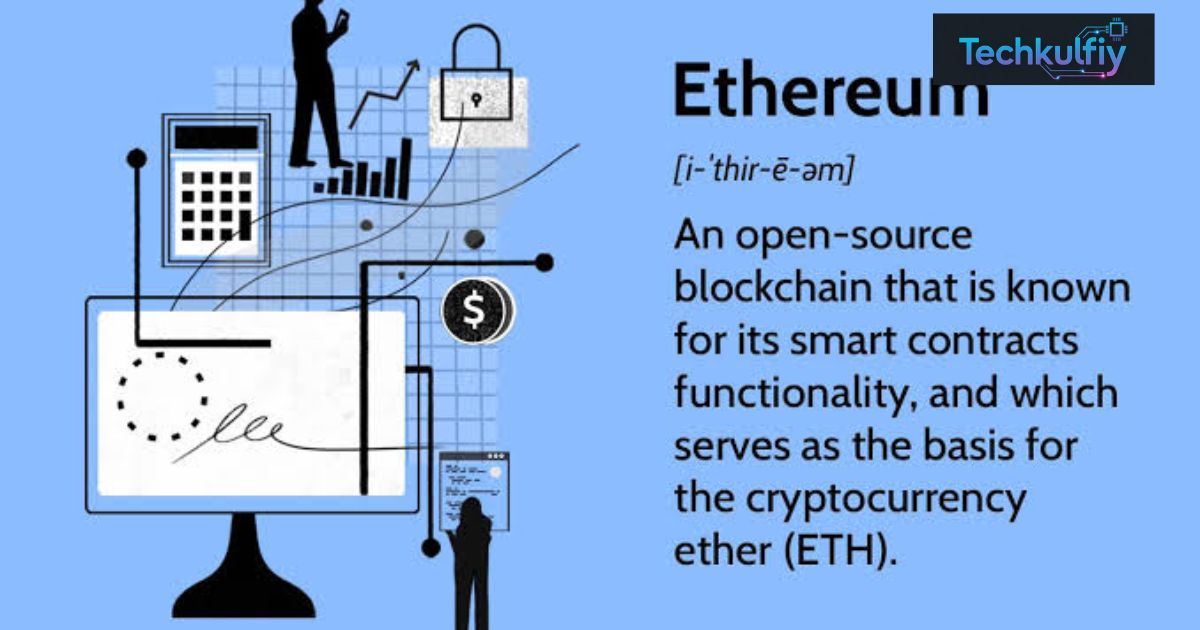
ETH is the native cryptocurrency of Ethereum, a blockchain network built for digital transactions and smart contracts. It helps users transfer value, pay Ethereum gas fees, and interact with decentralized applications. Unlike traditional money, ETH operates on blockchain technology without depending on a central bank.
From buying ETH to sending it between wallets, there is more happening behind a simple transaction than most beginners realize. Understanding ETH cryptocurrency can help you make sense of wallets, staking, gas fees, and decentralized applications. Whether you’re completely new to crypto or already familiar with Bitcoin, learning how ETH works gives you a clearer view of the modern blockchain ecosystem.
Today, ETH supports much more than basic payments. It plays an important role in Ethereum smart contracts, DeFi platforms, NFTs, and many other blockchain applications. You can hold ETH in a crypto wallet, purchase it through a crypto exchange, or participate in ETH staking. At the same time, ETH carries risks such as price volatility, scams, network fees, and wallet security issues.
What Is ETH?
ETH, also called Ether, is the native cryptocurrency of the Ethereum blockchain. Ethereum provides the network and infrastructure, while ETH provides the digital asset used throughout that network. This distinction is simple but important because people often use “Ethereum” and “ETH” as if they mean exactly the same thing.
Think of Ethereum as a large digital city. Smart contracts and decentralized applications are the businesses operating inside that city, while ETH works somewhat like the money used to pay for activities. When you make an Ethereum transaction, interact with a smart contract, or perform certain actions on the network, ETH can be used to pay the required network fee.
ETH can also be transferred between users. For example, one person in the United States can send ETH to another person’s wallet without using a traditional bank transfer. The transaction is recorded on the blockchain, allowing the network to verify what happened.
Because Ethereum supports programmable applications, ETH has become closely connected with a wide range of blockchain activities. Its role extends beyond simply being a digital currency.
How Does ETH Work?
ETH works through the Ethereum network, which uses blockchain technology to record transactions and execute smart contracts. Instead of keeping transaction records in one company’s private database, Ethereum maintains a distributed network where participants help verify and process activity.
When you send ETH, your wallet creates a transaction containing information such as the destination address and amount. The transaction is then submitted to the Ethereum network. Validators process network activity and help maintain the blockchain’s security.
The process may appear complicated at first, but the basic idea is straightforward. You create a transaction, the network processes it, and the resulting information becomes part of Ethereum’s shared blockchain record.
Ethereum also supports Ethereum smart contracts. These are programs stored and executed on the blockchain. They can perform predefined actions when their conditions are met. For example, a decentralized exchange can use smart contracts to facilitate token swaps without relying on a traditional intermediary.
ETH and the Ethereum Blockchain
ETH and Ethereum are connected, but they aren’t identical. Ethereum is the blockchain network and technology platform. ETH is its native digital asset.
This difference becomes clearer when you compare their functions. The Ethereum network provides the infrastructure for smart contracts and decentralized applications. ETH provides value within that infrastructure and helps users pay for computational work.
Ethereum’s programmable design allows developers to build applications that run on its blockchain. Those applications can use ETH or other tokens depending on their design.
How ETH Transactions Work
An ETH transaction begins when a user enters a recipient’s wallet address and chooses the amount to send. The wallet then prepares and signs the transaction using the user’s private key.
After submission, the transaction enters the Ethereum network for processing. The required ETH gas helps compensate the network for the computational resources needed to process the transaction.
Once the transaction is confirmed, the blockchain records the result. The recipient can then see the transferred ETH in their wallet.
This system allows users to transfer digital assets globally without requiring the receiving person to have a traditional bank account. However, users must check wallet addresses carefully because blockchain transactions generally cannot simply be reversed like a conventional bank payment.
What Is ETH Used For?
ETH has several important functions within the Ethereum ecosystem. Its most basic role involves transferring value between wallets. However, its usefulness extends far beyond sending cryptocurrency from one person to another.
ETH is used to pay transaction fees, interact with smart contracts, participate in staking, and access many decentralized applications. It can also serve as an asset within decentralized finance platforms and other blockchain-based systems.
For example, imagine using a decentralized application to exchange one digital token for another. The application may require ETH to pay the network’s processing fee. In that situation, ETH isn’t simply an investment asset. It is helping the application function.
ETH for Gas Fees
Ethereum gas fees are payments required to perform operations on the Ethereum network. The term “gas” refers to the computational work needed to process an operation.
A simple ETH transfer generally requires less computational work than a complicated smart-contract interaction. As a result, different transactions can require different amounts of gas.
Network demand can also affect the amount users pay. When many people compete for limited block space, transaction costs can increase. During quieter periods, costs may be lower.
Understanding gas is important because beginners sometimes focus only on the amount of ETH they want to send. The total cost can also include the network fee required to process the transaction.
ETH for Staking
Ethereum uses a proof-of-stake system in which validators help secure the network. Users can participate in ETH staking by committing ETH according to the rules of the Ethereum protocol.
Staking is different from simply holding ETH in a wallet. When ETH is staked, it participates in the network’s validation process. Validators can receive rewards for performing their responsibilities correctly, although staking also carries risks and conditions.
People can participate directly by operating validator infrastructure or through certain staking services. Each approach has different technical requirements, costs, and risks.
It is important to remember that staking isn’t a guaranteed source of profit. Rewards can vary, and users should understand the terms, fees, technical risks, and potential penalties before participating.
ETH in DeFi and NFTs
ETH has a major role in Ethereum DeFi, which refers to decentralized financial applications built on blockchain networks. These applications can provide services such as trading, lending, borrowing, and liquidity management through smart contracts.
ETH is also widely associated with NFTs. Ethereum-based NFT platforms use smart contracts to manage ownership and transactions involving digital assets.
Although the popularity of specific applications can change, the underlying concept remains the same. Ethereum provides programmable infrastructure, while ETH helps power activity within that ecosystem.
ETH vs Ethereum: What Is the Difference?
Many beginners search for “ETH” and “Ethereum” as if they are interchangeable. In everyday conversation, people often use them that way. Technically, however, they describe different things.
| Feature | ETH | Ethereum |
|---|---|---|
| Type | Cryptocurrency | Blockchain network |
| Main role | Digital asset and network utility | Blockchain infrastructure |
| Symbol | ETH | Ethereum |
| Used for | Transfers, fees, staking | Smart contracts and applications |
| Ecosystem role | Native asset | Network and technology platform |
A useful comparison is the relationship between a computer network and the currency used within an online economy. The network provides the infrastructure, while the asset provides economic value and utility.
Understanding this difference makes other crypto concepts much easier to follow.
How to Buy ETH in the United States
People in the United States can generally purchase ETH through supported cryptocurrency exchanges and other regulated or available services. The exact process depends on the platform, location, account requirements, and applicable regulations.
Typically, a user creates an account, completes any required identity verification, connects an available payment method, and purchases ETH. The purchased ETH may initially remain under the platform’s custody.
Some users later transfer their ETH to a personal wallet. This gives them more direct control over their assets, but it also means they become responsible for protecting their wallet credentials.
Before purchasing ETH, it is important to understand the platform’s fees, withdrawal rules, security practices, and applicable U.S. requirements. Cryptocurrency services can change their supported products and availability over time.
How to Store ETH Safely
An ETH wallet provides a way to manage Ethereum assets and interact with the network. Wallets can take different forms, including software wallets, hardware wallets, and exchange-based custody.
Software wallets are convenient because they can be accessed through computers or smartphones. Hardware wallets are physical devices designed to keep important wallet credentials more isolated from internet-connected environments.
The biggest security rule is simple: protect your recovery phrase and private keys. A legitimate support representative should not need your recovery phrase. Anyone who obtains it may gain control over the assets associated with that wallet.
Phishing is another major threat. A fake website can look almost identical to a legitimate service while attempting to steal wallet information. Before connecting a wallet or approving a transaction, check the website and transaction details carefully.
What Determines the Price of ETH?
The ETH price changes because cryptocurrency markets respond to supply, demand, market sentiment, economic conditions, network activity, and other factors.
Ethereum network usage can influence demand for ETH because users need the asset for certain network activities. Broader crypto-market conditions can also affect ETH because digital assets often move in response to changing investor sentiment.
Regulation is another important consideration, particularly for users and businesses operating in the United States. Changes in regulatory treatment can influence how exchanges, institutions, developers, and investors interact with digital assets.
Technology also matters. Developments that improve Ethereum’s scalability, efficiency, usability, or ecosystem can influence market expectations. However, no single development guarantees a particular price outcome.
| Factor | Potential Relationship With ETH |
|---|---|
| Network activity | Greater activity can increase demand for network resources |
| Market demand | Stronger demand can influence market price |
| Gas usage | Network activity creates demand for transaction processing |
| Staking | Changes the amount of ETH actively participating in staking |
| Regulation | Can affect access, adoption, and market conditions |
| Crypto sentiment | Broader market movements can influence ETH |
ETH Supply and Ethereum Economics
ETH has an economic model that differs from Bitcoin’s fixed maximum supply model. Ethereum’s supply can change because ETH is issued to support network validators while some transaction fees are burned under Ethereum’s fee mechanism.
The introduction of EIP-1559 changed how Ethereum handles its base transaction fee. Part of the base fee is burned, meaning that amount of ETH is removed from circulation.
This creates a more dynamic supply system. Depending on network activity and issuance, the overall supply can increase or decrease over particular periods.
For users, the important point is that ETH’s supply isn’t determined by a simple fixed maximum. Its economics are connected to network activity, validator rewards, and the fee-burning mechanism.
ETH Staking: How It Works
Ethereum staking allows participants to help secure the network by committing ETH to the proof-of-stake system. Validators perform important tasks such as proposing and attesting to blocks.
Running an individual Ethereum validator has technical requirements, including a deposit of 32 ETH for the standard validator setup. However, users don’t necessarily need to operate their own validator because various staking services provide alternative ways to participate.
These services can make staking more accessible, but they introduce additional considerations. Users need to examine service fees, custody arrangements, smart-contract risks, withdrawal conditions, and counterparty exposure.
Staking rewards also aren’t equivalent to guaranteed investment returns. The actual outcome depends on network conditions, validator performance, fees, and other factors.
ETH Gas Fees Explained
ETH fees can sometimes confuse new users because the final cost depends on more than the amount being transferred.
Ethereum measures computational work using gas. A transaction has a gas requirement, while the price paid for that gas changes according to network conditions.
For example, sending ETH can require a different amount of computational resources than interacting with a complex decentralized application. The more complicated operation may therefore require more gas.
| Gas Factor | What It Means |
|---|---|
| Network demand | Busy periods can increase competition for block space |
| Transaction complexity | More complex operations can require more computational work |
| Gas price | Determines the cost paid for each unit of gas |
| Network activity | Higher activity can affect fee conditions |
Learning how gas works can help you avoid surprises when using an Ethereum wallet or decentralized application.
Benefits of ETH
One important advantage of ETH is its connection to a large programmable blockchain ecosystem. Ethereum isn’t designed only for transferring cryptocurrency. Developers can use its infrastructure to create applications with automated rules and digital ownership systems.
ETH also provides a native economic asset for the network. Users can transfer it across borders, use it for network fees, or participate in staking.
Another important feature is accessibility. Ethereum applications can be accessed from anywhere with the appropriate internet connection and compatible wallet. This creates possibilities that aren’t always available through traditional financial infrastructure.
However, these benefits don’t remove the risks. Cryptocurrency users still need to consider volatility, security, scams, fees, and regulatory changes.
Risks and Limitations of ETH
ETH can experience significant price volatility. Its market value can rise or fall quickly, which means anyone considering an ETH investment should understand that losses are possible.
Security is another major concern. Losing a recovery phrase can result in permanent loss of access to wallet assets. Sending ETH to an incorrect address can also create serious problems because blockchain transactions generally aren’t reversible.
Smart contracts create additional risks. Even when a decentralized application appears legitimate, technical vulnerabilities or malicious code can result in financial losses.
Scams are also common in the cryptocurrency industry. Fake giveaways, impersonation schemes, phishing pages, fraudulent investment offers, and malicious wallet approvals can target inexperienced users.
For these reasons, understanding the technology matters just as much as understanding the potential benefits.
ETH vs Bitcoin
ETH and Bitcoin are both major cryptocurrencies, but they were designed with different primary purposes and technical approaches.
Bitcoin focuses heavily on peer-to-peer digital money and maintaining a decentralized monetary network. Ethereum provides a broader programmable environment where developers can create decentralized applications, smart contracts, tokens, and other blockchain systems.
| Feature | ETH | Bitcoin |
|---|---|---|
| Network | Ethereum | Bitcoin |
| Native asset | ETH | BTC |
| Main ecosystem focus | Programmable applications | Digital monetary network |
| Consensus system | Proof of Stake | Proof of Work |
| Smart contracts | Major ecosystem function | More limited functionality |
| Common uses | Fees, staking, dApps, DeFi | Payments and digital value storage |
Neither asset should be understood simply by looking at its market price. Their underlying networks have different designs and purposes.
ETH and Smart Contracts
Smart contracts are programs that run on blockchain infrastructure according to predefined rules. Ethereum helped popularize the idea of using blockchain networks for programmable applications.
Suppose a decentralized lending application allows users to deposit digital assets and borrow against them. Instead of relying entirely on a traditional financial institution, smart contracts can manage parts of the process according to programmed rules.
ETH can be important in this environment because users may need it to pay transaction fees when interacting with these contracts.
This programmability is one reason Ethereum has developed a broad ecosystem around finance, digital assets, gaming, tokenization, and other applications.
ETH and Decentralized Applications
Ethereum dApps are applications that use blockchain infrastructure for some part of their functionality. Unlike conventional applications that may rely entirely on centralized servers, decentralized applications can use smart contracts and blockchain-based records.
To interact with many dApps, users connect an ETH wallet or another compatible wallet. The wallet helps users sign transactions and approve blockchain actions.
For example, a decentralized exchange may allow a user to swap tokens directly through smart contracts. A decentralized lending platform may use contracts to manage deposits and loans.
The user experience can feel similar to an ordinary website, but the underlying technology works differently.
ETH Security: Common Scams to Avoid
ETH users should be especially careful with messages promising free cryptocurrency, guaranteed profits, exclusive investments, or urgent wallet verification.
A common phishing scam sends a message that appears to come from a legitimate exchange or wallet provider. The message may ask the user to click a link and enter a recovery phrase. Once that information is exposed, the attacker may gain control of the wallet.
Fake airdrops are another common tactic. A website may promise free tokens while asking users to connect their wallet or approve a suspicious transaction.
Users should also be cautious when someone asks them to send ETH first in exchange for a larger amount later. Promises of guaranteed returns are a major warning sign.
The safest approach is to verify information through official channels and never share private keys or recovery phrases.
The Future of ETH
The future of ETH is closely connected to the continued development of Ethereum and the applications built on its infrastructure. Scaling remains an important area of development because blockchain networks need to handle growing activity while maintaining security and reasonable costs.
Layer-2 networks have become an important part of the Ethereum ecosystem. They can process certain activity outside the Ethereum mainnet while using Ethereum for security or settlement in different ways.
Ethereum is also connected to broader trends such as tokenization, decentralized finance, digital ownership, and blockchain-based applications. Institutional participation and changing regulation may influence how these technologies develop in the United States.
Still, future adoption isn’t guaranteed. Technology, competition, regulation, user demand, security, and market conditions can all affect Ethereum’s development.
Frequently Asked Questions About ETH
What does ETH stand for?
ETH is the ticker symbol used for Ether, the native cryptocurrency of the Ethereum network. It is used for transfers, transaction fees, staking, and many activities across the Ethereum ecosystem.
Is ETH the same as Ethereum?
No. Ethereum refers to the blockchain network and its broader technology ecosystem, while ETH refers to its native cryptocurrency. People often use the terms interchangeably in casual conversation.
What is ETH used for?
ETH is used to transfer digital value, pay Ethereum network fees, participate in staking, and interact with many decentralized applications and smart contracts.
Can you stake ETH?
Yes. Users can participate in Ethereum staking through different methods. Running a personal validator requires 32 ETH under Ethereum’s standard validator setup, while staking services can provide other options.
Is ETH a cryptocurrency?
Yes. ETH is a cryptocurrency and the native digital asset of the Ethereum blockchain.
Where can you store ETH?
You can store ETH using software wallets, hardware wallets, or cryptocurrency exchange custody. Each option has different security, convenience, and control considerations.
Why does ETH have gas fees?
Ethereum charges fees because transactions and smart-contract operations require computational resources from the network. Gas measures the computational work associated with these operations.
Is ETH safe to buy?
ETH has established technology and a large ecosystem, but buying ETH still involves financial and security risks. Its price can fluctuate substantially, while scams, wallet mistakes, and regulatory changes can create additional risks.
Conclusion
ETH is much more than a digital coin. It is the native cryptocurrency that helps power the Ethereum network, from basic transfers and gas payments to staking, smart contracts, DeFi, and decentralized applications.
Understanding the difference between ETH and Ethereum is the first step. From there, concepts such as ETH staking, Ethereum gas fees, wallets, smart contracts, and network activity become easier to understand.
For anyone exploring cryptocurrency in the United States, learning how ETH works can provide useful context before buying, holding, staking, or using it. The technology offers significant possibilities, but responsible use requires attention to security, fees, volatility, and regulatory developments.
Meta Description
Learn what ETH is, how Ethereum works, its uses, staking, gas fees, wallets, price factors, and key risks in this complete guide.
