
Next-Gen Tech means advanced technology built for modern needs. It combines smart tools, automation, connectivity, and artificial intelligence. These technologies help businesses create faster, smarter, and more connected solutions.
Technology is changing faster than ever before. Businesses can’t rely on outdated systems while customer expectations keep rising. Next-Gen Tech helps companies adapt, innovate, and stay ready for what comes next.
From AI and IoT to cloud computing and automation, Next-Gen Tech covers many innovations. These tools can improve operations, products, security, and customer experiences. They also help businesses make smarter decisions and grow efficiently.
Why Is Next-Gen Tech Important for Modern Businesses?
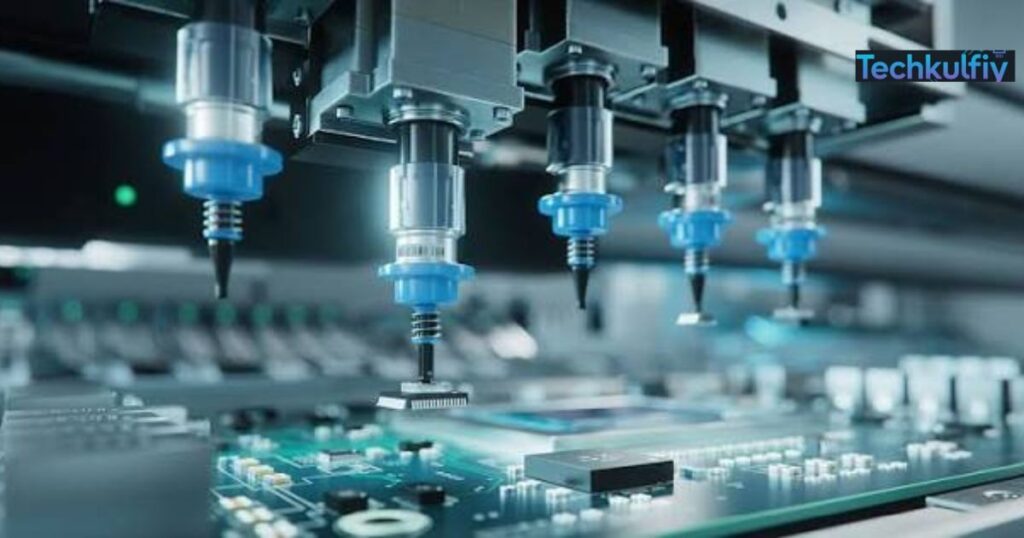
Modern businesses operate in an environment where customers expect speed, convenience, personalization, and reliability. A slow application or unreliable connected device can quickly damage customer satisfaction. Meanwhile, companies face pressure to release products faster while maintaining strong quality assurance. Next-Gen Tech helps organizations address these competing demands by connecting development, testing, operations, analytics, and customer experience.
Automation is particularly valuable when businesses need to test complicated products repeatedly. Traditional manual testing can uncover important problems, yet it becomes difficult to maintain when a product supports hundreds of devices or thousands of possible interactions. Modern automated testing solutions can execute repetitive scenarios consistently while allowing a QA team to focus on deeper analysis and product improvements.
The same principle applies to connected ecosystems. A smartphone might communicate with headphones, vehicles, smart appliances, payment systems, and cloud services. Each connection creates another opportunity for failure. Interoperability testing helps determine whether different technologies can communicate and function together as expected.
For U.S. companies, this capability can become especially important when products reach customers across multiple regions. Different carriers, operating systems, device models, network conditions, and regulations can influence product behavior. A successful product therefore needs more than attractive design. It needs dependable connectivity, strong performance, and a consistent user experience.
Key Technologies Driving Next-Gen Tech
Artificial intelligence is one of the strongest forces behind the current technology shift. Machine learning systems can analyze large datasets, identify patterns, generate predictions, and support automated decisions. Generative AI extends these capabilities by creating text, images, software, summaries, and other content. AI can also work alongside connected hardware to create systems that react to changing conditions.
IoT provides another major foundation. Connected sensors and devices can continuously exchange information with platforms and applications. IoT Ecosystems can include devices, networks, mobile applications, cloud services, analytics platforms, and control systems. In a smart home, for instance, connected appliances may interact with phones, voice assistants, security systems, and home networks.
Connectivity technology is advancing at the same time. Wi-Fi 7 is designed to support higher performance and more demanding connected environments, while Wi-Fi Mesh technology can improve coverage across larger spaces. These developments matter because modern products increasingly depend on stable wireless communication.
Bluetooth remains equally important for short-range connections. Wireless headphones, vehicles, wearables, medical devices, and other consumer products rely on Bluetooth for communication. As expectations for wireless performance increase, businesses need reliable Bluetooth Performance Testing and Bluetooth Interoperability Testing to identify pairing, connection, latency, and audio problems.
Cloud and edge computing also form an important part of Next-Gen Tech. Cloud platforms provide scalable computing and storage, while edge computing moves certain processing tasks closer to the device. This combination can reduce delays and support applications that need fast responses.
Robotics and physical automation add another dimension. A cobot, or collaborative robot, can work alongside people in controlled environments. A vision system can use cameras and software to identify objects, inspect products, or monitor physical processes. When these technologies connect with AI and analytics, businesses can create highly responsive systems.
How Next-Gen Tech Is Transforming Business Operations
Next-generation technology changes business operations by replacing fragmented processes with connected, data-driven workflows. Instead of waiting for employees to manually collect information, organizations can use connected systems to gather data continuously. AI and automation can then process that information and highlight issues that need attention.
Testing provides a clear example. A modern automated testing suite can control devices, applications, interfaces, and external equipment to simulate realistic user behavior. Rather than performing the same test manually every afternoon, an organization can automate the process and run it repeatedly. This creates broader test coverage while reducing repetitive work.
Advanced testing can also reproduce complex events that are difficult to perform consistently by hand. A test could involve connecting a mobile phone to a vehicle, launching an application, playing audio, changing network conditions, and reconnecting the device. Such scenarios can reveal hidden bugs that isolated feature testing may miss.
Modern end-user testing takes this concept even further by simulating human interaction with a product. The objective isn’t merely to verify whether a button works. The goal is to understand whether the entire experience behaves correctly from the user’s perspective.
For connected products, hardware testing is equally important. Software may appear stable while physical components create unexpected problems. Testing can therefore cover audio, display, sensors, buttons, wireless radios, and user interfaces alongside software and cloud services.
Automation can also improve debugging. Detailed comprehensive logging records interactions and events during a test. When something fails, engineers can examine what happened before the failure instead of relying on assumptions. This shortens the path between discovering a defect and identifying its cause.
Next-Gen Tech Applications Across Industries
Next-Gen Tech now reaches far beyond traditional software companies. In consumer electronics, connected headphones, televisions, wearables, appliances, and other products must communicate across diverse environments. Consumer Electronics & IoT testing helps companies verify that devices deliver reliable performance before reaching customers.
Mobile technology is another major area. Mobile & Apps products need to work across different operating systems, screen sizes, hardware configurations, and network environments. Mobile App Testing becomes especially important when an application controls or communicates with physical devices.
Automotive companies face an even more complicated challenge. Modern vehicles combine entertainment, navigation, Bluetooth, Wi-Fi, smartphones, cloud services, and safety-related systems. An infotainment platform may need to support numerous phone models while maintaining a stable connection. Android Auto is one example of an ecosystem where interoperability can directly influence the driver’s experience.
Audio products provide another useful example. wireless earbuds need reliable pairing, stable connections, low latency, and strong sound performance. Testing can evaluate Bluetooth Audio behavior and audio quality under different conditions. The growth of lossless wireless sound also raises expectations for wireless audio performance.
Healthcare technology has its own demanding use cases. Connected monitoring devices need dependable communication because inconsistent data can affect decisions. Bluetooth Blood Pressure Monitoring illustrates how consumer electronics and healthcare technology increasingly overlap.
Financial technology also benefits from advanced testing. A digital payment product needs to remain reliable across different devices, applications, and network conditions. Wireless POS systems, for example, may need to process transactions while maintaining stable connections in busy retail environments. Reliable payment processing therefore depends on more than the payment application itself.
The following table summarizes how Next-Gen Tech can support different sectors:
| Industry | Next-Gen Tech Application | Main Focus |
|---|---|---|
| Consumer Electronics | Connected devices and wireless products | Reliability and user experience |
| Automotive | Connected vehicles and infotainment | Connectivity and interoperability |
| Healthcare | Smart monitoring devices | Accuracy and dependable communication |
| Retail | Smart systems and wireless POS | Speed and payment reliability |
| Manufacturing | Robotics and connected equipment | Automation and efficiency |
| Mobile | Apps and connected services | Device compatibility |
| Smart Homes | Connected home automation | Seamless device interaction |
Benefits of Adopting Next-Gen Tech
The biggest advantage of Next-Gen Tech is its ability to help organizations accomplish more without adding unnecessary complexity. Automated systems can handle repetitive tasks while employees focus on decisions that require judgment and creativity. In product development, this can shorten testing cycles and help teams identify problems earlier.
One major benefit comes from stronger test coverage. An automated platform can test more devices, configurations, functions, and user scenarios than a small team could reasonably test by hand. This doesn’t make human expertise irrelevant. Instead, it gives engineers more time to investigate unusual behavior and improve the product.
Speed is another advantage. Advanced automated testing products can run repeated scenarios around the clock. A company can test a month’s worth of simulated consumer usage in a much shorter period. Faster feedback can help developers fix problems before they become expensive late-stage defects.
Cost efficiency also improves when organizations reduce repetitive labor. on-premise automated testing can give companies greater control over their testing environment and infrastructure. For organizations with frequent testing requirements, automation can become a long-term productivity investment rather than a one-time project.
Better reliability can lead directly to stronger customer relationships. When products connect smoothly, applications respond correctly, and devices behave consistently, users have fewer reasons to abandon them. In crowded markets, that reliability can become a quiet competitive advantage.
How AI Is Powering the Next Generation of Technology
AI gives Next-Gen Tech its intelligence. Traditional automation generally follows predefined instructions, while AI can analyze information and respond to patterns. This difference allows organizations to build systems that are more adaptive and capable of handling complex situations.
AI can also improve testing. An intelligent testing system can analyze large amounts of test information and help identify patterns associated with failures. When combined with automated testing, AI can support faster defect discovery and more informed debugging.
The connection between AI and connected products is particularly powerful. Imagine a smart device that monitors its environment, sends information to the cloud, detects unusual behavior, and automatically adjusts its operation. That workflow combines sensors, connectivity, analytics, cloud computing, and intelligent decision-making.
AI can also improve codeless test creation. Instead of requiring every test scenario to be written from scratch, visual tools can allow testers to define actions through simpler interfaces. This can make advanced automation more accessible to product teams that don’t specialize in programming.
Modern testing platforms can integrate external lab test equipment as well. This allows organizations to combine software automation with physical measurements and specialized hardware. Such integration becomes useful when products need to evaluate radio performance, audio behavior, displays, or other physical characteristics.
The future will likely involve closer cooperation between humans and AI. Engineers will still define goals, interpret results, investigate unusual failures, and make final decisions. AI can handle more of the repetitive analysis in the background. The result is a partnership rather than a simple replacement.
Challenges of Implementing Next-Gen Tech
Advanced technology can create impressive results, but implementation isn’t always straightforward. Companies often have legacy systems that weren’t designed to communicate with modern platforms. Connecting old infrastructure with new applications can require careful planning, additional development, and extensive testing.
Security and privacy create another concern. Connected products continuously exchange information, which increases the importance of secure communication and responsible data handling. Organizations must consider cybersecurity throughout development rather than treating it as a final inspection.
Regulatory requirements also matter. Different industries operate under specific quality standards and regulations. Healthcare, automotive, financial services, and other sectors may face different requirements for safety, privacy, data management, or product performance.
Cost can become another barrier. Advanced infrastructure, specialized equipment, skilled employees, and software platforms all require investment. The best approach isn’t necessarily to adopt every emerging technology. Businesses should identify where a technology can solve a meaningful problem and measure the resulting value.
Compatibility presents another challenge. A connected product may need to work with thousands of mobile devices, operating systems, networks, and accessories. Even a small change in one part of the ecosystem can affect the overall experience.
For this reason, organizations need structured testing rather than relying entirely on assumptions. product test services can provide specialized expertise when internal teams lack the equipment, experience, or capacity required for broad validation.
How to Build a Successful Next-Gen Tech Strategy
A successful technology strategy should begin with a business problem rather than a fashionable technology. Before purchasing an AI platform or automation system, a company should ask what it wants to improve. The answer might involve reducing testing time, improving product reliability, lowering support costs, or creating a better customer experience.
The next step involves assessing the existing technology environment. Companies should understand their infrastructure, applications, devices, data, networks, and operational processes. This assessment reveals where new systems can create the greatest impact and where legacy technology may create integration challenges.
Testing should become part of the strategy from the beginning. For connected products, end-to-end interoperability testing can verify how hardware, software, networks, mobile devices, and cloud services interact as one ecosystem. This approach is more realistic than testing every component in isolation.
A strong strategy should also balance automation with human judgment. Automation is excellent at repetition, consistency, scale, and pattern detection. Humans remain better suited to interpreting ambiguous results, understanding customer expectations, and making nuanced decisions.
Organizations can use a simple framework to guide implementation: identify the problem, evaluate the technology, run a controlled pilot, measure the result, improve the process, and scale what works. This reduces the risk of making a large investment before proving its value.
Training matters too. Even the best technology can underperform if employees don’t understand how to use it. Teams need practical knowledge of automation, AI, data, cybersecurity, and the specific systems they operate.
Finally, businesses should treat Next-Gen Tech as an evolving strategy. Technology changes quickly. A platform that seems advanced today may become ordinary tomorrow. Continuous evaluation helps companies remain adaptable without constantly chasing every new trend.
What Is the Future of Next-Gen Tech?
The future of Next-Gen Tech will likely be defined by convergence. AI won’t exist separately from IoT. Connected devices won’t operate independently from cloud platforms. Automation will increasingly connect physical systems with intelligent software. These technologies will form larger ecosystems that can sense, analyze, decide, and respond.
Connected products will also become more sophisticated. Customers may expect devices to recognize their preferences, communicate seamlessly with other products, and recover intelligently from common problems. That will make reliable connectivity and interoperability even more important.
Testing will evolve alongside these products. Companies will need deeper automation, broader device coverage, and more realistic simulations. automated interoperability testing will become increasingly valuable as ecosystems include more hardware, applications, networks, and services.
The role of AI will expand as well. AI systems may help engineers create tests, analyze failures, predict potential defects, and optimize testing strategies. At the same time, responsible AI practices will become more important as automated systems influence real business decisions.
The next generation of technology won’t simply be about making devices faster. It will be about making systems smarter, more connected, more adaptive, and easier to use. Businesses that understand this shift can prepare their products and operations for a world where technology works more like an interconnected ecosystem than a collection of separate tools.
Ultimately, Next-Gen Tech is transforming technology by bringing intelligence, automation, connectivity, and human-centered design together. Whether a company develops mobile applications, vehicles, smart devices, healthcare products, or enterprise systems, the same principle applies: technology creates the most value when different pieces work together reliably. The businesses that master that connection will be better positioned to innovate, scale, and compete in the years ahead.
FAQs
- What exactly is Next-Gen Tech, and how does it differ from current technology?
Next-Gen Tech uses advanced tools like AI, IoT, and automation to deliver smarter, faster, and more efficient solutions. - Why are Artificial Intelligence (AI) and cloud computing essential for the future of businesses?
AI and cloud computing help businesses automate tasks, analyze data, reduce costs, and scale their operations more efficiently. - What specific benefits do companies get by adopting next-generation digital transformation services?
Companies can improve productivity, customer experiences, decision-making, security, and operational efficiency through digital transformation. - Does migrating to next-gen technologies pose any risks to data privacy and cybersecurity?
Yes, migration can create privacy and security risks, but strong encryption, access controls, and regular security testing can reduce them. - How will next-gen advancements like agentic AI and quantum computing impact the daily lives of everyday consumers?
They could make services more personalized, automate everyday tasks, and enable faster solutions in areas like healthcare, finance, and communication.
Meta Description
Discover how Next-Gen Tech is transforming businesses with AI, automation, IoT, and smart solutions for a faster digital future.
