

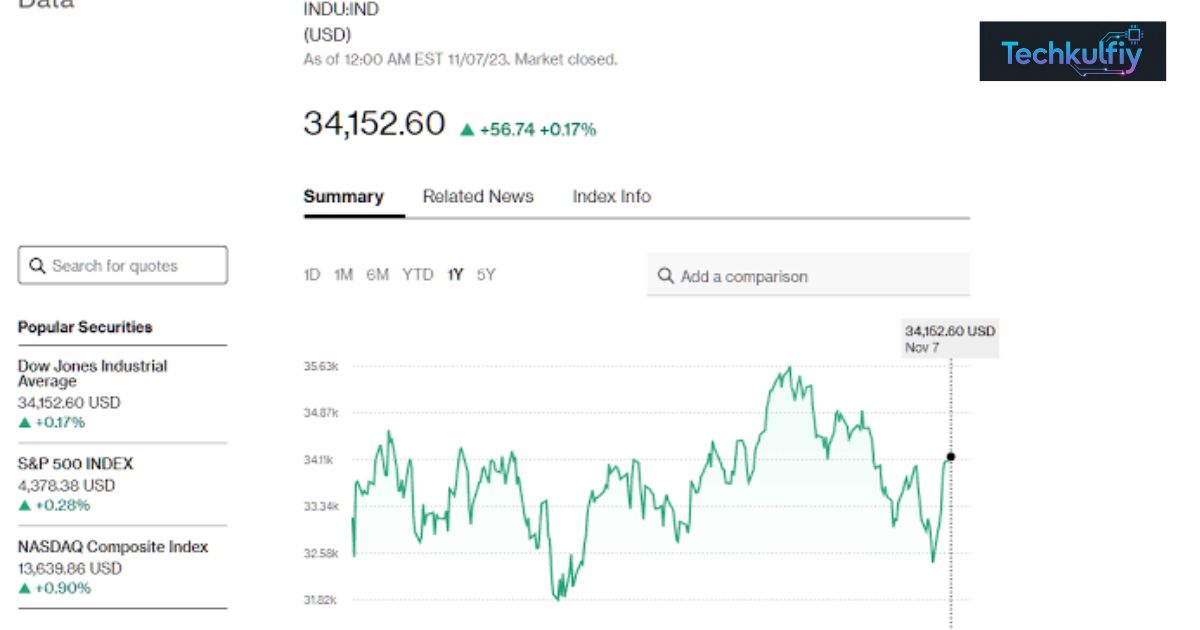
DJIA AI Stocks refers to Dow Jones companies with exposure to artificial intelligence.
These companies may use AI in software, chips, cloud services, or other technology.
The term connects the DJIA with the growing artificial intelligence market.
AI is changing the stock market faster than ever before.
Want to know which Dow companies have strong AI connections?
Understanding their technology exposure can make market research easier.
DJIA AI Stocks can include companies linked to AI infrastructure and software.
They may benefit from machine learning, cloud computing, and generative AI.
Their AI exposure can vary based on each company’s business model.
What Are DJIA AI Stocks?
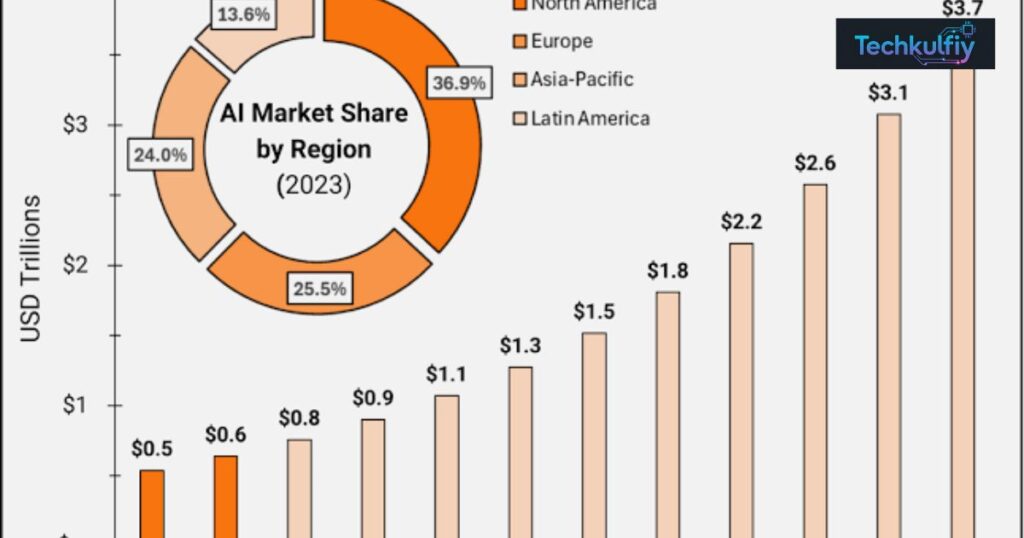
DJIA AI Stocks is an informal term used to describe companies associated with the Dow Jones Industrial Average that have meaningful exposure to artificial intelligence. It isn’t an official classification published by S&P Dow Jones Indices. Instead, it helps describe the growing connection between Dow Jones stocks and the expanding AI industry.
The DJIA index contains 30 companies and uses price weighting. That means a stock’s share price influences its effect on the index. It doesn’t simply give the largest company by market value the largest weight. S&P Dow Jones Indices explains the methodology as a price-weighted system that measures major U.S. companies.
| Term | Meaning |
|---|---|
| DJIA stocks | Companies included in the Dow Jones Industrial Average |
| Dow Jones AI stocks | Dow-related companies with meaningful AI exposure |
| AI stocks | Public companies connected to artificial intelligence |
| AI technology stocks | Companies developing or using AI-related technology |
| AI infrastructure stocks | Businesses supporting computing, chips, networking, and data centers |
| AI software stocks | Companies providing software powered by or built around AI |
The important point is that an AI-related company doesn’t need to be a pure-play AI business. A company may use AI to improve advertising, cloud computing, cybersecurity, recommendations, logistics, or enterprise software. That makes the world of AI-powered companies much broader than a simple list of AI model developers.
How Does the DJIA Include AI and Technology Companies?
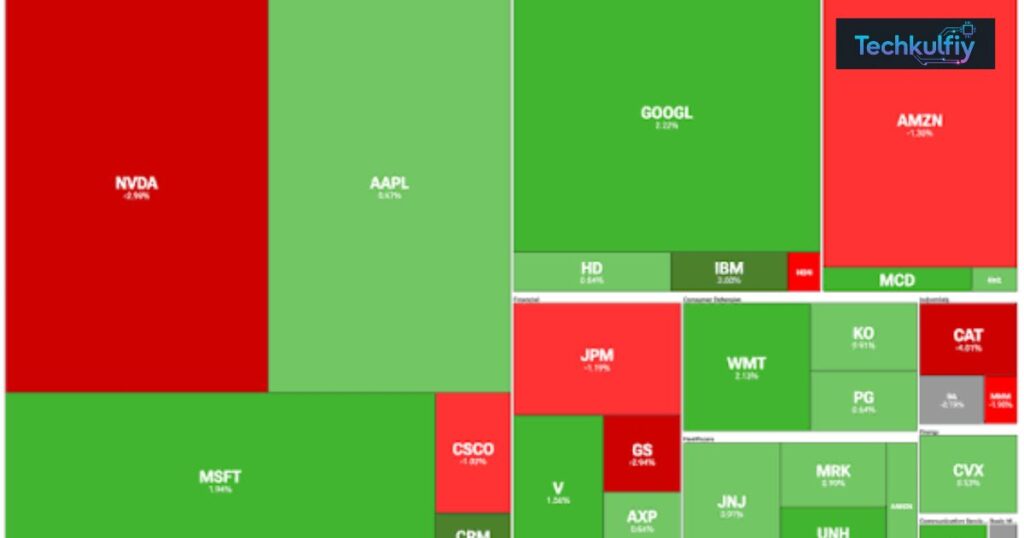
The Dow has evolved as the U.S. economy has changed. S&P Dow Jones Indices says the index has remained at 30 constituents since 1928, while its committee reviews constituents for ongoing eligibility and can make changes when market conditions or corporate developments warrant them. This flexibility allows the index to reflect major parts of the modern economy, including technology.
NVIDIA’s addition to the Dow in November 2024 was especially important for people watching Dow Jones technology stocks and AI semiconductor stocks. NVIDIA replaced Intel, giving the index a more direct connection to advanced computing and the semiconductor industry.
The connection goes beyond one company. Microsoft, Amazon, Alphabet, Broadcom, and Meta Platforms have different forms of exposure to AI technology. Some provide cloud computing or infrastructure, while others use AI inside advertising, software, search, recommendations, and other products.
| AI connection | How it supports the AI economy |
|---|---|
| AI chips | Provide computing power for AI workloads |
| Cloud computing | Gives businesses access to scalable computing resources |
| AI software | Turns AI capabilities into useful business tools |
| Data centers | Provide physical infrastructure for large-scale computing |
| Machine learning | Helps systems analyze data and make predictions |
| Generative AI | Creates text, images, code, audio, and other content |
This is why DJIA companies can have very different relationships with AI. One company may sell the hardware that powers an AI system, while another may use that system to improve its own products.
Top DJIA AI Stocks to Watch
When researching DJIA AI Stocks, it helps to look at the role each company plays instead of treating every company as the same type of AI business. NVIDIA is strongly linked to AI computing, while Microsoft has broad exposure through software and cloud services. Amazon connects AI with AWS and its large digital ecosystem. Alphabet uses AI across search, advertising, cloud services, and research.
Other companies also have important connections with the technology supply chain. Broadcom operates in semiconductors and networking. Meta uses AI extensively for recommendations, advertising, and other platform features. Taiwan Semiconductor Manufacturing is important because advanced chips require sophisticated manufacturing capabilities.
| Company | AI connection | Main area |
|---|---|---|
| NVIDIA | Accelerated computing and AI processors | AI infrastructure |
| Microsoft | Cloud, enterprise software, AI services | Cloud and software |
| Amazon | AWS, cloud AI services, machine learning | Cloud computing |
| Alphabet | Search, cloud, AI research, advertising | AI applications and cloud |
| Broadcom | Semiconductors and networking | AI infrastructure |
| Meta Platforms | Recommendations, advertising, AI systems | AI applications |
| Taiwan Semiconductor Manufacturing | Advanced chip manufacturing | Semiconductor supply chain |
Current S&P Dow Jones data shows NVIDIA, Microsoft, Amazon, Alphabet, Taiwan Semiconductor Manufacturing, Broadcom, and Meta among prominent companies in its broader Dow Jones index universe.
The phrase AI sector stocks can therefore cover several business models. Some companies benefit from selling the tools needed to build AI systems. Others benefit when businesses and consumers use those systems. Understanding that distinction gives a much clearer picture of the AI stock market.
Nvidia, Microsoft, and Other Leading AI Stocks
NVIDIA has become closely associated with the modern AI infrastructure boom because its computing technology supports demanding AI workloads. Its 2024 addition to the DJIA also gave the index a more visible connection with the semiconductor side of artificial intelligence. For readers researching AI semiconductor stocks, NVIDIA provides a useful example of how hardware can sit at the foundation of the AI ecosystem.
Microsoft represents a different model. Its AI exposure spans cloud computing, enterprise software, developer tools, and AI services. Rather than relying on one product category, the company can integrate AI software across a broad business platform. Amazon follows another path through AWS, where cloud infrastructure can support companies building and running AI applications.
Alphabet has deep connections with AI innovation through search, cloud services, machine learning, and other technology projects. Meta uses AI in areas such as recommendations and advertising. Broadcom adds another infrastructure angle through semiconductor and networking technologies.
The common thread is that these companies don’t all make money from AI in the same way. Some sell infrastructure. Others provide platforms. Some use AI to make existing businesses more efficient or more valuable. This is why simply searching for AI investment stocks without studying the underlying business can leave out important context.
AI Stocks Across Semiconductors, Cloud, and Software
The AI economy is much larger than chatbots. Underneath every advanced AI application sits a network of hardware, software, computing resources, and data systems. AI chips provide processing power, while networking equipment helps move information between systems. Data centers bring these components together at scale.
Cloud computing provides another major layer. Instead of purchasing and operating every server themselves, businesses can access computing resources through cloud platforms. This makes it easier to develop and deploy AI applications, particularly when workloads change quickly.
The software layer sits closer to the end user. AI software can support customer service, coding, research, cybersecurity, marketing, analytics, automation, and productivity. Together, these layers form a technology chain in which one company’s products can become another company’s foundation.
| AI layer | Examples of what it does |
|---|---|
| AI chips | Process demanding AI workloads |
| Semiconductor companies | Manufacture and supply advanced computing components |
| Data center technology | Provides physical computing infrastructure |
| Cloud computing | Delivers scalable computing resources |
| AI software | Turns AI capabilities into business tools |
| AI applications | Brings AI features directly to users |
This structure explains why AI infrastructure stocks and AI software stocks can behave differently. Infrastructure businesses may benefit from increasing demand for computing capacity, while software companies may depend more heavily on user adoption and recurring application revenue.
How Artificial Intelligence Is Affecting the Dow Jones
Artificial intelligence can influence the Dow through business investment, productivity, technology demand, and changing customer behavior. When companies spend more on computing infrastructure, chips, cloud services, or software, businesses throughout the technology chain can feel the effect.
AI can also change how companies operate internally. Machine learning can help businesses analyze large amounts of information, improve recommendations, automate repetitive tasks, detect unusual activity, and support decision-making. Generative AI adds another layer by helping create text, code, images, summaries, and other digital content.
However, AI is only one factor affecting DJIA stocks. Interest rates, consumer spending, corporate earnings, economic growth, energy costs, regulation, and global events can also influence market performance. The Dow should therefore not be viewed as an AI-only measure.
| Factor | Possible connection with AI |
|---|---|
| Revenue | New AI products and services can create additional demand |
| Productivity | Automation can change how businesses use labor and technology |
| Capital spending | Companies may invest more in AI infrastructure |
| Software | AI features can change enterprise applications |
| Semiconductors | AI workloads can increase demand for advanced computing |
| Advertising | AI can improve targeting and recommendation systems |
| Customer service | AI tools can automate and support customer interactions |
A useful way to think about AI is as a new layer running through existing industries. It doesn’t replace every business model overnight. Instead, it can gradually change how companies build products, serve customers, and manage operations.
DJIA AI Stocks vs Other AI Stocks
The biggest distinction between DJIA AI Stocks and the wider universe of AI stocks is index membership. The DJIA contains only 30 companies, while thousands of publicly traded companies exist across the broader U.S. and global market.
The DJIA is also price weighted. S&P Dow Jones Indices explains that a stock with a higher share price has greater influence on the index than a stock with a lower share price, even when the lower-priced company has a larger market capitalization.
This makes the DJIA different from many other major benchmarks. A company can have enormous AI exposure while remaining outside the Dow. Likewise, a Dow constituent can use AI extensively without being primarily an AI company.
| Category | Main characteristic | AI exposure |
|---|---|---|
| DJIA | 30 major U.S. companies | Mixed |
| Dow Jones AI stocks | Dow-related companies with AI exposure | Moderate to significant |
| Broader AI stocks | Companies linked to artificial intelligence | Varies widely |
| AI technology stocks | Technology businesses using or developing AI | Often significant |
| AI semiconductor stocks | Chip and computing businesses | Infrastructure-focused |
| AI software stocks | Software businesses built around AI | Application-focused |
The U.S. stock market therefore contains a much wider AI ecosystem than the Dow alone. For that reason, the terms Dow Jones AI stocks and artificial intelligence stocks shouldn’t be treated as exact synonyms.
What to Consider When Analyzing AI Stocks
AI-stock research should begin with the actual business rather than the latest headline. A company may announce an exciting AI product, yet the financial effect could take years to become significant. Another company may quietly sell infrastructure that becomes essential to thousands of AI developers.
Revenue growth is one useful starting point. You can then examine margins, cash flow, capital spending, research costs, and the company’s competitive position. For infrastructure businesses, investment requirements can be particularly important because AI systems may require expensive processors, networking equipment, data centers, electricity, and cooling.
Valuation also deserves attention. A company can have strong technology and impressive AI growth prospects while still facing high expectations from the market. If future results fail to match those expectations, the stock can react even when the underlying technology remains useful.
| Factor | What to examine |
|---|---|
| Revenue growth | Is demand for the company’s products increasing? |
| Profitability | Does growth translate into stronger business results? |
| Cash flow | Can the company fund expansion and operations? |
| Capital spending | How much is required for AI infrastructure? |
| Competition | Can rivals challenge the company’s position? |
| Valuation | How much future growth does the market already expect? |
| AI exposure | Is AI central to the business or simply one feature? |
| Regulation | Could new rules affect products or operations? |
A simple case study shows why this matters. Imagine two companies both described as AI-powered companies. Company A sells specialized computing hardware to data centers. Company B sells an AI writing application to consumers. If AI infrastructure spending rises, Company A may see demand from data-center operators. Company B depends more directly on users subscribing to its software. Both belong to the AI conversation, but their business drivers are completely different.
AI Stock Market Trends and Future Growth
The AI market continues to develop across hardware, software, cloud services, robotics, cybersecurity, automation, and enterprise applications. One of the biggest changes is the movement from experimental AI tools toward systems designed to perform useful business tasks.
Generative AI remains an important part of that shift. Companies are exploring systems that can create content, write code, summarize documents, analyze information, and assist employees. At the same time, traditional machine learning remains important for recommendations, fraud detection, forecasting, search, and other data-heavy tasks.
AI infrastructure is another major theme. As models become more capable, organizations need computing power, networking, storage, and data-center capacity. S&P Dow Jones Indices’ technology indexes currently include major companies such as NVIDIA, Microsoft, Broadcom, Micron, and Taiwan Semiconductor Manufacturing, highlighting the broad role of the technology supply chain.
| AI trend | Why it matters |
|---|---|
| Generative AI | Expands AI into content and knowledge work |
| AI infrastructure | Supports large-scale model development and deployment |
| AI chips | Provide specialized computing power |
| Cloud computing | Makes AI resources easier to access |
| AI software | Brings AI into everyday business workflows |
| AI agents | Could automate more complex multi-step tasks |
| Data center technology | Supports growing computing requirements |
| Enterprise AI | Connects AI with real business operations |
Still, AI growth won’t necessarily follow a straight line. Technology cycles can move through periods of heavy investment, rapid expansion, competition, and consolidation. High infrastructure costs, changing customer demand, regulation, energy needs, and new technologies can all affect the pace of adoption.
A useful quote from S&P Dow Jones Indices captures the broader nature of the Dow: “The Dow is price weighted.” That simple detail matters when interpreting AI-related movements in the index. AI may drive significant changes in some companies, yet the DJIA’s overall behavior depends on the methodology and performance of all its constituents.
Frequently Asked Questions About DJIA AI Stocks
Bilkul. Main “DJIA AI Stocks” aur related keywords ki quantity increase kar raha hoon, lekin natural flow maintain karunga taake keyword stuffing na lage.
What Are DJIA AI Stocks?
DJIA AI Stocks is an informal term for DJIA stocks and Dow Jones AI stocks that have meaningful exposure to artificial intelligence. These AI companies may work with AI infrastructure, AI chips, cloud computing, software, automation, and other AI technology. The term connects the Dow Jones Industrial Average with the growing AI market and AI industry. However, DJIA AI Stocks is not an official category of the DJIA index.
What Is the DJIA?
The Dow Jones Industrial Average is a 30-stock, price-weighted stock market index that tracks major U.S. blue-chip companies. The DJIA index covers companies from different industries, including some important technology stocks. Because several DJIA companies now have exposure to artificial intelligence, the connection between Dow Jones stocks and AI stocks has become more important for investors and market researchers.
Which AI Companies Are in the DJIA?
Several AI companies connected with the DJIA have meaningful exposure to artificial intelligence. NVIDIA, Microsoft, Amazon, Alphabet, Broadcom, and Meta are examples of companies involved in areas such as AI infrastructure, AI software, cloud computing, advertising technology, and AI applications. These Dow Jones AI stocks have different business models, so their exposure to the AI sector and AI technology can vary significantly.
Is NVIDIA Part of the DJIA?
Yes. NVIDIA joined the DJIA in November 2024, replacing Intel. Its addition strengthened the connection between DJIA AI Stocks, AI semiconductor stocks, and the wider AI market. NVIDIA develops technologies used for demanding AI workloads, making it an important company in the AI infrastructure ecosystem. Its role also highlights the growing importance of AI chips and semiconductor companies in the AI industry.
What Are the Main Types of AI Stocks?
The main categories of AI stocks include AI semiconductor stocks, AI infrastructure stocks, AI software stocks, cloud computing companies, automation businesses, and companies developing consumer or enterprise AI applications. Many artificial intelligence stocks can operate across several categories. For example, a company may provide AI chips, cloud services, and AI software at the same time. These categories help explain how different AI investment stocks participate in the AI sector.
Are All AI Stocks Part of the DJIA?
No. The DJIA index has only 30 constituents, while the broader market contains many AI stocks and artificial intelligence stocks. Numerous AI technology stocks trade outside the DJIA. Some are large technology companies, while others focus on specialized AI infrastructure, AI software, machine learning, robotics, or other areas of the AI industry. Therefore, DJIA AI Stocks represent only one part of the broader AI stock market.
What Is the Difference Between DJIA and Nasdaq AI Stocks?
The DJIA is a 30-company, price-weighted stock market index, while Nasdaq represents a much broader group of listed companies with significant exposure to the technology sector. Many AI technology stocks, AI software stocks, and AI semiconductor stocks trade on Nasdaq without being DJIA companies. As a result, Dow Jones AI stocks provide one view of AI exposure, while the wider AI stock market includes many more companies.
How Does AI Affect Dow Jones Stocks?
Artificial intelligence can affect Dow Jones stocks through technology demand, productivity improvements, cloud computing, semiconductor demand, software adoption, automation, advertising, and business investment. Generative AI, machine learning, and other forms of AI innovation are creating new opportunities across the technology sector. The impact on individual DJIA stocks depends on each company’s products, customers, revenue sources, and level of AI adoption.
Is the DJIA an AI Index?
No. The DJIA index is a broad stock market index, not an AI-specific index. However, some DJIA companies have substantial exposure to artificial intelligence, AI infrastructure, cloud computing, software, and AI applications. This is why the term DJIA AI Stocks is sometimes used when discussing Dow Jones technology stocks and their relationship with the AI market.
Why Is NVIDIA Important to DJIA AI Stocks?
NVIDIA is closely connected to the AI infrastructure market because its computing technologies support demanding AI workloads. Its business is also linked to AI chips, data centers, and AI technology. For this reason, NVIDIA is frequently discussed alongside AI semiconductor stocks, AI infrastructure stocks, and other Dow Jones AI stocks. Its presence in the DJIA gives the index a more direct connection to the expanding AI industry.
What Makes a Company an AI Stock?
A company is commonly called an AI stock when artificial intelligence plays an important role in its products, services, infrastructure, revenue opportunities, or business strategy. AI companies can develop AI software, AI chips, cloud platforms, machine learning systems, or AI applications. Other AI-powered companies may use AI to improve advertising, automation, customer service, analytics, or internal operations. There is no single universal definition of an AI stock, so the level of AI exposure can differ between DJIA stocks, Dow Jones AI stocks, and other artificial intelligence stocks.
Conclusion
DJIA AI Stocks offer a useful way to understand how artificial intelligence connects with some of America’s largest public companies. The Dow itself isn’t an AI benchmark. However, its technology-related constituents can provide exposure to important parts of the AI ecosystem, including chips, cloud computing, software, data centers, networking, advertising, and digital services.
The most important lesson is that AI stocks aren’t all the same. NVIDIA represents AI computing infrastructure. Microsoft connects AI with cloud and enterprise software. Amazon brings AI into AWS and its broader ecosystem. Alphabet and Meta use artificial intelligence across major digital platforms. Other AI companies may focus on specialized software, robotics, cybersecurity, or advanced hardware.
As the AI industry continues to develop, understanding these different business models becomes more valuable than simply following a list of popular tickers. The AI stock market includes infrastructure providers, software developers, cloud platforms, semiconductor manufacturers, and businesses that use AI to improve existing products.
For anyone following DJIA stocks, Dow Jones AI stocks, and broader artificial intelligence stocks, the key is to understand how technology connects with actual business performance. AI is a powerful trend, but it operates inside a much larger stock market index, economy, and competitive landscape.
META DESCRIPTION
Explore DJIA AI Stocks, top AI companies, market trends, and how artificial intelligence is shaping Dow Jones stocks today.

About the Author
The author at TechKulfiy writes informative articles about technology, software, digital platforms, and IT solutions. The goal is to make complex topics easier to understand by providing clear explanations, practical insights, and helpful information. Each article aims to help readers explore technology topics and make informed decisions.