


Artificial intelligence is a technology that helps machines think and learn like humans.
It uses data to make decisions and solve problems.
In simple words, it allows computers to act smart without human help every time.
Artificial intelligence is changing the way we live and work today.
You see it in phones, apps, and online services every day. It is making tasks faster and easier for everyone.
Artificial intelligence is used in many fields like healthcare, business, and education.
It helps in predicting results and improving accuracy.
This technology is becoming an important part of modern life.
What it is and why it matters
Artificial intelligence refers to machines that can think, learn, and act in a way that looks human-like. These AI systems can adapt to new inputs without being explicitly programmed again and again. Instead, they rely on automation technology to handle repetitive and complex tasks efficiently.
One simple example is Netflix recommendations. The system studies your watching behavior and uses AI algorithms to suggest shows you might enjoy. It feels simple, but behind the scenes, it is powerful predictive analytics in action.
AI matters because it saves time, reduces errors, and improves decision-making. In the USA, businesses use it to cut costs and improve customer experience. However, it also raises questions about control, fairness, and long-term impact.
A tech expert once said,
“AI does not replace human thinking. It amplifies it.”
Artificial Intelligence History
The story of AI history begins in the 1950s when scientists first tried to build machines that could think. Early systems were based on logic and rules. They were simple but groundbreaking.
Later, the USA played a major role in AI development through research programs like DARPA. These efforts helped computers learn basic reasoning and pattern recognition. Over time, improvements in computing power and big data processing pushed AI forward.
The evolution of AI can be understood like this:
Era Development
1950s–1970s Symbolic AI and early neural ideas
1980s–2010s Rise of machine learning
2011–2020s Breakthrough in deep learning
Present Growth of generative AI
Each stage made machines smarter and more useful in real-world applications.
What is generative AI?
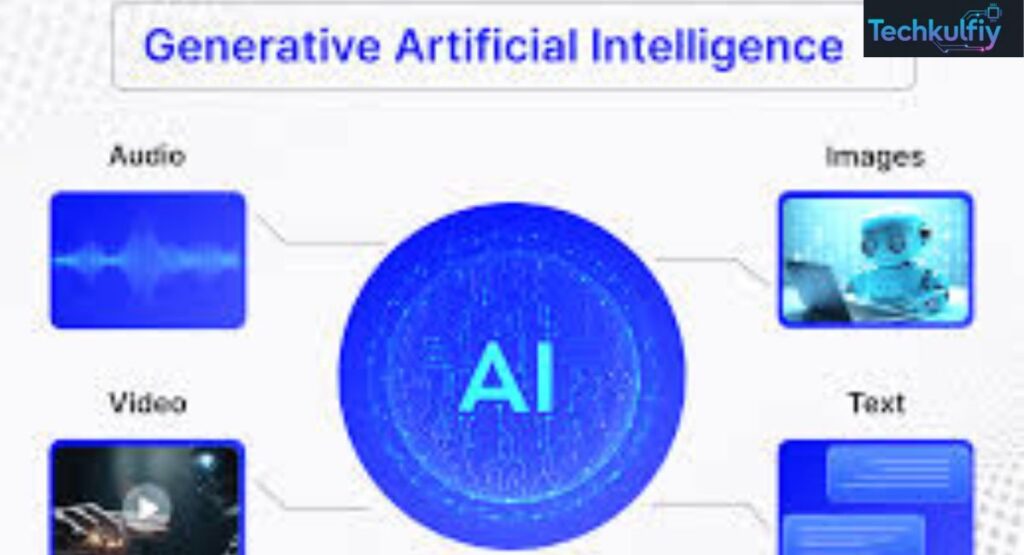
Generative AI is one of the most exciting parts of modern technology. Unlike traditional systems that only analyze data, generative AI creates new content. It can write text, generate images, and even produce code.
It works using large language models (LLMs) trained on massive datasets. These models understand patterns in language and produce human-like responses using natural language generation (NLG).
For example, when you ask an AI chatbot to write an email, it does not copy anything. Instead, it generates new content based on learned patterns.
Generative AI is changing industries because it allows faster creativity, smarter automation, and better digital communication.
How Artificial Intelligence Works
AI works through a combination of data, algorithms, and computing power. It starts by collecting large datasets, often called big data processing, and then applies AI algorithms to find patterns.
These patterns help systems make decisions or predictions. Over time, the system improves through feedback loops.
For example, a navigation app uses real-time traffic data to suggest faster routes. It constantly updates its understanding of road conditions using predictive analytics.
The process can be summarized simply:
Data goes in → AI learns patterns → System predicts outcomes → Performance improves
Machine Learning, Neural Networks, and Deep Learning Explained
Machine learning allows computers to learn without being explicitly programmed. It is the foundation of modern AI systems.
Neural networks work like a simplified human brain. They connect layers of information and process input step by step. These networks are especially powerful in tasks like image recognition.
Deep learning is an advanced form of machine learning that uses many layers of neural networks to understand complex patterns.
A common example is facial recognition. Your phone uses computer vision powered by deep learning to identify your face with high accuracy.
These technologies form the backbone of modern intelligent automation systems.
Artificial Intelligence in Today’s World
Today, Artificial intelligence is deeply embedded in everyday life in the USA. You see it in smartphones, online shopping, banking apps, and healthcare systems.
AI is not futuristic anymore. It is already part of daily digital experiences. Businesses use it to improve efficiency, while users benefit from faster and smarter services.
At the heart of this transformation are AI systems powered by automation technology and realtime data processing.
How Artificial Intelligence Is Being Used Across Industries
AI is transforming major industries in powerful ways.
In healthcare, AI applications in healthcare help doctors detect diseases early using medical imaging and patient data analysis. It improves accuracy and saves lives.
In retail, Retail AI studies customer behavior and improves product recommendations. It helps businesses understand what people want before they even search for it.
In banking, Banking AI is used for fraud detection, credit scoring, and risk management. It protects both customers and financial institutions.
In manufacturing, Manufacturing AI improves production efficiency by predicting machine failures and optimizing supply chains.
Industry AI Use
Healthcare Diagnosis and imaging
Retail Personal recommendations
Banking Fraud detection
Manufacturing Predictive maintenance
Each industry relies on intelligent automation to reduce human effort and increase accuracy.
Is AI becoming autonomous?
AI is slowly moving toward autonomy through AI agents that can perform tasks independently.
These systems can make decisions, complete workflows, and interact with other systems.
However, full autonomous AI is still limited. Most systems still require human supervision. For example, self-driving cars can operate in controlled environments but still need human oversight in complex situations.
The balance between automation and human control is still evolving.
Ethical Challenges and Trust Issues in AI
As AI grows, so do concerns about fairness and safety. AI ethics is now a major topic in the USA.
One big concern is the AI trust dilemma, where people worry about how AI systems make decisions. If AI is biased or unclear, trust breaks down.
Companies are now focusing on responsible AI, which means building systems that are fair, transparent, and safe for everyone.
Issues like bias, privacy, and misinformation must be handled carefully to ensure long-term trust in AI systems.
Future of Artificial Intelligence and Emerging Trends
The future of Artificial intelligence in the USA looks extremely powerful. We will see more advanced AI agents, smarter automation systems, and deeper integration into everyday life.
Natural language processing (NLP) will also improve, making communication between humans and machines more natural. Technologies like conversational AI, chatbots, and voice assistants will become more human-like.
Future trends include smarter intelligent automation, better semantic understanding, and more advanced language models that improve communication, decision-making, and creativity.
As one researcher said,
“AI will not replace humans, but humans who use AI will replace those who don’t.”
Conclusion
Artificial Intelligence is not just technology. It is a major shift in how the world works. From healthcare to banking and retail to manufacturing, AI is changing everything through datadriven intelligence, automation, and learning systems.
The USA is at the center of this transformation, and understanding AI today gives you an advantage in tomorrow’s world.
FAQs
What is artificial intelligence?
Artificial intelligence is a technology that helps machines think, learn, and make decisions like humans using data and algorithms.
What are the 4 types of AI?
The four types are Reactive Machines, Limited Memory AI, Theory of Mind AI, and Self-Aware AI.
Which type of AI is ChatGPT?
ChatGPT is Generative AI based on large language models that create human-like text.
Who is the father of AI?
John McCarthy is known as the father of artificial intelligence.
What are the five names of AI?
Machine Learning, Deep Learning, Neural Networks, Natural Language Processing, and Computer Vision.
Meta Description
Artificial Intelligence explained simply with uses, history, and future impact in easy English for beginners and USA readers.
