

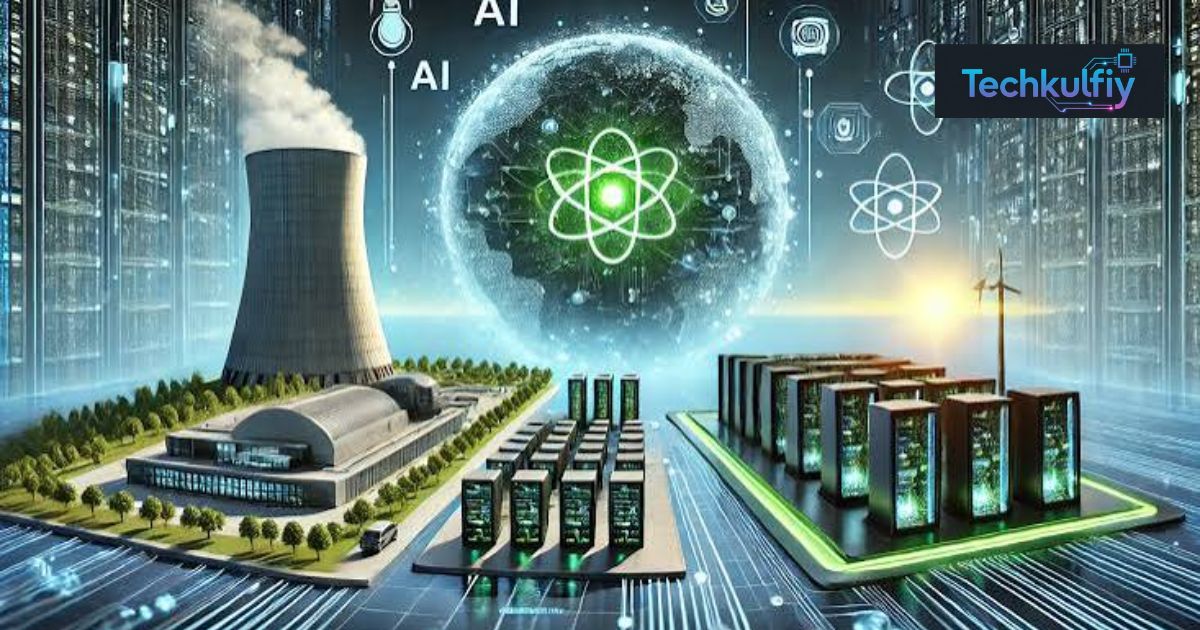
AI in US Nuclear Power Plants is becoming an important topic in 2026 as American energy companies explore how artificial intelligence can improve efficiency, simplify paperwork, and support nuclear power operations. From analyzing maintenance records to organizing technical documents, AI technology in nuclear energy offers new ways to help workers manage complex tasks.
Across the United States, growing electricity demand from AI data centers, businesses, and digital infrastructure has renewed interest in nuclear power. At the same time, nuclear operators must maintain strict safety standards, protect sensitive systems, and comply with federal regulations. This makes the responsible use of AI in US nuclear power plants especially important.
In this article, you will discover how AI in US Nuclear Power Plants could transform paperwork, equipment maintenance, safety analysis, and energy management. We will also explore the potential benefits, major challenges, and future of artificial intelligence in the US nuclear energy industry.
What Is AI in US Nuclear Power Plants?
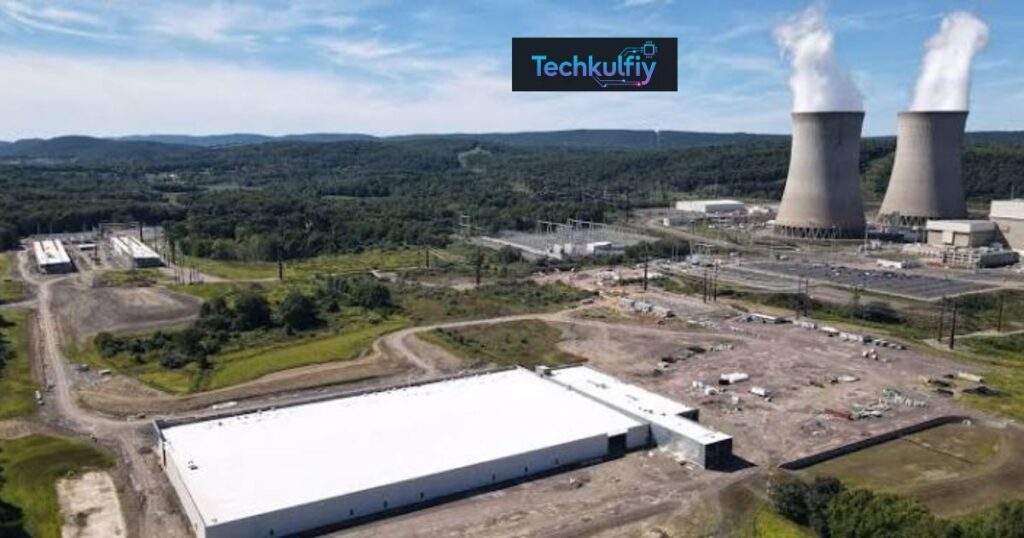
AI in US Nuclear Power Plants refers to the use of artificial intelligence (AI) and related software to support selected activities at nuclear energy facilities. These applications may include reviewing documents, analyzing equipment data, identifying unusual patterns, and helping staff find relevant technical information.
A nuclear power plant generates electricity through controlled nuclear fission. Because these facilities operate under demanding technical and regulatory requirements, workers must maintain detailed records and follow established safety procedures.
Traditional systems can require employees to search through extensive manuals, inspection reports, maintenance records, and regulatory documents. AI-powered document management could help organize this information and make it easier to retrieve.
For example, a maintenance engineer might use an approved AI assistant to locate relevant sections of a technical manual or summarize historical maintenance reports. The employee would still need to verify the information before using it in operational decisions.
The key distinction is that AI in nuclear energy does not automatically mean AI controls the reactor. Administrative assistants, analytical tools, and safety-critical control systems have different roles and risk levels.
Why AI Is Gaining Attention in the US Nuclear Energy Industry
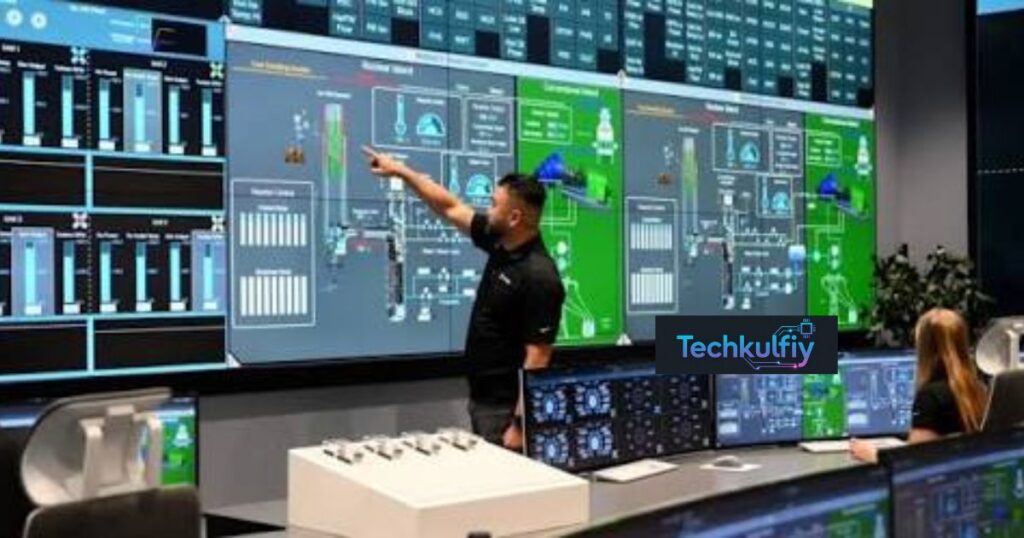
The American nuclear energy industry faces several competing priorities. Operators must maintain reliable electricity production, comply with extensive regulations, manage aging equipment at some facilities, and control operating costs.
At the same time, electricity demand is receiving increased attention because of AI data centers, industrial development, and the electrification of various services.
These pressures help explain interest in AI in US Nuclear Power Plants.
Growing electricity demand: Data centers and other electricity-intensive operations have increased interest in dependable power sources. Nuclear facilities are one part of the broader US energy mix.
Complex technical records: Nuclear operators maintain extensive documentation covering inspections, equipment, training, maintenance, and regulatory compliance.
Equipment maintenance: Analyzing historical data may help engineers identify patterns associated with equipment deterioration before a failure occurs.
Workforce support: AI-based search and summarization tools could help employees find information across large technical document collections.
Operational efficiency: Carefully designed software may reduce repetitive administrative work and give employees more time for tasks requiring professional judgment.
However, these potential benefits do not mean every nuclear facility is already using AI in the same way. Adoption varies, and each application must be evaluated according to its intended purpose and risk.
How AI Helps With Nuclear Power Plant Paperwork
One of the most practical applications of AI in US Nuclear Power Plants is supporting document-heavy administrative work.
Nuclear facilities generate and maintain many types of records, including maintenance reports, equipment histories, inspection documentation, training materials, and compliance records. Locating the correct information can take time, especially when records are spread across different systems.
AI-powered document management may help staff search, categorize, summarize, and compare approved documents.
For example, AI in US nuclear power plants ,an employee could ask an internal AI assistant to find maintenance reports associated with a particular equipment identifier. The system might retrieve relevant records and produce a summary for review.
Another application is automated document processing. AI can help extract information from forms, identify missing fields, and organize records into categories. Employees would still need to check the output and correct mistakes.
AI can also support regulatory compliance documentation by helping workers locate applicable procedures and identify records that may require further review. It must not replace formal regulatory interpretation or required approvals.
The main benefit is improved access to information. The main risk is that an AI system may misinterpret a document, overlook an exception, or generate an inaccurate summary. For this reason, nuclear operators need controlled access, traceable sources, and human verification.
AI Applications in Nuclear Plant Maintenance
Maintenance is another area where AI in US Nuclear Power Plants could provide practical value.
As per AI in US nuclear power plants ,Nuclear facilities depend on numerous mechanical, electrical, and monitoring systems. Equipment performance must be assessed according to approved maintenance schedules, engineering requirements, and regulatory obligations.
Predictive maintenance AI analyzes available data to identify patterns that may indicate developing equipment problems. Depending on the system and the quality of its data, this analysis may help engineers prioritize inspections or investigate unusual behavior.
Consider an industrial pump in AI in US nuclear power plants that produces vibration measurements over time. An analytical model might identify a pattern that differs from the equipment’s established baseline. Engineers could then investigate the finding using approved procedures.
This does not mean AI can independently decide whether equipment is safe to operate. The result is an analytical signal that qualified personnel must evaluate.
Other potential applications include equipment health monitoring, anomaly detection, and maintenance-history analysis.
These methods may help reduce avoidable downtime when properly validated. Nevertheless, false alarms, missed warnings, poor-quality data, and changing equipment conditions can undermine performance.
In a AI in US nuclear power plants maintenance recommendations must remain consistent with approved engineering processes and safety requirements.
AI and Nuclear Plant Safety in America
Safety is the most important consideration when discussing AI in US Nuclear Power Plants.
As per AI in US nuclear power plants,Nuclear facilities use multiple layers of protection, established operating procedures, technical specifications, trained personnel, and regulated safety systems. AI must be evaluated within this existing framework rather than treated as a substitute for it.
An administrative AI assistant that summarizes maintenance records presents a different risk from software that could influence a safety-related control function.
This distinction matters because nuclear safety systems may be subject to stringent design, testing, qualification, and change-control requirements.
Potentially useful applications include reviewing historical information, supporting engineering analysis, and helping personnel locate relevant procedures. Higher-risk uses require much more extensive assessment.
Human oversight remains essential. Operators and qualified engineers must retain responsibility for decisions that affect plant safety.
AI in US nuclear power plants should also be tested for incorrect outputs, unexpected behavior, cybersecurity weaknesses, and performance under unusual conditions. A tool that performs well in ordinary circumstances may still fail when presented with incomplete or unfamiliar information.
Therefore, the goal of AI-powered nuclear safety support should be to improve the quality of human decision-making, not to bypass established safeguards.
Comparison Table: AI Applications in US Nuclear Power Plants
| AI application | Potential benefit | Main limitation |
|---|---|---|
| AI document management | Faster access to technical records | Summaries may contain errors |
| Predictive maintenance AI | Earlier identification of possible equipment problems | Predictions require validation |
| Anomaly detection | Highlights unusual data patterns | False alarms are possible |
| Automated document processing | Reduces repetitive administrative work | Human checks remain necessary |
| Energy demand forecasting | Helps analyze electricity demand patterns | Forecasts are not guaranteed |
| Cybersecurity analytics | Helps identify suspicious activity | AI can miss threats or generate false alerts |
| Engineering decision support | Organizes information for qualified staff | Cannot replace approved engineering judgment |
These applications have different risk levels. A document-search tool may be suitable for controlled administrative use, while a system that interacts with safety-related equipment would require a much more demanding evaluation.
Can AI Make Nuclear Energy More Efficient?
AI in US Nuclear Power Plants may improve selected aspects of efficiency, but the results depend on the specific application.
For example, As per AI in US nuclear power plants ,AI-assisted maintenance analysis may help engineers identify recurring equipment issues. Better document retrieval may reduce the time employees spend searching through records. Improved forecasting may support planning and resource allocation.
These benefits can contribute to more efficient workflows without changing how nuclear fission produces electricity.
However, AI energy efficiency should not be confused with an automatic increase in reactor output. An AI system cannot simply increase generation beyond approved operating limits.
Nuclear power plants must continue to follow their technical specifications, licensing conditions, maintenance requirements, and safety procedures. Any operational changes must be assessed and authorized through the appropriate processes.
Another consideration is the electricity used by the AI infrastructure itself. Some AI systems require computing resources, data storage, and network capacity. Their total value should be evaluated against their costs and measurable benefits.
For US nuclear operators, a successful AI project should demonstrate that it improves a specific workflow or decision process without introducing unacceptable risks.
AI Data Centers and the Future of Nuclear Power in the US
The relationship between AI data centers and nuclear energy has attracted attention because large computing facilities can require substantial amounts of electricity.
As companies expand their AI infrastructure, dependable electricity supply becomes an important planning issue. Nuclear generation is one option that utilities and technology companies may consider alongside renewables, natural gas, storage, transmission upgrades, and other resources.
Some energy companies and technology firms have explored agreements involving existing nuclear facilities or plans associated with future nuclear generation. The details vary by project, and proposed capacity should not be confused with electricity already being delivered.
Interestingly,As per AI in US nuclear power plants this relationship works in both directions.
Nuclear facilities may use AI tools to support selected administrative and maintenance tasks, while the growth of AI computing can increase interest in reliable electricity supplies.
However, AI-powered nuclear energy is not a single technology or a guaranteed solution to America’s energy challenges. New generation projects, grid connections, permitting, fuel availability, financing, and equipment supply all influence how much electricity can be delivered and when.
The most realistic outlook is that AI and nuclear power may increasingly intersect through planning, computing demand, and carefully selected plant-support applications.
Challenges of Using AI in US Nuclear Power Plants
Despite its potential, AI in US Nuclear Power Plants faces important technical, regulatory, and organizational challenges.
Data quality: AI models rely on data that may be incomplete, inconsistent, or poorly structured. Incorrect inputs can produce unreliable results.
Cybersecurity: Nuclear operators must protect sensitive systems and information. Connecting AI tools to internal networks can introduce additional security considerations.
Regulatory requirements: AI applications must fit within the facility’s licensing, safety, quality-assurance, and change-control obligations.
Explainability: Staff need enough information to understand why an AI tool produced a particular result, especially when that result affects engineering decisions.
Human expertise: Employees need training to identify AI errors and distinguish useful recommendations from unsupported output.
Integration costs: Existing nuclear facilities may use older equipment and specialized software. Integrating new AI tools can require substantial testing and technical work.
Reliability: A model can perform well during initial testing but behave differently when operating conditions or data patterns change.
These challenges explain why nuclear operators should adopt AI incrementally, beginning with well-defined use cases and measurable objectives.
What US Nuclear Operators Should Consider Before Adopting AI
Before implementing AI in US Nuclear Power Plants, operators should identify a specific problem that the technology is intended to solve.
As per AI in US nuclear power plants A document-search assistant, for example, should be evaluated on whether it retrieves the correct approved records, cites the relevant source material internally, protects confidential information, and reduces search time.
A predictive maintenance model should be evaluated against reliable historical data and established engineering practices. Its performance should be monitored for false positives, missed detections, and changes in operating conditions.
Cybersecurity reviews should determine which data the system can access, whether it connects to sensitive networks, and how access is controlled. AI tools should not be granted unnecessary permissions simply because they can perform multiple tasks.
Operators should also establish clear accountability. Staff need to know who reviews outputs, who approves decisions, how errors are reported, and when the AI system must not be used.
A phased approach allows facilities to test benefits and limitations before expanding deployment. In nuclear operations, documented validation and controlled implementation are more important than adopting a technology simply because it is new.
Frequently Asked Questions
1. What is AI in US Nuclear Power Plants?
It refers to using artificial intelligence to support selected nuclear-industry tasks, including document management, maintenance analysis, anomaly detection, and engineering support. It does not necessarily mean AI controls a reactor.
2. Are US nuclear power plants already using AI?
AI and machine-learning technologies have applications across the wider energy industry, but adoption differs by facility and purpose. A specific claim about an individual nuclear plant should be verified before publication.
3. How can AI help nuclear power plant paperwork?
AI-powered document management can help organize records, search technical manuals, summarize reports, and identify missing information. Staff must verify outputs before relying on them for regulated work.
4. Can AI control a nuclear reactor?
Some AI research explores advanced control and automation, but using AI in safety-critical reactor functions raises demanding technical and regulatory issues. AI-generated recommendations should not be confused with authorization to control a licensed facility.
5. Can AI improve nuclear power plant safety?
AI may help identify unusual data patterns or organize information that supports safety-related analysis. Its effectiveness depends on validation, data quality, cybersecurity, and human oversight. AI itself does not guarantee greater safety.
6. Why are AI data centers increasing interest in nuclear energy?
Large data centers can consume substantial amounts of electricity. This has encouraged interest in dependable generation options, including nuclear power, although the best energy mix depends on regional conditions and project economics.
7. What are the main risks of AI in nuclear facilities?
Major concerns include inaccurate outputs, cybersecurity vulnerabilities, poor-quality data, limited explainability, and inappropriate reliance on automated recommendations.
8. Will AI replace nuclear power plant workers?
AI may automate certain repetitive tasks and change how workers access information. Nuclear facilities will still require qualified personnel for operations, maintenance, engineering, safety oversight, and regulatory compliance.
Conclusion
AI in US Nuclear Power Plants could become an important part of the American nuclear industry’s effort to improve information management, maintenance analysis, and selected administrative processes. Its most practical applications may include AI-powered document management, predictive maintenance AI, and analytical tools that help qualified employees identify patterns in complex data.
For US nuclear operators, the main opportunity is not to replace established safety procedures with automation. It is to use well-tested technology to make specific tasks more efficient while preserving human accountability and regulatory compliance.
The growth of AI in US nuclear power plants centers may also increase interest in dependable electricity generation, creating a closer relationship between artificial intelligence and the nuclear energy sector. Nevertheless, actual outcomes will depend on infrastructure investment, project economics, technical validation, and responsible implementation.
Ultimately, the future of AI in US Nuclear Power Plants will depend on whether individual applications demonstrate measurable benefits without compromising safety, reliability, or cybersecurity. Careful testing, clear operating boundaries, and expert oversight will be essential as the American nuclear industry evaluates new AI capabilities.

About the Author
The author at TechKulfiy writes informative articles about technology, software, digital platforms, and IT solutions. The goal is to make complex topics easier to understand by providing clear explanations, practical insights, and helpful information. Each article aims to help readers explore technology topics and make informed decisions.