

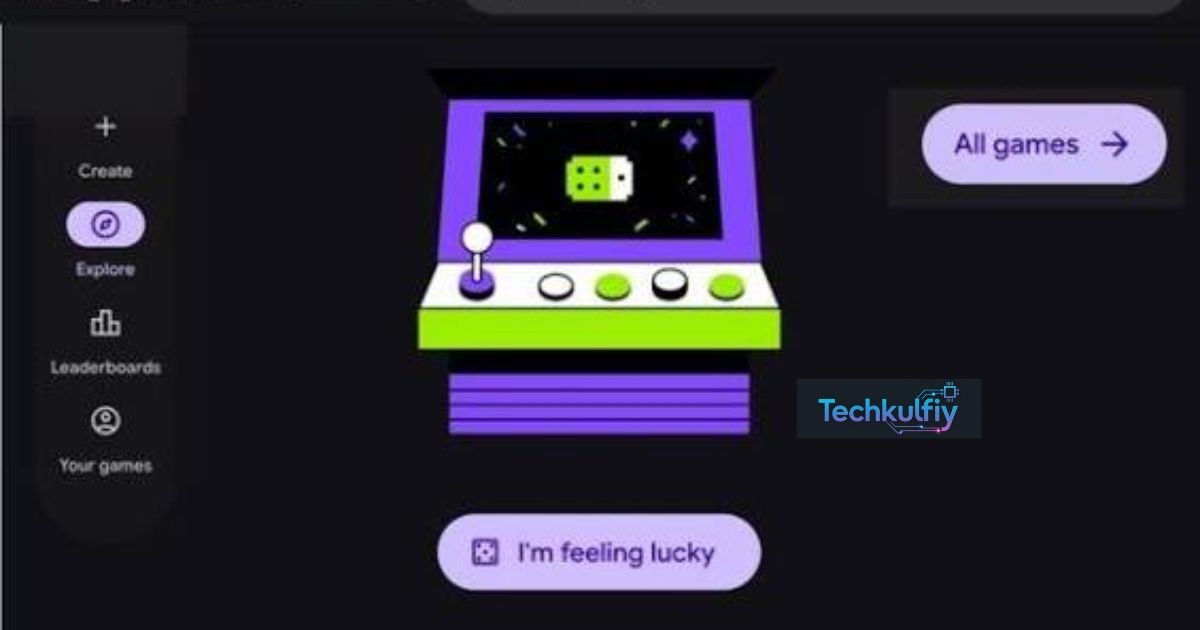
Playground is Google and Unity’s new AI-powered gaming platform that lets users create interactive games with simple text prompts.
It uses advanced AI technology to turn ideas into playable virtual experiences without requiring traditional coding skills.
Imagine describing a game in a few sentences and watching AI turn your idea into an interactive world.
Playground makes this possible by combining AI game generation, world models, and creative tools for faster game development.
The platform also points toward a future where anyone can experiment with game creation, even without technical experience.
With Unity Spark and advanced 3D capabilities coming into the picture, AI gaming could become more powerful and accessible.
What Is Playground?
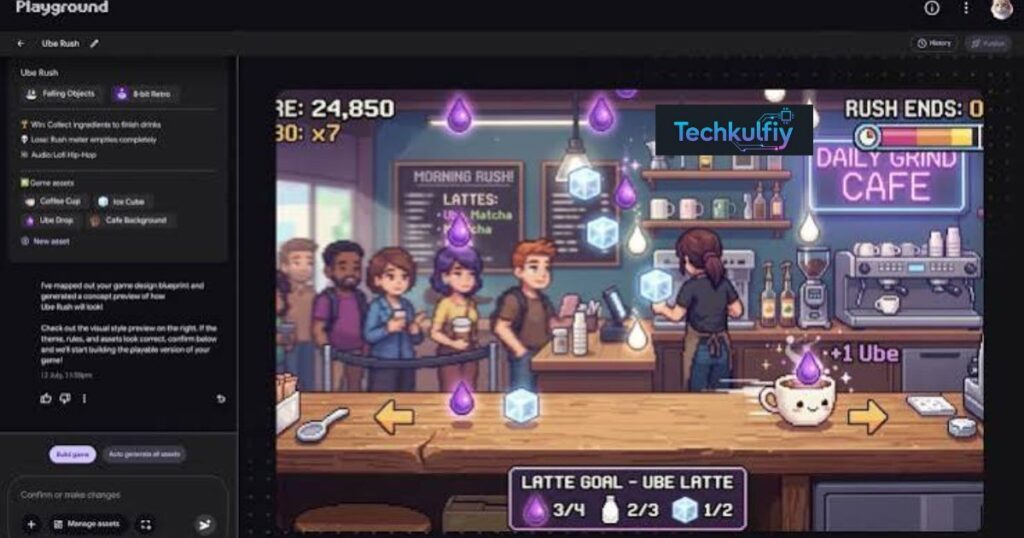
Playground is an experimental AI gaming platform created through a partnership between Google and Unity. It is designed to let people create, play, and share interactive games using natural-language instructions.
Traditional game development often requires knowledge of programming, 3D modeling, animation, physics, level design, and other technical skills. The new platform takes a different approach by allowing users to explain their ideas using ordinary language.
For example, you could describe a racing game set in a futuristic city. Instead of manually building every road, object, and gameplay rule, you can use a text prompt to explain what you want.
The AI then helps turn that description into an interactive experience.
This is one of the biggest reasons the launch is attracting attention. Playground isn’t simply another AI chatbot that writes descriptions about games. It is designed around interactive game creation, where the result can actually be played and modified.
Google’s goal is to make gaming more accessible to people who have creative ideas but don’t have years of programming experience.
How Does Playground Work?
The basic process behind Playground is based on natural-language interaction. You start with an idea and describe it to the system.
You might ask for a racing game, a tower-defense challenge, a trivia experience, or another type of interactive game. The platform interprets your instructions and generates an experience based on them.
After the initial version is created, you can continue giving instructions.
For example, you might tell it to make the game faster, change the environment, add obstacles, modify the rules, or make an enemy more difficult.
This creates a new style of game design. Instead of spending hours searching through menus and settings, creators can communicate their intentions directly.
The process resembles working with an AI creative assistant.
The first version may not be perfect. However, you can keep refining it until the experience becomes closer to your original idea.
This ability to quickly move from an idea to a playable prototype could become one of the most useful parts of Playground.
What Technology Powers Playground?
The technology behind Playground combines several areas of artificial intelligence. Google has highlighted its Gemini models, Nano Banana, Lyria, and other AI technologies as part of the broader experience.
The platform also uses the concept of AI world models.
A world model is designed to help AI understand how an environment works rather than simply predicting the next piece of text. In gaming, this type of technology can potentially help AI understand objects, movement, characters, environments, and interactions.
That matters because a playable game needs more than attractive visuals.
A game needs game mechanics, rules, movement, interaction, and responses to player actions.
For example, if a player pushes an object, the game needs to understand what should happen next. If an enemy approaches the player, the game needs rules that determine how the interaction works.
This is why world models are particularly interesting for the future of AI game development.
Instead of generating isolated assets, AI can potentially help create complete interactive environments.
Can Playground Create Games Without Coding?
Yes. One of the biggest attractions of Playground is its no-code game development approach.
You don’t need to begin by learning a programming language or understanding complicated game-engine systems. You can start with a description of what you want to create.
Imagine that you have an idea for a space adventure.
You could describe a game where players explore a damaged spaceship, find missing crew members, solve puzzles, and avoid security robots.
The AI can then use your instructions to create an initial experience.
You can continue modifying it through additional prompts.
If the spaceship is too dark, you can ask for brighter lighting. If the robots are too difficult, you can ask the system to reduce their speed. If the level feels empty, you can request additional objects and challenges.
This makes AI-assisted game development more accessible.
However, no-code does not mean no creativity.
You still need to decide what makes your game interesting. AI can help build the experience, but the creator still needs to provide the idea, direction, and feedback.
What Types of Games Can You Make?
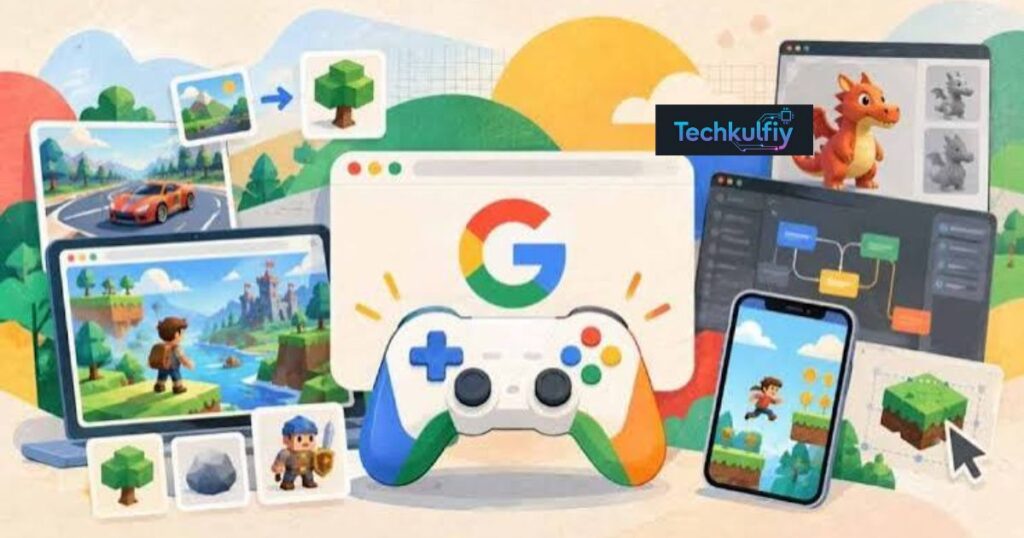
Playground is designed to support different types of interactive games and experiences.
Google has highlighted experiences such as racing, trivia, and tower defense. Users can also start creating from their own ideas instead of being limited to a single template.
This opens the door to many possibilities.
A student could make a simple educational game. A hobbyist could build a racing challenge. A content creator could design a small game for an online audience.
Someone interested in storytelling could experiment with an interactive adventure.
The quality and complexity of each result will depend on the platform’s capabilities and the instructions provided by the user.
That means prompt engineering can become an important skill.
A clear prompt gives the AI more information about the desired experience. Instead of simply saying, “Make a racing game,” a creator can describe the environment, vehicles, rules, objectives, difficulty, and visual style.
The more clearly you communicate your idea, the easier it becomes to guide the generated experience.
Can You Change a Game After Creating It?
Yes. Modification is a major part of the concept.
A generated game isn’t supposed to be a finished product that you create once and never touch again.
Instead, you can continue experimenting with the game mechanics, environment, characters, rules, and other elements.
Suppose you create a platform game and discover that the character jumps too high.
Instead of manually searching through technical settings, you can give another instruction asking for lower jumping power.
The same approach can be used for other parts of the game.
You can request new obstacles, change the setting, adjust the difficulty, or modify how characters behave.
This creates a faster prototyping workflow.
In traditional development, testing a small idea can sometimes require significant work. With AI-assisted creation, the initial experiment can potentially happen much faster.
For developers, that means more ideas can be tested before deciding which ones deserve serious development.
For beginners, it means they can learn by experimenting rather than studying every technical system first.
What Is Unity Spark?
Unity Spark is one of the most important parts of the Google and Unity partnership.
While Playground focuses on making AI-powered game creation accessible, Unity Spark is being developed to provide a more advanced creation environment.
The technology is expected to bring professional-level game mechanics, high-fidelity 3D, and the flexibility of the Unity runtime to AI-assisted creation.
This could create a bridge between simple experimentation and professional 3D game development.
A beginner might start with a basic idea using natural-language prompts. More experienced creators could eventually use advanced tools to build richer and more sophisticated experiences.
Unity already has a huge ecosystem around real-time 3D, games, simulations, and interactive content.
Combining that technology with Google’s AI capabilities could create a powerful development workflow.
Unity Spark is expected to enter testing through a closed beta, so its final capabilities and availability may evolve as development continues.
Why Is the Google and Unity Partnership Important?
Google and Unity have different strengths, which makes this partnership particularly interesting.
Google brings its expertise in artificial intelligence, machine learning, cloud technology, and large-scale computing.
Unity brings extensive experience in game engines, 3D development, real-time graphics, and interactive experiences.
Together, they can approach AI gaming from two different directions.
Google can help make creation easier through natural language and AI models, while Unity can provide the technical foundation for more advanced game development workflows.
This could eventually allow creators to move between simple AI-generated prototypes and professional development tools.
The goal isn’t necessarily to remove developers from the process.
Instead, AI can become another tool that helps developers work faster.
A developer who previously spent hours creating a basic prototype might be able to produce several variations in much less time.
That could make experimentation cheaper and encourage more people to try ambitious ideas.
How Playground Could Change Game Development
The most important impact of Playground could be the reduction of the technical barrier to entry.
For years, people have had game ideas but lacked the programming skills needed to turn them into reality.
AI changes that equation.
A person who knows how to describe an interesting game could potentially create a working prototype without becoming an expert programmer first.
This doesn’t mean traditional developers will disappear.
Professional games require much more than basic generation. Large projects involve programmers, artists, designers, writers, sound engineers, animators, testers, producers, and many other specialists.
AI can assist these people, but it doesn’t automatically replace their creativity or experience.
Instead, generative AI could help teams move faster.
A designer could test different environments. A programmer could experiment with mechanics. A writer could create interactive story ideas. A small studio could build prototypes without spending as much time on initial implementation.
That is where the real value of AI may appear.
Could Playground Help Indie Game Developers?
Independent developers could benefit significantly from AI-powered tools.
Large game studios have huge teams and budgets. An independent creator may have a great idea but limited money, time, and technical resources.
AI game development can potentially reduce some of those barriers.
An indie developer could use AI to explore different concepts before committing to a large project.
For example, imagine an independent creator who wants to build a detective game.
They could test several versions of the environment, gameplay loop, and character interactions before investing months into a single direction.
This doesn’t guarantee success.
A generated prototype still needs testing, refinement, optimization, and creative direction.
But faster experimentation can be extremely valuable for a small team.
The creator can spend more time deciding what makes the game unique instead of spending all their time building basic systems.
Playground and the Rise of AI-Generated Games
The rise of AI-generated games represents a broader change in the entertainment industry.
Previously, game creation was mostly controlled by developers and studios with access to specialized software and technical knowledge.
User-generated platforms changed that model by allowing ordinary players to create and publish experiences.
AI could take that idea even further.
Instead of learning a complicated creation tool first, users could simply explain what they want.
This could lead to a much larger number of experimental games.
Some might be excellent. Others might be strange, simple, or completely unsuccessful.
But the barrier to experimentation becomes much lower.
That could result in new genres and unusual gameplay ideas that might never have been developed through traditional workflows.
Is Playground a Replacement for Professional Game Engines?
No.
It is better to think of Playground as a new layer of AI-assisted creation rather than a complete replacement for professional game engines.
Traditional engines provide developers with detailed control.
Developers can manually create systems, optimize performance, build complex mechanics, control assets, and make precise decisions about how a game behaves.
AI-generated experiences may not provide that same level of control.
They can also produce unexpected results.
For professional projects, developers may still need traditional tools for optimization, debugging, performance, and advanced customization.
This is where Unity Spark could become particularly important.
If AI-generated creation can connect naturally with the professional Unity ecosystem, creators may get both speed and control.
That combination could be much more powerful than either approach alone.
What Are the Benefits of Playground?
One major benefit is accessibility.
People who have never written code can experiment with game creation.
Another benefit is speed.
AI can potentially produce a basic prototype much faster than traditional development.
The platform can also encourage experimentation because creators can try ideas without committing huge amounts of time at the beginning.
Another important advantage is learning.
Beginners can experiment with different game mechanics and immediately see what happens.
Instead of learning every technical concept before creating something, they can learn through the process of making and modifying games.
For experienced creators, the benefit is different.
AI can act as a rapid prototyping assistant that helps them test ideas before moving into more detailed development.
What Are the Limitations?
Despite its potential, Playground is still an experimental platform.
Users shouldn’t expect every generated game to have the quality of a major commercial title.
AI-generated experiences can have inconsistencies, unexpected behavior, or limitations in complex gameplay.
Another concern is originality.
If many people use similar prompts and AI systems, some experiences could begin to look or feel similar.
There are also wider questions around AI-generated content, copyright, creative ownership, and the role of human artists and developers.
These questions are still being debated across the technology and gaming industries.
There is also the issue of quality control.
Creating a game quickly doesn’t automatically make it fun.
A successful game still needs a strong concept, enjoyable mechanics, good pacing, meaningful challenges, and an understanding of its audience.
AI can accelerate creation, but human judgment remains important.
Is Playground Free to Use?
Google provides free access for playing games, while game creation includes a limited free tier with weekly generation tokens.
Users who need higher limits can use eligible Google One AI plans.
This model allows people to experiment without immediately paying for the service while also giving frequent creators an option for greater usage.
Because AI generation requires significant computing resources, usage limits are understandable.
The exact availability and limits can change as Google continues developing the platform.
Users should therefore check the official service information before relying on specific limits.
Can You Share Games Created With Playground?
Yes. Sharing is another important part of the platform.
Creators can keep their experiences private or share them with other people. Games can also be published to the Explore gallery, allowing other users to discover and play them.
This introduces a social gaming element.
Instead of making a game only for yourself, you can create something and let other people experience it.
Community discovery could become one of the platform’s strongest features if the number of creators and games grows.
It could also create opportunities for creators who want to build an audience around their experimental games.
The success of this model will depend on how well Google handles discovery, moderation, quality, and community engagement.
Is Playground a Threat to Roblox?
It is too early to call it a direct replacement for Roblox.
Roblox already has a massive creator ecosystem, established communities, and a mature platform for user-generated games.
However, Google’s approach shows how quickly AI is changing this part of the gaming industry.
The key difference is the emphasis on creating games through natural-language instructions and AI-generated experiences.
If AI makes game creation dramatically easier, more platforms may compete to become the place where people create and share those experiences.
For users, that competition could be positive.
More powerful creation tools could mean more opportunities to experiment and publish games.
Who Should Try Playground?
Playground could be useful for beginners, students, hobbyists, designers, content creators, and experienced developers.
Beginners can use it to understand basic game design without first learning complicated software.
Students can experiment with interactive projects.
Content creators can build small experiences for their audiences.
Designers can test ideas quickly.
Developers can use it for rapid prototyping.
The platform is particularly interesting for anyone who has ever thought, “I have a game idea, but I don’t know how to build it.”
Now, AI may provide a way to turn that idea into something playable.
What Does Playground Mean for the Future of Gaming?
The arrival of Playground suggests that gaming could become increasingly conversational.
Instead of selecting options from complicated software, creators may increasingly describe what they want and let AI handle parts of the implementation.
That could eventually change the relationship between players and games.
Imagine creating a game specifically for a group of friends in a few minutes.
Imagine changing the rules while playing.
Imagine creating a new world simply by describing it.
These ideas are becoming more realistic as generative AI, world models, and real-time 3D technology improve.
The biggest change may be that the difference between player and creator becomes smaller.
A player could become a designer. A designer could become a developer. A developer could use AI to become a faster creator.
That is the broader direction suggested by Google’s partnership with Unity.
What Could Come Next?
The future of Playground will depend on how quickly the underlying AI technology improves.
Better world models could create more consistent environments. Better 3D generation could make virtual worlds more detailed. Improved reasoning could make complex gameplay mechanics easier to generate.
Unity Spark could also become an important part of this evolution if it successfully connects AI creation with professional development.
The biggest question is not whether AI can generate a game.
It already can.
The more important question is whether AI can help create games that people genuinely want to play.
That requires creativity, balance, storytelling, performance, and emotional engagement.
Those qualities are difficult to automate completely.
The best future may therefore be a collaboration between humans and AI.
Humans provide the imagination and direction.
AI helps turn those ideas into interactive experiences faster.
Frequently Asked Questions
What is Playground?
Playground is an experimental AI gaming platform from Google and Unity that allows users to create, play, and share interactive experiences using natural-language prompts.
Does Playground require coding?
No. The platform is designed around no-code game development, allowing users to describe their ideas instead of manually writing traditional game code.
What can I create with Playground?
You can experiment with different interactive games, including racing, trivia, tower defense, and other custom experiences based on your prompts.
What is Unity Spark?
Unity Spark is an upcoming AI-assisted creation experience designed to provide more advanced 3D capabilities, professional-level mechanics, and access to the Unity runtime.
Is Playground free?
Users can play games for free, while game creation includes a limited free tier. Higher generation limits may require an eligible Google One AI plan.
Can I share my games?
Yes. Games can be kept private, shared through links, or published for other users to discover and play.
Will Playground replace game developers?
Not likely. AI can automate or accelerate parts of game development, but professional games still require human creativity, design, programming, testing, art, storytelling, and decision-making.
Is Playground available everywhere?
Availability is being rolled out gradually. Google initially launched the experience for eligible users in the United States, with broader availability planned.
Conclusion
Playground represents an interesting new direction for AI-powered game development. Instead of requiring users to master complicated software before they can create something, it lets them begin with an idea and express that idea through natural language.
The technology is still experimental, and it has limitations. AI-generated games won’t automatically match the quality of professionally developed titles. Creators will still need creativity, testing, and good design decisions.
However, the combination of Google’s AI technology and Unity’s real-time 3D expertise could make game creation much more accessible.
With Unity Spark adding a path toward more advanced 3D game development, this partnership could become even more important in the future.
For now, Playground is best viewed as an early look at a future where creating a game could be as simple as describing what you want to play.

About the Author
The author at TechKulfiy writes informative articles about technology, software, digital platforms, and IT solutions. The goal is to make complex topics easier to understand by providing clear explanations, practical insights, and helpful information. Each article aims to help readers explore technology topics and make informed decisions.