

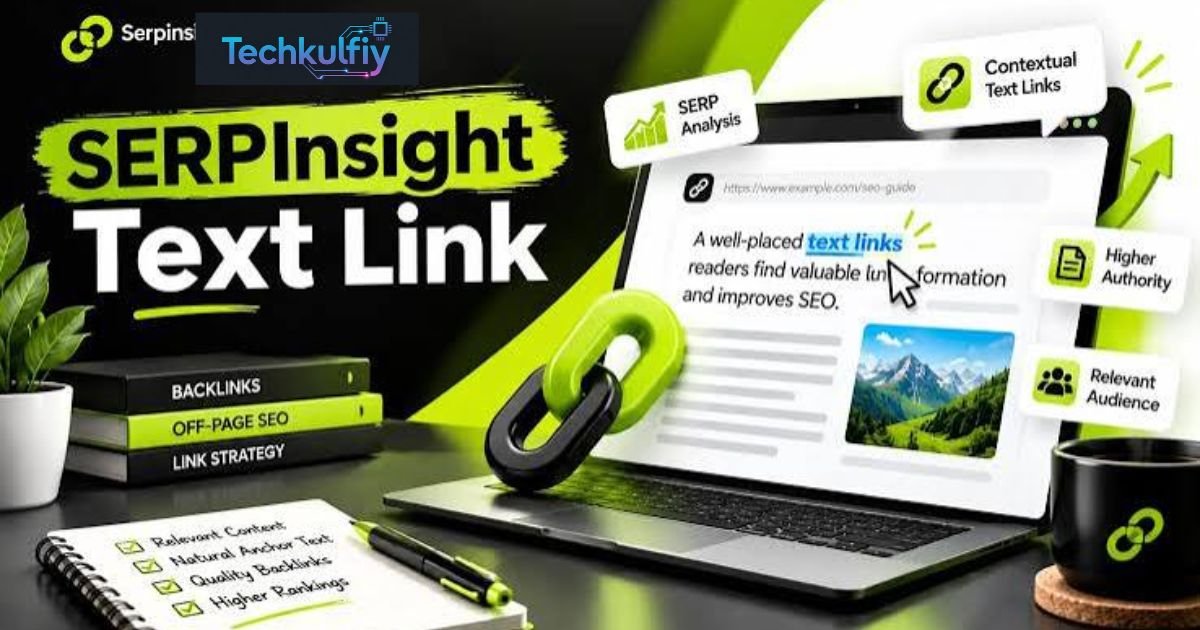
SERPInsight is a name worth understanding if you are exploring backlink marketplaces, guest posting, and link insertion services. For website owners and SEO professionals, choosing the right link-building approach can influence how efficiently they manage their campaigns.
Building backlinks manually often requires research, outreach emails, negotiations, and follow-ups with website publishers. A marketplace can simplify these tasks by bringing publisher information, placement options, and order management into one place.
This SERPInsight review explains how the platform works, which services it offers, what buyers should check before purchasing links, and how it compares with traditional outreach. It also examines the limitations of paid backlinks so readers can make informed SEO decisions instead of relying on unrealistic ranking promises.
SERPInsight Review: How the Backlink Marketplace Works
What Is SERPInsight?
SERPInsight is a backlink marketplace designed to connect people who need link-building placements with publishers offering opportunities on their websites. Its primary services include guest posts, link insertions, and footer links.
The platform aims to simplify a process that traditionally involves contacting website owners individually. Instead of searching for hundreds of publishers and negotiating with each one, buyers can explore available listings, compare their advertised metrics, and select placements that match their requirements.
For freelancers, digital marketing agencies, SaaS businesses, affiliate marketers, and website owners, SERPInsight offers a more centralized way to organize backlink campaigns.
The general idea is straightforward. A buyer identifies a website that may be relevant to a campaign, reviews its available information, chooses a placement, and submits an order. The publisher then handles the placement according to the listing’s terms and editorial requirements.
SERPInsight operates as an intermediary marketplace rather than directly controlling every publisher website. This distinction matters because individual publishers can have different content standards, prices, delivery schedules, and acceptance policies.
Another important point is that SERPInsight is not the same thing as Google’s search results page. SERP commonly means search engine results page, while SERPInsight is the name of a commercial link-building platform. Understanding this distinction helps readers find the correct service when researching the brand.
How Does SERPInsight Work?
The SERPInsight process is intended to reduce the administrative work involved in buying backlinks. Traditional link building can require several conversations before a publisher agrees to publish an article or insert a link. A marketplace puts much of that initial research and selection into a single workflow.
Finding Suitable Publisher Websites
The first step is identifying websites that fit your campaign. Buyers should consider the website’s subject, audience, location, language, organic visibility, and available SEO metrics.
SERPInsight advertises filters that help users explore publisher listings by factors such as domain rating, traffic, niche, country, language, and price. These filters can make it easier to narrow a large collection of websites into a manageable shortlist.
However, filtering is only the starting point. A website with an impressive domain score may still be unsuitable if it publishes unrelated content or attracts visitors who have no interest in your business.
Comparing Placement Options
Once you identify possible publishers, compare the available placements and their terms. Look at the displayed price, delivery estimate, content requirements, and type of backlink being offered.
A guest post may suit a campaign that needs a new article, while a link insertion may be more appropriate when an existing article is relevant to the target page.
SERPInsight provides a marketplace-based selection process, but buyers should still inspect individual websites before committing money.
Placing and Tracking an Order
After choosing a publisher, the buyer submits the required content or placement details and proceeds according to the marketplace’s ordering process.
The platform advertises centralized order tracking and payment protection arrangements. These features can help buyers follow the progress of their purchases without managing every detail through separate email conversations.
The exact delivery time depends on the selected publisher and the order requirements. A displayed estimate should not be interpreted as a universal guarantee that every placement will be published instantly.
Verifying the Published Link
The final step is checking the delivered placement. Confirm that the article or page is live, the intended destination URL is correct, and the backlink appears where agreed.
It is also useful to check whether the surrounding content is relevant and whether the page is accessible to search engines.
SERPInsight can make order management more convenient, but buyers should maintain their own records of completed placements. A marketplace dashboard is useful for tracking transactions; independent verification provides additional confidence.
Main Features of SERPInsight
The platform emphasizes convenience, publisher discovery, transparent listings, and centralized management. These features may be helpful for people who regularly purchase placements or manage multiple SEO campaigns.
Publisher Marketplace
SERPInsight advertises access to more than 5,000 publisher websites. This stated inventory gives users a broad starting point for researching opportunities across different industries and geographic markets.
The practical value of a large marketplace depends on the quality and relevance of its individual listings. Buyers should evaluate potential publishers rather than assuming every listed website is suitable for every campaign.
For example, a software company seeking customers in the United States may prefer a genuine technology publication with an established American audience over a general website with little topical relevance.
SEO Metric Filters
Domain Rating, Domain Authority, estimated organic traffic, and referring domains are commonly used when evaluating potential publishers.
SERPInsight advertises filters for multiple SEO metrics, helping buyers compare listings before ordering. These metrics can make research faster, but they should be interpreted correctly.
Domain Rating is an Ahrefs metric, while Domain Authority is a Moz metric. Neither is a direct Google ranking score. Similarly, estimated organic traffic from an SEO tool is not the same as verified Google Analytics data.
A strong evaluation combines these measurements with content quality, relevance, real search visibility, and the website’s overall publishing patterns.
Centralized Order Management
Managing link-building orders can become difficult when an SEO professional works with multiple publishers. Details such as target URLs, anchor text, prices, deadlines, and publication status can quickly become scattered across spreadsheets and email threads.
A centralized dashboard helps organize this information in one place.
For agencies handling several clients, this type of workflow may reduce repetitive administrative work. Freelancers may also find it easier to maintain a record of orders and completed placements.
Payment Protection and Link Protection
SERPInsight advertises escrow-style payment protection and a 36-month link protection window. These are important features to review before placing an order.
Buyers should read the applicable terms to understand when payments are released, what happens if an order is rejected, and which situations qualify for protection if a link disappears.
Protection policies have limits. They should not be interpreted as a guarantee of permanent publication, improved rankings, or increased traffic.
SERPInsight Guest Posting Explained
Guest posting involves publishing a new article on another website. The article may introduce a useful topic, explain a problem, or provide information relevant to the host site’s readers.
Within link building, a guest post may contain a link to the contributor’s website when the placement and editorial policy allow it.
SERPInsight offers guest-posting opportunities through its publisher marketplace. Instead of negotiating separately with every potential website owner, buyers can explore listings and select placements according to their campaign requirements.
For example, a company selling project management software might look for business, productivity, or technology publications. A relevant guest article could explain how small teams organize projects and include a useful reference to the company’s resources.
The most important consideration is whether the article provides genuine value to the host website’s audience. A poorly written article created only to insert a backlink may offer little benefit to readers.
Before ordering a guest post, examine the publisher’s existing articles, writing quality, topical focus, and organic visibility. Check whether the proposed subject fits naturally into its editorial coverage.
Buyers should also understand the difference between a live backlink and a ranking benefit. A published article may provide referral traffic or brand exposure, but it does not automatically improve search positions.
SERPInsight Link Insertion: What Does It Mean?
Link insertion, also known as a niche edit, involves adding a link to an article that has already been published.
Rather than creating a new article, the publisher updates existing content to include a relevant reference to another page. This approach can be convenient when an established article already discusses a subject related to the linked resource.
SERPInsight advertises link insertion as one of its main services. Buyers can explore opportunities for adding links to existing publisher content instead of commissioning an entirely new article for every placement.
Consider a website that publishes a detailed guide about email marketing. If your page provides a genuinely useful explanation of email deliverability, a contextual reference might make sense within that guide.
The key is relevance. The linked resource should support the sentence or provide additional information that readers would reasonably want to explore.
Not every existing page is a good candidate. Buyers should examine the specific page rather than relying entirely on the host domain’s overall authority score.
Check whether the page receives meaningful organic visibility, whether its content remains useful, and whether the proposed link fits naturally into the discussion.
An article that once ranked well but has become outdated may be less valuable than a current, relevant page with a smaller audience.
Guest Posts vs. Link Insertion
Both methods can be used in link-building campaigns, but they serve different purposes.
| Factor | Guest Posting | Link Insertion |
|---|---|---|
| Content format | A new article | An existing article is updated |
| Main task | Prepare and publish fresh content | Add a relevant link to published content |
| Content creation | Usually required | Often not required |
| Research priority | Publisher quality and topic fit | Publisher quality and individual page performance |
| Delivery | Depends on writing, review, and publication | Depends on page review and publisher approval |
| Potential benefit | Relevant exposure and referral traffic | Contextual visibility within existing content |
| Main concern | Thin or promotional guest articles | Irrelevant or manipulative link placement |
Neither method is automatically superior. The right choice depends on the campaign’s objectives, available budget, content strategy, and the quality of the placement.
Guest posting can be useful when you have a worthwhile topic to contribute to another publication. Link insertion may be more practical when an existing article already provides an appropriate context for your resource.
Some campaigns use both methods. The important point is to prioritize relevance and editorial value rather than buying placements simply to increase a backlink count.
How Much Does SERPInsight Cost?
The cost of using SERPInsight depends on the selected publisher, placement type, and individual listing terms. The platform promotes a pay-per-placement model without a mandatory monthly subscription.
This structure may appeal to users who prefer to purchase links when a campaign requires them rather than paying a recurring fee for access.
However, there is no single price that applies to every publisher. A specialized publication with an established audience may charge more than a smaller website. Guest posts and link insertions can also have different prices.
Before purchasing a placement, compare the total cost with the likely business value. Consider the relevance of the publisher, its audience, content standards, and the time required to complete the order.
A low price is not automatically a bargain. A cheap backlink from an irrelevant or low-quality website may offer little practical value. Likewise, a high price does not prove that a placement will improve rankings.
Set a clear campaign budget and avoid buying links based only on domain metrics. If you are a small business or freelancer, a few carefully researched opportunities may be more sensible than a large number of questionable placements.
Always check the current listing and terms because prices, publisher availability, and delivery estimates can change.
Is SERPInsight Legit and Safe to Use?
SERPInsight presents itself as an active commercial marketplace for backlink placements. Its public website describes its services, publisher marketplace, ordering process, and payment protection arrangements.
Its published terms identify the operator as SERPInsight LTD and explain that it acts as an intermediary between buyers and independent publishers.
These details provide information that prospective customers can review. However, the existence of a website, published policies, or company information does not establish that every publisher or placement is high quality.
A sensible evaluation should consider several factors.
First, review the platform’s terms, refund conditions, and link protection policy before spending money. Understand which situations are covered and what evidence may be required if a dispute occurs.
Second, assess individual publishers. Look at their actual content, subject relevance, organic visibility, and publishing patterns. Avoid making a decision based on a single authority metric.
Third, examine the placement itself after delivery. Confirm that the target URL and anchor text are correct and that the surrounding article provides a sensible context for the link.
Finally, keep realistic expectations. A marketplace can make buying placements easier, but it cannot guarantee that Google will reward a particular backlink with higher rankings.
Therefore, SERPInsight should be evaluated as a commercial service with specific features and policies, not as an automatic shortcut to search engine success.
Advantages of SERPInsight
One potential advantage of SERPInsight is convenience. Finding publishers manually can involve extensive research, repeated outreach, and lengthy negotiations. A marketplace can consolidate publisher discovery and order management into a more organized process.
Another advantage is the ability to compare multiple listings. Buyers can use available filters to narrow their options by niche, location, authority metrics, and price. This may reduce the time required to create a shortlist.
The pay-per-placement model can also suit users who do not want a recurring subscription. Buyers can select opportunities according to their immediate campaign needs, subject to the marketplace’s current terms.
For agencies, centralized order tracking can make it easier to monitor multiple placements. Freelancers may appreciate having a more structured process for managing client requirements.
The platform also advertises payment protection and a link protection window, which can provide a defined framework for handling certain order-related issues.
These benefits are most useful when buyers already understand how to evaluate backlinks. The marketplace can simplify the workflow, but it does not remove the need for SEO judgment.
Disadvantages and Limitations of SERPInsight
The first limitation is that publisher quality can vary. A large inventory does not mean every website has the same editorial standards, audience relevance, or organic performance.
The second limitation is that SEO metrics are estimates or third-party measurements. A website’s Domain Rating or Domain Authority may look impressive even when its content is unrelated to your business or its search visibility is weak.
Another concern is that paid placements can create unrealistic expectations. Some buyers expect every backlink to produce an immediate ranking improvement. In reality, search performance depends on many factors, including content usefulness, competition, technical SEO, and overall site quality.
There is also a cost consideration. Repeatedly purchasing placements can become expensive, particularly when campaigns target highly competitive industries. A business must weigh those costs against other activities, such as producing helpful content or improving its existing pages.
Finally, protection policies have conditions. A link protection period should not be confused with a guarantee that a backlink will remain available forever or that a website will achieve a particular search position.
Understanding these limitations helps buyers use SERPInsight more thoughtfully.
Does SERPInsight Help Improve Google Rankings?
SERPInsight can help users find and manage backlink placements, but using the platform does not guarantee higher Google rankings.
Backlinks can be a signal that search engines use to understand relationships between pages. However, their value depends on context, quality, relevance, and how they were acquired.
Google’s spam policies address link schemes intended to manipulate search rankings. Buying or selling links for ranking purposes can create policy risks, especially when placements are designed to pass ranking credit rather than provide genuine editorial value.
For that reason, businesses should not treat a backlink marketplace as a guaranteed ranking strategy. Paid links should be handled in accordance with applicable search engine policies, including appropriate qualification such as sponsored attributes when required.
A sustainable SEO strategy also needs useful content, sound technical foundations, clear site structure, and a positive user experience.
For example, a business publishing excellent guides about accounting software may benefit more from improving its content and earning relevant editorial references than from buying numerous unrelated links.
SERPInsight may simplify the operational side of link building, but the platform cannot replace a complete SEO strategy.
SERPInsight vs. Traditional Link-Building Outreach
Traditional outreach starts with identifying potential publishers. An SEO professional researches websites, finds contact information, prepares personalized emails, negotiates terms, and follows up until a publisher responds.
This approach provides direct communication and may create opportunities for genuine editorial partnerships. It can also require substantial time, particularly when many websites need to be contacted.
SERPInsight offers a different workflow. Buyers can explore listings, compare available information, and order placements through a centralized marketplace.
For campaigns that need an organized purchasing process, this model may be more convenient. It can reduce repetitive outreach and make it easier to track orders.
However, traditional outreach has advantages of its own. Direct relationships can lead to collaborative articles, expert contributions, brand mentions, and long-term publishing opportunities that go beyond a single paid placement.
Neither approach is the right answer for every situation. Businesses should choose based on their resources, objectives, risk tolerance, and the kind of relationships they want to build.
A balanced strategy can combine useful content, legitimate outreach, digital public relations, and careful evaluation of any paid placement opportunities.
Who Should Consider SERPInsight?
SERPInsight may be relevant to freelance SEO professionals who manage backlink campaigns for clients. Its marketplace format can make publisher discovery and order tracking more organized.
Digital agencies may also find the service useful when they need to compare placements across different industries or manage several campaigns from one workflow.
SaaS companies, e-commerce businesses, and affiliate marketers may explore it when researching relevant publications for brand exposure and content promotion.
Website owners who understand SEO metrics may appreciate the ability to compare publisher listings before selecting a placement.
However, beginners should learn the fundamentals of link quality before spending money. It is important to understand the difference between authority metrics, genuine organic visibility, relevant audiences, and links that exist primarily to manipulate rankings.
Businesses with limited budgets should also consider whether their existing pages need improvement before they invest in external placements.
SERPInsight is a tool for organizing link-building purchases. It is not a substitute for understanding your audience or creating a website that deserves attention.
How to Evaluate a Publisher Before Ordering
Before placing an order through SERPInsight, examine the individual website carefully.
Start with topical relevance. The publisher should cover subjects related to your industry or provide a logical context for the content you want to publish.
Next, review organic visibility. Use SEO tools to investigate estimated traffic, ranking keywords, and the history of the specific page where possible. Remember that third-party estimates are not verified visitor counts.
Look at editorial quality, too. Read several recent articles and check whether they offer useful information or consist mainly of promotional material.
Review the proposed placement. The article should be relevant, the anchor text should read naturally, and the destination page should genuinely support the surrounding discussion.
Finally, check the terms, cost, delivery expectations, and protection conditions before paying. Keep a record of the order and verify the result independently after publication.
This process takes additional time, but it helps prevent a common mistake: choosing a backlink because the displayed metrics look attractive without investigating the actual website.
Frequently Asked Questions
What is SERPInsight?
SERPInsight is a commercial backlink marketplace where buyers can explore publisher websites and purchase services such as guest posts, link insertions, and footer links.
What does SERPInsight do?
SERPInsight helps users discover publisher listings, compare available SEO metrics, order backlink placements, and track their orders through a centralized process.
Is SERPInsight legit?
SERPInsight presents itself as an operating backlink marketplace and publishes information about its services and terms. However, buyers should independently evaluate the platform’s policies and each publisher before purchasing a placement.
Does SERPInsight offer guest posting?
Yes. Guest posting is one of the services advertised by SERPInsight. It involves publishing a new article on a third-party website, subject to the publisher’s requirements.
What is SERPInsight link insertion?
Link insertion involves adding a relevant backlink to an article that has already been published. It is also commonly known as a niche edit.
How much does SERPInsight cost?
The cost varies according to the selected publisher, placement type, and listing terms. SERPInsight advertises a pay-per-placement model without a mandatory monthly subscription.
Does SERPInsight guarantee Google rankings?
No backlink marketplace should be treated as a guarantee of higher Google rankings. Search performance depends on numerous factors, and paid links intended to manipulate rankings can create policy risks.
Is guest posting better than link insertion?
Neither method is always better. Guest posting creates a new article, while link insertion adds a link to existing content. The right option depends on relevance, editorial quality, campaign goals, and cost.
Can beginners use SERPInsight?
Beginners can explore the marketplace, but they should first understand how to evaluate publisher quality, organic visibility, content relevance, and link-building risks.
Does SERPInsight require a monthly subscription?
The platform advertises a pay-per-placement model without mandatory monthly subscription fees. Buyers should confirm the current terms before placing an order.
Are all SERPInsight publishers equally valuable?
No. Publisher websites can differ significantly in relevance, editorial quality, audience, and organic performance. Each listing should be evaluated individually.
Can backlinks increase website traffic?
Relevant backlinks may bring referral visitors and can contribute to a broader SEO strategy. However, traffic growth is not guaranteed, and results depend on the quality and context of each placement.
Conclusion
SERPInsight provides a marketplace-based approach to guest posting and link insertion. By bringing publisher listings, SEO metric filters, order management, and placement options into one workflow, it aims to reduce the time spent on traditional link-building administration.
Its main appeal is convenience. Freelancers, agencies, and businesses can explore potential publishers without relying entirely on individual outreach emails and negotiations. The advertised pay-per-placement model may also suit users who prefer not to pay a recurring subscription.
Nevertheless, the value of SERPInsight depends on how carefully buyers evaluate their options. A large publisher inventory does not guarantee high-quality websites, and impressive domain metrics do not automatically translate into better rankings. Editorial relevance, useful content, real search visibility, and transparent terms remain essential considerations.
Before purchasing a guest post or link insertion, review the publisher, understand the placement conditions, and verify the published result. Avoid making decisions based solely on price or authority scores, and do not expect a backlink to produce instant search traffic.
Ultimately, SERPInsight is best understood as a tool for organizing backlink purchases rather than a complete SEO solution. When used with careful research, realistic expectations, and a broader strategy focused on valuable content, it may help streamline parts of the link-building process. The strongest long-term approach remains one that prioritizes usefulness, relevance, and a website’s genuine value to its audience.

Noor ul Ain is a tech enthusiast and the founder of Techkulfiy. She loves exploring Artificial Intelligence (AI) and future tech, breaking down complex trends into simple, engaging updates for her readers.